
Quiz
Cor
Erstelle ein kostenloses Konto, um dieses Quiz zu beenden
Speichere deinen Fortschritt und sieh dir dein Endergebnis an.
oder mit deiner E-Mail registrieren
Schon ein Konto? Anmelden
Fragen in diesem Quiz (222)
1The arrhythmia on this link is called ____
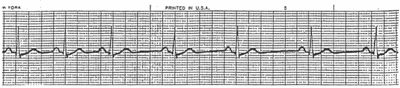
- Asinus arrhythmia
- Bsinus bradycardia
- CA Fib
2The arrhythmia on this link is called ____
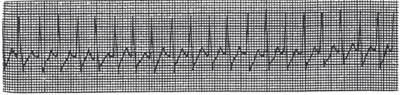
- ASinus Tachycardia
- BSVT
- CVT
- DVF
3The arrhythmia on this link is called ____
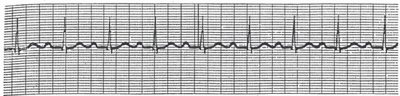
- Asinus rhythm
- BFirst degree AV block
- CA flutter
- DMobitz !!
4The arrhythmia on this link is called ____
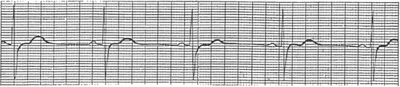
- Asinus bradycardia
- Bsinus rhythm
- C3rd Degree AV block
- DA Fib
5The arrhythmia on this link is called ____

- AMobitz !I
- B3rd degree AV block
- CWenckbach
- DA Fib
6The arrhythmia on this link is called ____ (include the entire strip, not just the abnormality)
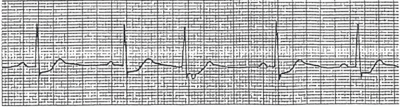
- AA Fib
- BSinus arrhythmia with PJC
- Csinus bradycardia with PJC
7The arrhythmia on this link is called ____
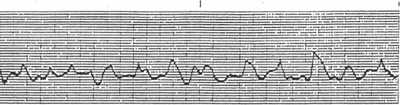
- AVT
- BV Fib
- CPEA
- DConduction problem
8The arrhythmia on this link is called ____
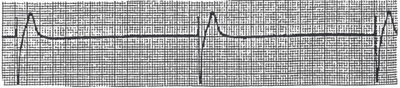
- AIVR
- BSinus bradycardia
- CA Fib
- D1st degree heart block
9The arrhythmia on this link is called ____

- AFirst degree AV block
- BSinus rhythm
- CMobitz !!
- DPassive junctional rhythm
10The arrhythmia on this link is called ____
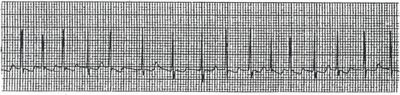
- AV Fib
- BA Fib
- CA Flutter
- DSinus Tachycardia
11The arrhythmia on this link is called ____ (include the entire strip, not just the abnormality)

- ANormal sinus rhythm with sinus pause
- B1st degree AV block
- CMobitz !!
- DIVR
12The arrhythmia on this link is called ____
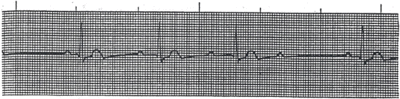
- AMobitz !!
- B1st Degree AV block
- C3rd Degree AV block
- DWenckebach
13The arrhythmia on this link is called ____
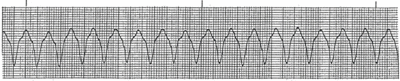
- AVF
- BVT
- CIVR
14The arrhythmia on this link is called ____
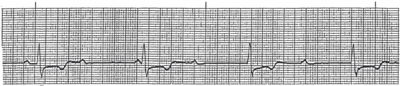
- A3rd Degree AV block
- BMobitz II
- CJunctional
- DIVR
15The arrhythmia on this link is called ____
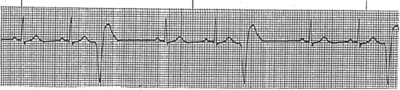
- ANSR with PVC's
- BNSR with PAC's
- CVentricular Trigeminy
- DMobitz II
16The two branches of the left coronary artery are the
- Aleft anterior descending, left posterior descending
- Bcircumflex, right coronary artery
- Ccircumflex, left anterior descending
- Dleft lateral artery, circumflex
17The heart's muscular layer that allows the heart to contract is the
- Aendocardium
- Bmyocardium
- Cepicardium
- Dpericardium
18The chamber that receives blood from the vena cavas is the
- ALA
- BRA
- CLV
- DRV
19Atrial kick supplies the ventricles with about ________ blood volume
- A20%
- B50%
- C80%
- D100%
20During ventricular systole, the
- Aaortic and tricuspid valves close
- Btricuspid and pulmonic valves close
- Cmitral and aortic valves open
- Dpulmonic and aortic valves open
21The curcumflex artery mostly supplies the
- ARA
- Blateral wall of the RV
- Cseptal wall of the LV
- Dlateral wall of the LV
22Cardiac Output equals
- Aheart rate x stroke volume
- Bheart rate x venous pressure
- Cheart rate x systemic pressure
- Dheart rate x atrial kick
23Vessels that supply the heart's structures with oxygenated blood are the
- Apulmonary arteries
- Bcoronary arteries
- Csystemic arteries
- Dvena cavas
24Spread of depolarization to the LA travels along
- Athe internodal tracts
- Bthe bundle of HIS
- Cthe L bundle branch
- DBachmann's bundle
25The right side of the heart pumps blood into the
- Apulmonary circulation
- Baorta
- Csystemic circulation
- Dcoronary arteries
26Preload refers to the ventricular stretch
- Aat the start of atrial systole
- Bat the end of atrial diastole
- Cat the start of ventricular diastole
- Dat the end of ventricular diastole
27Intrinsically, the SA node can normally initiate ______ impulses each minute
- A29-40
- B40-60
- C40-80
- D60-100
28The PMI (point of maximum impulse) is best heard
- Aat the apex of the heart
- Bat the base of the heart
- Cover the aortic area
- Dover the pulmonic area
29Ventricular depolarization/systole
- Apropels blood to the atria
- Bcoincides with atrial systole
- Cresults from electrical stimulation
- Dprevents blood flow into the coronary arteries
30Mitral stenosis can
- Aincrease preload
- Bdecrease preload
- Cincrease afterload
- Ddecreases afterload
31Atrial systole can also be called
- Aatrial relaxation
- Batrial kick
- Catrial pressure
- Datrial repolarization
32Rupture of a papillary muscle can
- Alead to valve regurgitation, thereby affecting SV and CO
- Bdecreases electrical stimulation
- Cocclude a coronary artery
- Densure electrical impulses conduct regularity
33Which coronary artery supplies the AV node in most people
- Athe R coronary artery
- BThe L coronary artery
- Cthe LAD artery
- Dthe circumflex artery
34Fast heart rates can decrease CO because of
- Aan increase in SV
- Bthe increased force of contraction
- Cthe shortened ventricular filling time
- Dtheir relaxing effect on the heart valves
35The conduction system refers to
- Athe heart's mechanical system
- Bthe heart's electrical system
- Cthe AV node's function
- Dventricular contraction
36Oxygenated blood returns to the heart via the
- Apulmonary arteries
- Bvena cavas
- Cpulmonary veins
- Daorta
37The tricuspid valve is located between the
- ARA and LA
- BLA and LV
- CRV and LV
- DRA and RV
38Prior to the onset of late ventricular diastole (before atrial systole), the ventricles have
- Areceived about 20% of their blood volume
- Breceived about 80% of their blood volume
- Cfilled to full capacity
- Dcontracted
39The CO can decrease with slow heart rates because
- Athe SV cannot increase any further
- Bof rapid AV conduction
- Cof poor LV muscle contraction
- Dof valvular dysfunction
40The main property of the AV node is to
- Aa forward 20% extra blood volume to the ventricles
- Bslow impulse conduction velocity/speed
- Censure a regular rhythm of impulse transmission
- Dpromote atrial systole
41The cells' ability to initiate impulses is called
- Aautomaticity
- Bexcitability
- Cconductivity
- Dcontractility
42If the SA node fails, the AV junction can intrinsically generate ____ impulses per minute
- A20-40
- B40-60
- C60-80
- D80-100
43The PMI is located at the
- A2nd R ICS (intercostal space)
- B2nd L ICS
- C5th R ICS
- D5th L ICS
44An S3 can indicate
- Aan atrial gallop
- Bthe apical pulse
- Cheart failure
- Dclosure of the mitral valve
45At the aortic area
- AS1 is louder than S2
- BS2 is louder than S1
- CS2 cannot be heard
- DS1 and S2 sound the same
46Palpitations can be
- Asustained
- Binsignificant
- Ccaused by the use of bronchodilators
- Dany of the above
47Pulsus alternans is characterized by
- Aalternating regular and irregular rhythms
- Balternating strong and weak pulses
- Cincreased rate with expiration
- Ddecreased rate with expiration
- Aalternating regular and irregular rhythms
48Auscultation of the mitral valve is best heard at the
- A2nd R ICS, adjacent to the sternum
- B2nd L ICS, adjacent to the sternum
- C5th L ICS, medial to the mid-clavicle
- Dlower L sternal border
49Acute MI pain can radiate to
- Athe jaw and neck
- Bthe left arm
- Cthe back
- Dany of the above
50Unilateral leg edema can signify
- Aleft sided heart failure
- Bsuperior vena cava syndrome
- Cvenous insufficiency
- Dventricular diastole
51Auscultation of the pulmonic valve is best heard at the
- A2nd R ICS
- B2nd L ICS
- C5th R ICS
- D5th L ICS
52During atrial systole, you might auscultate an
- AS1
- BS2
- CS3
- DS4
53Elevated JVP might be visualized in the patient with
- ARV MI
- BRVF
- Ccor pulmonale
- Dany of the above
54During inspection of the chest , the pulsation of the apical pulse is always visible
- ARichtig
- BFalsch
55Palpation of a normal pulse strength is documented as
- A1+
- B2+
- C3+
- D4+
56The ____ valve is heard loudest at the 2nd R ICS, adjacent to the sternum
- AAortic
- BPulmonic
- CTricuspd
- DMitral
57Which cardiac condition would most likely cause chest pain that eases by sitting up and leaning forward?
- AAcute Paricarditis
- BCHF
58A pneumothorax can potentially to displace the PMI
- ARichtig
- BFalsch
59The S1 heart sound
- Arepresents closure of the mitral and tricuspid valves
- Bsignifies the end of ventricular diastole
- Cis heard loudest at the apex
- Dall of the above
60The S3 and S4 adventitious heart sounds
- Aare best heard with the stethoscope's diaphragm
- Bcan indicate heart failure
- Ccorrespond with ventricular systole
- Dall of the above
61To observe the JVP
- Aturn the patient's head away from the side being examined
- Belevate the head of the bed to 90 degrees
- Causcultate the 2nd L ICS
- Densure dim lighting to distinguish the JVP shadows
62An adventitious heart sound heard during atrial diastole would be
- AS1
- BS2
- CS3
- DS4
63When discussing the dorsalis pedis pulse
- Apalpating the R and L simultaneously is safe
- Bit should always be easily palpable in normal adults
- Cit is located just below the malleolus
- Dits detection requires very deep palpation
64An S4 heart sound
- Ais called a ventricular gallop
- Bis heard during ventricular diastole
- Cis heard during atrial diastole
- Doccurs before S2
65Pulsus paradoxus is characterized by
- Aalternating regular and irregular rhythms
- Balternating strong and weak pulses
- Cdecreased amplitude with expiration
- Ddecreased amplitude with inspiration
66When listening over the mitral area, S1 is louder than S2
- ARichtig
- BFalsch
67Normally, pulsations of the internal jugular veins
- Achange in response to positioning
- Bare visualized at 10cm above the suprasternal notch
- Care noticeable when the patient stands
- Dall of the above
68Syncope can be a symptom of
- Avasodilatation
- Ba slow heart rate
- Cexcessive vagal activity
- Dany of the above
69When documenting a pulse's strength, a weak pulse is
- A0
- B1+
- C2+
- D3+
70In which of the following conditions might the patient's chest heaviness ease if s/he rests?
- Aacute pericarditis
- Bdissecting aneurysm
- Cstable angina
- Dpulmonary embolism
71Palpating both carotid arteries simultaneously can decrease the HR and produce syncope
- ARichtig
- BFalsch
72An irregular pulse is always detected in patients with
- Acardiac tamponade
- BMI
- Caortic dissection
- Datrial fibrillation
73In Lead I
- ARA is negative, LL is positive
- BLA is negative, LL is positive
- CRA is negative, LA is positive
- DRA is negative, RL is positive
74CK elevation will be detected with
- Aelevated HDLs
- BCVA
- Cdepolarization
- Ddecreased CO
75After MI, the following LDH isoenzymes can be expected
- ALD1 and LD2 are absent
- BLD1 = LD2
- CLD1 < LD2
- DLD1 > LD2
76Depolarization
- Ais a state of excitability
- Bcoincides with discharge of electricity
- Cresults from ionic activity
- Dall of the above
77Oral anticoagulation dosing is determined by assessing the
- ACK
- BAST
- CPTT
- DPT or INR
78The normal PR interval measures
- Aless than 0.12 seconds
- B0.12 to 0.20 seconds
- C0.20 to 0.40 seconds
- Dmore than 0.40 seconds
79The Q wave is the first ____ of a ventricular complex
- Afirst negative deflection
- Bfirst positive deflection
- Csecond negative deflection
- Dsecond positive deflection
80To calculate an irregular ventricular rate
- Adivide the # of small boxes between 2 QRSs into 1500
- Bdivide the # of large boxes between 2 QRSs into 300
- Ccount the # of QRSs in a 6 second strip, and x 10
- Dall of the above
81The QT interval represents the time frame for
- Aventricular depolarization to occur
- Bventricular repolarization to occur
- Cventricular depolarization and repolarization to occur
82In lead III
- ARA is negative, LL is positive
- BLA is negative, LL is positive
- CRA is negative, LA is positive
- DRA is negative, RL is positive
83The cardiac cycle includes
- AThe P wave
- Bthe QRS complex
- Cthe T wave
- Dthe PQRST
84An MI can be safely diagnosed with the CK-MB result because this isoenzyme
- Arepresents atrial depolarization
- Bis specific to cardiac tissue
- Creflects the CO
- Dcauses the ventricles to contract
85Cholesterol is carried on
- ALDL
- BAST
- CPTT
- Dmyoglobin
86An impulse travelling toward the area where a positive electrode is placed is recorded as
- Aa positive deflection
- Bnegative deflection
- Cflat line
- Dany of the above
87Torsades de Pointes can result from
- Ashort PR intervals
- Blong PR intervals
- Cshort QT intervals
- Dlong QT intervals
88Normally, the majority of cardiac electrical activity travels to the electrode placed on the
- ARA
- BLA
- CRl
- DLL
89The P wave represents
- Aatrial depolarization
- Bventricular depolarization
- Cventricular repolarization
- Dconduction through the AV node
90The QT interval
- Astarts at the onset of the QRS complex
- Bends after the T wave
- Cshould be less than half the R-R interval
- Dall of the above
91Prior to obtaining lipid studies
- Athe CK-MB must be elevated
- Bpatients must be fasting
- Cthe INR must be within normal range
- DCO must be satisfactory
92The QRS complex
- Ashould measure more than 0.10 seconds
- Breflects ventricular depolarization
- Calways has a Q, an R, and an S wave
- Dall of the above
93Heparin dosing is determined by assessing the
- APTT
- BPT
- CINR
94The PR interval is measured from the
- Astart of the P wave to the start of the QRS
- Bstart of the P wave to the end of the QRS
- Cend of the P wave to the start of the QRS
- Dend of the P wave to the end of the QRS
95Which troponins can be evaluated to detect myocardial damage?
- Atroponins I and C
- Btroponins I and T
- Ctroponins T and C
- Dtroponins I, T, and C
96Ventricular repolarization is reflected by the
- AP wave
- BQRS complex
- CT wave
- DPR interval
97In lead II
- ARA is negative, LL is positive
- BLA is negative, LL is positive
- CRA is negative, LA is positive
- DRA is negative, RL is positive
98Six seconds on ECG paper includes
- A15 small boxes
- B15 large boxes
- C30 small boxes
- D30 large boxes
99Which of the following ST segments is abnormal?
- A0.5mm below the baseline
- B0.5mm above the baseline
- Cthe iso-electric ST segment
- D2mm above the baseline
100The normal ventricle requires ____ to contract
- A< 0.02 seconds
- B< 0.10 seconds
- C> 0.12 seconds
- D> 0.20 seconds
101The CK begins to elevate ____ after muscle damage
- A4-6 hours
- B10-15 hours
- C12-24 hours
- D24-36 hours
102The patient with a prosthetic mechanical valve, whose INR is 1.2 needs
- Ato increase his warfarin dosage
- Bto decrease his warfarin dosage
- Cto maintain his same/usual warfarin dose
- Dto withold the next warfarin dose
103In lead II, normal ventricular depolarization produces a
- AP wave with a positive deflection
- BP wave with a negative deflection
- CQRS with a positive deflection
- DQRS with a negative deflection
104The normal CK-MB
- Avaries according to the HDL
- Bis less than 5% of the total CK
- Cwill elevate with cerebral injury
105Spinach and other foods rich in Vitamin K can
- Aincrease the CK and AST
- Bdecrease the CK and AST
- Cincrease clotting times
- Ddecrease clotting times
106Repolarization
- Arepresents a state of excitability
- Bis a state of relaxation
- Cindicates that the ventricles are contracting
- Dis reflective of myocardial damage
107The time reflected between each darkened 'bold' line on ECG paper is
- A0.02 seconds
- B0.04 seconds
- C0.12 seconds
- D0.20 seconds
108The R wave
- Ais positively deflected
- Bindicates that the atria are contracting
- Cmeasures > 0.20 seconds
- Dreflects conduction through the AV node
109When QRS complexes occur at intervals with slight variances of < 0.12 seconds
- Aextra P waves are always seen
- Bthe ventricles are not depolarizing
- Cthe rate is always rapid
- Dthe rhythm is considered regular
110In the heart with a normal conduction system
- Aextra P waves are seen
- Beach P wave is followed by a QRS
- CP waves differ in morphology (appearance)
- Dthe absence of P waves is expected
111The negatively deflected wave indicates that the impulse
- Ahas not been generated
- Bis travelling toward a positive electrode
- Cis travelling away from a positive electrode
- Drequires stronger electrical current
112U waves
- Ashould deflect in the same direction as the T wave
- Bare only 1/4 the height of the T wave
- Cmay be absent on the normal rhythm strip
- Dall of the above
113Colour of RA
- ABlack
- BGreen
- CBrown
- DWhite
- ERed
114Colour of LA
- Ablack
- Bgreen
- Cbrown
- Dred
115Colour of RL
- Ared
- Bgreen
- Cblack
- Dwhite
116Colour of LL
- Abrown
- Bgreen
- Cred
- Dblack
117Colour of Precordium (V lead)
- Ared
- Bblack
- Cgreen
- Dbrown
118Sinus tachycardia can be caused by
- Aexcessive vagal stimulation
- Bbeta-blockers, digoxin
- Cverapamil, adenosine
- Dfever, anxiety, atropine
119Syncope can be a manifestation of any tachycardia because
- Athe HR is too slow
- Bventricular depolarization does not occur
- Cventricular filling times are shortened
- Dvagal activity is excessive
120Carotid sinus massage can lead to
- Asinus bradycardia
- Bsinus block
- Csinus arrest
- Dany of the above
121In atrial flutter
- Aall atrial impulses always reach the ventricles
- Bthe AR is always slow
- Cthe PR interval is not measurable
- Dthe QRS complexes are always wide
122The initial energy level required to convert PAT is
- A50 joules
- B100 joules
- C200 joules
- D300 joules
123Junctional escape rhythm can deteriorate to
- AIVR
- BVT
- Cjunctional tachycardia
- Dany of the above
124The distinguishable features of Wenckebach are
- Aconstant PR interval, AR = VR
- Bconstant PR interval, AR > VR
- Cvariable PR interval, AR = VR
- Dvariable PR interval, AR > VR
125Multifocal PVCs are reflected as
- Afrequent beats
- Bdifferent looking beats
- Cbeats occurring regularly
- Dmissing beats
126A regular rhythm with an AR of 110, VR of 110, constant PR interval of 0.12 seconds, QRS complexes of 0.08 seconds is
- Asinus tachycardia
- BPAT
- Catrial fibrillation
- DVT
127The most distinguishable feature of atrial fibrillation is
- Aa rapid ventricular rate
- Ban irregular rhythm
- Cvariable PR intervals
- Dwide QRS complexes
128Lidocaine is often effective in treating ventricular rhythms because it
- Aenhances ventricular depolarization
- Bimproves atrial automaticity
- Csuppresses ventricular irritability
- Dblocks PSNS activity
129A defibrillator should be quickly accessible for the patient in third degree AV block because this block can deteriorate to
- AVT
- BWenckebach
- CIVR
- Dsinus bradycardia
130Sinus arrest can be caused by
- Aatropine
- Bexcessive SNS stimulation
- Ccaffeine, nicotine
- Ddigoxin toxicity
131PAT with an AR of 240 beats/minute would always have
- Aa slower VR
- Bregular rhythm
- Cnormal PR intervals
- Dvisible P waves
132In atrial fibrillation, reduced CO can result from
- Athe rapid SA node rate of impulse formation
- Bthe irregular ventricular rhythm
- Cdisorganized, chaotic atrial quivering
- Dshortened PR intervals
133Initial shock treatment of pulseless VT is
- Acardioversion, starting with 200 joules
- Bcardioversion, starting with 300 joules
- Cdefibrillation, starting with 200 joules
- Ddefibrillation, starting with 300 joules
134The ____ generates impulses in all heart blocks
- ASA node
- Batria
- CAV junction
- Dventricles
135Treatment is rarely needed for first degree AV block because
- Athe CO is usually satisfactory
- Bthe PR intervals are normal
- Cthe AV junction is initiating all impulses
- Dthe ventricles are using their property of automaticity
136The P wave may be difficult to distinguish with a PAC, but the P wave occurs because the ____ depolarize
- AVentricles
- BSA Node
- CAtria
- DAV Node
137Symptoms associated with junctional escape rhythm result from
- Ashortened ventricular filling time
- Bshortened atrial filling time
- Cslower heart rate
- Drapid heart rate
138A regular rhythm with an atrial rate of 68, VR of 68, constant PR intervals of 0.28 seconds, QRS complexes of 0.08 seconds is
- Afirst degree AV block
- Bsecond degree, Wenckebach
- Csecond degree, Mobitz II
- Dthird degree AV block
139A ventricular rate of less than 100 beats/minute can be seen in
- Asinus bradycardia
- Batrial fibrillation
- CWenckebach
- Dall of the above
140The initial energy level required to cardiovert atrial flutter is
- A50 joules
- B100 joules
- C200 joules
- D300 joules
141The P waves in junctional beats and rhythms can
- Abe inverted
- Bbe buried/lost in the QRS complexes
- Cfollow the QRS complexes
- Dany of the above
142Decreased CO in AIVR is due to
- Aloss of atrial kick
- Bslow AV conduction
- Cthe excessively rapid HR
- Drapid AV conduction
143The patient in VF has
- Ainverted P waves
- Bshortened PR intervals
- Cnormal QRS complexes
- Dnone of the above
144The PR interval in Mobitz II can be normal or prolonged
- ARichtig
- BFalsch
145Treatment for frequent PVCs might include
- Averapamil, adenosine, pacemaker
- Bcarotid sinus massage
- Catropine, epinephrine
- Dlidocaine, pronestyl, potassium
146Potential for clot formation in atrial fibrillation is due to
- Aatrial quivering
- Bexcessive stimulants
- Cincreased CO
- Dventricular automaticity
147Atrial and ventricular contractions are not synchronized at all in
- Afirst degree AV block
- Bsecond degree, Wenckebach
- Csecond degree, Mobitz II
- Dthird degree AV block
148Symptoms of decreased CO can potentially be experienced with
- AJT
- BPAT
- CIVR
- Dany arrhythmia
149Cells in the AV junction have the property of ____ which allows cells in the AV junction to initiate/generate junctional beats/rhythms
- Aconduction
- Bautomaticity
- Cregularity
- Delectricity
150Repolarization in ventricular beats/rhythms is reflected as T waves that
- Aare absent
- Bdeflect in the same direction as the QRS
- Cdeflect opposite to the QRS deflection
- Dare peaked
151VT with a pulse is treated with
- Acardioversion, starting with 100 joules
- Bcardioversion, starting with 300 joules
- Cdefibrillation, starting with 100 joules
- Ddefibrillation, starting with 300 joules
152The term SVT can be used to describe
- Ajunctional tachycardia
- Buncontrolled atrial fibrillation
- CPAT
- Dany rapid rhythm that originates above the ventricles
153A rhythm with an AR of 86, a VR of 30, variable, erratic PR intervals with no pattern, and QRS complexes measuring 0.14 seconds is
- Asinus arrhythmia
- Batrial fibrillation
- Csecond degree, Wenckebach
- Dthird degree AV block
154The PR intervals cannot be measured in ventricular rhythms because of
- Aabsent atrial depolarization
- Bshortened conduction through the AV node
- Cdecreased CO
- Dall of the above
155If a PR interval can be measured in junctional beats/rhythms, it characteristicly measures ____ seconds
- A<0.12
- B>0.12
- C<0.08
- D>0.08
156Which patient has the more serious block?
- AAR 96, VR 48, constant PR 0.24 seconds, QRS 0.20 seconds
- BAR 80, VR 40, constant PR 0.22 seconds, QRS 0.10 seconds
- CAR 90, VR 45, constant PR 0.26 seconds, QRS 0.08 seconds
157Initial treatment of pulseless VT is
- Alidocaine
- Bprocainamide
- Ccardioversion
- Ddefibrillation
158When each and every impulse from the SA node is blocked at the AV node, the rhythm is
- Athird degree block
- Bjunctional escape rhythm
- Catrial fibrillation
- DMobitz II
159The drug treatment of choice for symptomatic IVR is
- AAtropine
- BLidocaine
- CEpinepherine
- DAdenosine
160Absent P waves in junctional beats/rhythms result from
- Arapid atrial depolarization
- Bthe excessively slow ventricular rate
- Csimultaneous atrial and ventricular depolarization
- Datrial contraction that occurs after ventricular contraction
161Decreased CO in VT is due to
- Aprolonged PR intervals
- Bthe rapid ventricular rate
- Cthe AV node's slow rate of impulse conduction
- Drapid atrial depolarization
162In Wenckebach
- AP waves occur at regular intervals
- Bthere are more P waves than QRS complexes
- CP waves are normal and all look the same
- Dall of the above
163CAD modifiable risk factors include
- Asmoking, diet
- Bgender, age
- Cexercise, genetics
- Ddiet, race
164Occlusion of the LAD artery would result in
- Alateral wall MI
- Banterior wall MI
- Cright atrial MI
- Dposterior wall MI
165Which one of the heart's layers is damaged with a non-Q wave MI?
- AMesoderm
- BEndocardium
- CEpicardium
- DMyocardium
166With angina and following MI, semi-fowler's position is preferred, to
- Areverse the necrotic destruction
- Bincrease autonomic nervous system activity
- Cincrease systemic oxygenation through lung expansion
- Dreduce the Cardiac Output
167Hepatomegaly occurs in RVF because
- Athe spleen enlarges
- Bthe liver is necrotic
- Cof increased pressure in the hepatic veins
- Dof the development of arrhythmias
168Following MI, the zone of injury
- Ahas irreversibly damaged cells
- Bis necrotic
- Ccauses atrial depolarization
- Dhas jeopardized cell
169The risk of CAD decreases with menopause
- ARichtig
- BFalsch
170CAD indicates
- Aheart failure
- Bdecreased coronary artery blood flow
- Cthe presence of arrhythmias
- DMI
171Stable angina pain usually subsides with
- Arest, nitroglycerine
- Bmorphine, oxygen
- Cnitroglycerine, morphine
- Dmorphine, ASA
172Pathological Q waves are
- Areflective of tissue ischemia
- Breflective of tissue injury
- C25% the height of the R waves
- Dall of the above
173Decreasing preload in LVF can be accomplished with the use of
- Adiuretics
- Bmorphine
- Cvasodilators
- Dall of the above
174Obese people and patients who rarely exercise are more prone to
- Aelevated HDL's
- Bdecreased HDL's
175Cessation of pain following an 'anginal attack' indicates that
- Aplatelets are no longer adhering to the arteries
- Barrhythmias have developed
- Cmyocardial oxygen needs are met
- Dmyocardial tissues are fully necrotic
176The LV lateral wall MI is secondary to occlusion of the
- Apositive artery
- Blateral vein
- CRCA
- Dcircumflex artery
177The ECG sign of tissue necrosis is
- Athe development of ventricular rhythms
- Bbradycardia
- Cpathological Q waves
- DST segment changes
178Not monitoring the control and balance of systemic fluid can result in
- Ahyponatremia
- Bhypokalemia
- Cdehydration
- Dany of the above
179HDLs are
- Aelevated in consumers of moderate amounts of wine
- Bmetabolized by the liver
- Csometimes called the 'good' lipoprotein
- Dall of the above
180Following plaque rupture, the following components begin to adhere to the plaque
- Afibrin, thrombin
- Bplatelets, fibrin
- Cthrombin, platelets
- Dplatelets, thrombin, fibrin
181Chest pain experienced with unstable angina
- Ais predictable and reproducible
- Bis always relieved with nitroglycerine
- Coccurs more frequently and with less effort
- Dalways lasts less than five minutes
182Tachycardia in LVF develops
- Adue to enhanced vagal activity
- Bto improve the CO
- Cto limit the SV
- Dall of the above
183Isolated RVF is more common following
- Ainferior wall MI
- Blateral wall MI
- Canterior wall MI
- Dright ventricular MI
184CAD symptoms generally begin to occur when the coronary arteries are about ____ % occluded
- A25
- B50
- C75
- D85
185Nitroglycerine reduces afterload by
- Aincreasing venous capacitance
- Bdecreasing venous capacitance
- Cincreasing systemic vascular resistance
- Ddecreasing systeming vascular resistance
186In left sided heart failure
- Ablood flow from the RA to the LA is impeded
- BLA pressure decreases
- Cthe RV has injured cells
- Dpulmonary venous pressure increases
187Elevated HDL levels would most likely be found in
- Adiabetics
- Bpre-menopausal women
- Ccigarette smokers
- Doverweight patients
188During the initial acute phase of an MI, oxygen is administered
- Awhen ventricular arrhythmias are imminent
- Bwhen AV blocks develop
- Cwhen the patient complains of chest pain
- DAlways
189Elevated JVP is seen in RVF because of
- Aincreased LV pressure
- Bincreased superior vena cava pressure
- Cincreased thrombi formation
- Dincreased pulmonary venous pressure
190The personality type that is most prone to CAD is known as a type ____ personality
- AA
- BB
- CC
- DD
191Provoking factors for MI can be
- Athe same as those for stable angina
- Bthe same as those for unstable angina
- Cabsent (no obvious provoking factors)
- Dall of the above
192Decreased CO in LVF results from
- Aright ventricular failure
- Bdecreased vagal activity and hyponatremia
- CST segment and T wave changes
- Ddecreased LV compliance and SV
193The first intervention in pulmonary edema should always be
- Adiuretic therapy
- Boxygen therapy
- Cvasodilatation
- Dcontrolling arrhythmias
194The patient in PEA
- Arequires CPR
- Bdisplays electrical activity on the cardiac monitor
- Chas no palpable pulse
- Dall of the above
195The main goal in cardiac tamponade is to
- Aenhance SNS dominance
- Bdecrease AV conduction
- Cenhance AV node automaticity
- Ddecrease pressure within the pericardial sac
196The compensatory SNS effect in cardiogenic shock is temporary because
- Aall the heart's valves are necrotic
- Bthe SV cannot increase further to help improve the CO
- Cpulses are not palpable
- Dfluid interferes with oxygenation
197Dopamine can be part of the treatment plan in cardiogenic shock to
- Aimprove systolic BP
- Bcause vasoconstriction
- Cimprove myocardial contractility
- Dall of the above
198Serious and sinister arrhythmias can occur in pulmonary edema because
- Aelectrical conduction structures are poorly oxygenated
- Bof increased pressure in the pericardial sac
- Cthere is no electrical activity
- Dof increased myocardial contractility
199In cardiac tamponade, blood ejected during ventricular systole is decreased
- ARichtig
- BFalsch
200Ventricular rupture can occur following
- Atransmural inferior wall MI
- Btransmural anterior wall MI
- Ctransmural lateral wall MI
- Dany transmural MI
201Heparin induced cardiac tamponade is treated with
- Acardioversion
- Bdefibrillation
- Cheparin
- Dprotamine sulfate
202In cardiogenic shock, urine volume
- Adecreases
- Bincreases
- Cremains unchanged
203Blood tinged sputum in pulmonary edema results from
- Achanges in clotting factors
- Bhemorrhages in the pulmonary system
- Cairway narrowing
- Dincreased pressure in the RA
204The signs or features known as Beck's triad are
- Aelevated JVP, muffled heart sounds, pulsus paradoxus
- Belevated JVP, hypotension, pulsus paradoxus
- Cnarrowed pulse pressure, hypotension, muffled heart sounds
- Dmuffled heart sounds, tachycardia, hypotension
205Cardiogenic shock
- Aresults in extensive organ underperfusion
- Bonly develops secondary to MI
- Ccauses venous oxygenation to increase
- Dall of the above
206Morphine is effective in pulmonary edema because it
- Aalleviates arrhythmias
- Bincreases the HR
- Creduces preload
- Dimproves myocardial contractility
207In cardiac tamponade
- Adiastolic ejection is impaired
- Bdiastolic filling is impaired
- Csystolic ejection is normal
- Dsystolic filling is normal
208The patient in pulmonary edema will most likely develop
- Abradycardia
- Btachycardia
- Ca slow ventricular rhythm
- Dthird degree block
209In cardiogenic shock, fluids are
- Alimited to prevent marked hypotension
- Binfused to maintain intravascular volume
- Climited to prevent overloading the kidneys
- Dinfused to counteract hypertension
210Sodium bicarbonate might be administered in cardiogenic shock to
- Acontrol the HR
- Breverse acidosis
- Creverse alkalosis
- Dcontrol ventricular ectopic activity
211To improve CO in pulmonary edema
- Athe SV increases
- Bthe HR increases
- Cpreload increases
- Dafterload increases
212Fluid accumulation within the pericardial sac leading to cardiac tamponade, can develop
- Avery slowly
- Bvery rapidly
- Cslowly or rapidly
213In cardiogenic shock, the
- Asystolic and diastolic BP increase concurrently
- Bsystolic and diastolic BP fall concurrently
- Csystolic BP falls before the diastolic BP
- Ddiastolic BP falls before the systolic BP
214Patients in cardiogenic shock develop anginal chest pain because of
- Athe development of sinister arrhythmias
- Bcoronary artery underperfusion
- Chypertension
- Dtachycardia secondary to SNS stimulation
215Decreasing the respiratory rate in pulmonary edema will help to
- Adecrease preload
- Bdecrease afterload
- Cimprove cardiac contractility
- Dincrease the HR
216Myocardial injury associated with cardiac tamponade is reflected by
- Aabsent P waves
- BQ waves
- CST segment changes
- Dprolonged PR intervals
217Tachycardia occurs in cardiac tamponade to
- Aencourage narrowing of pulse pressure
- Bincrease venous return
- Ccompensate for the decreased SV
- Dpromote ventricular ectopic activity
218To promote healthy elimination following MI, the following is administered
- Astool softeners
- Benemas
- Csuppositories
- Dall of the above
219It is common to hear an ____ when auscultating the patient in pulmonary edema
- AS4
- BS3
220Pulse pressure refers to the difference between the
- Astanding and sitting blood pressures
- Barterial and venous blood pressures
- Csystolic and diastolic blood pressures
221Diuretics administered to the cardiac patient can
- Adecrease preload
- Bimprove urinary output
- Ccause hypotension
- Dall of the above
222In pulmonary edema, airflow ____ the alveoli is diminished
- Ato
- Bfrom
- Cto and from
Informationen
- Beschreibung
- Practice for durham coronary 1 course
- Autor
- julia k
- Sprache
- English
- Aufrufe
- 11
- Bewertung
- Noch keine Bewertungen Bewerte dieses Quiz
Mehr zu ECG Rhythms and Arrhythmias