
Quiz
Purposes of non-fiction writing
Dieses Quiz enthält Fragetypen, die sich im gewohnten Player öffnen.
Fragen in diesem Quiz (10)
1What is meant by form, audience and purpose in relation to writing tasks
- AType of text, , who it is written for, reason for writing
- BStyle, people, effect
- CStructure, tone, effect
2What is the purpose if the following piece of writing?
We are a father and two sons living in a household without women. We are like an experiment in a satellite, free of normal earthly influences (like guilt, and bleach and sock drawers). We've lived for years now in a whole new all-male institution. Given its inadequacies as a child-rearing unit, I like it. It's so different from a household run by a woman. It's home alone except there are three of us. Here are a few characteristic gender moments.
- AInform
- BExplain
- CAdvise
3Look at this plan for a piece of writing to argue. The candidate has been asked to write a letter to a local newspaper to express their views on the closure of a local school. Complete the plan by dragging and dropping the points that could be made as counter arguments.
Plan:
F = Letter so remember full addresses & postcodes, date in full. Start Dear . . . end Yours Faithfully.
A = Local people, particularly parents and children.
P = to argue that the school shouldn't be closed.
Main argument:
Lots of children attend the school
The next nearest school would mean a drive = more traffic, pollution, dangerous roads
Results have been getting better.
Counter argument.
[blank_start]Local population is aging[blank_end]
[blank_start]County council will run a bus[blank_end]
[blank_start]Results better at other school[blank_end]
- ALocal population is aging
- BThey can easily make new friends
- CCounty council will run a bus
- DThe children could walk there
- EResults better at other school
- FResults were worse this year
4When writing to argue you must always include points from both sides of the argument

- ARichtig
- BFalsch
5Verb choice is important when writing to persuade, argue or advise. This text has been written to advise. Choose from the drop-down menus to label the verbs as either modal or imperative.
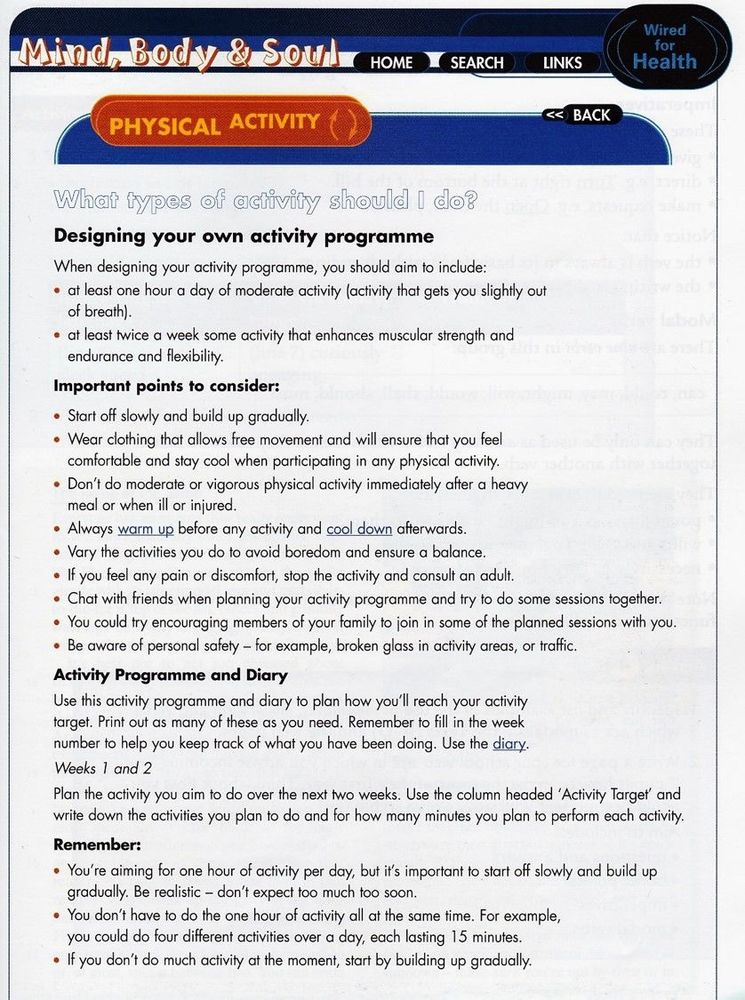
- Amodal
- Bimperative
- Cmodal
- Dimperative
- Emodal
- Fimperative
- Gmodal
- Himperative
- Imodal
- Jimperative
- Kmodal
- Limperative
- Mmodal
- Nimperative
6Which of these conventions can be found in all three writing purposes, argue, persuade, advise? Choose all that apply.
- AVariety of sentence structures
- BEmotive language
- CEmphatic language
- DRhetorical questions
- ESequential connectives
- FImperative and modal verbs
7Annotate this advert which has been written to persuade by choosing the correct convention from each drop-down menu.
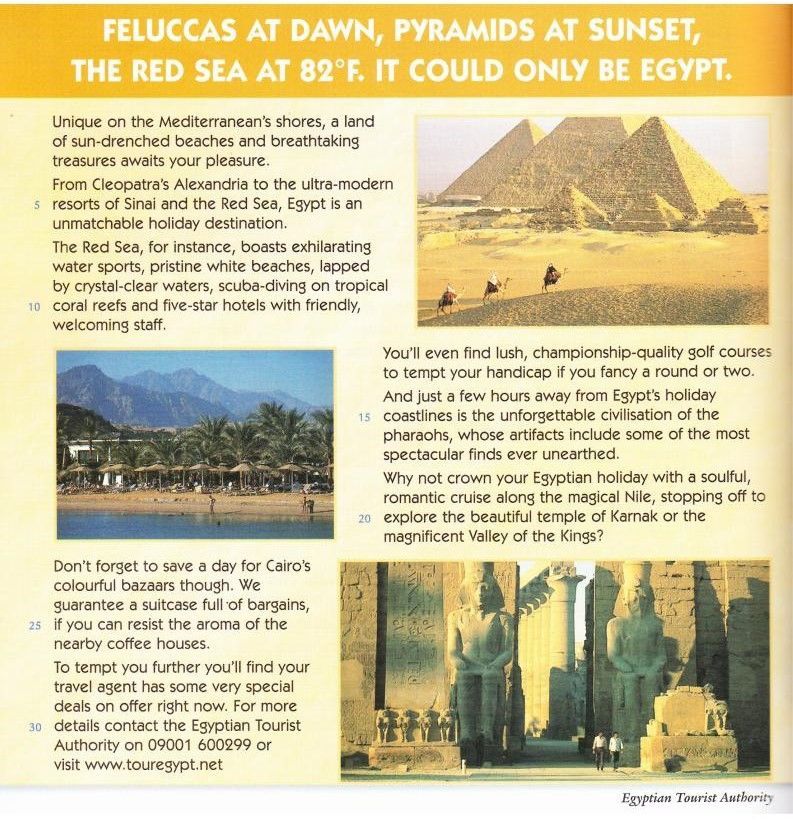
- AEmphatic language
- BFact
- CInteresting adverb
- Dinteresting noun
- EPersonal pronoun
- FThird person
- G2 three-part lists
- H2 short sentences
- IIdentifies with target audience
- JFormal tone distances audience
- KRepetition
- LRhetorical question
- MMore emphatic language
- NMore emotive language
- O3 emotive adjectives
- P3 emotive verbs
- QRhetorical Q
- RDirect question
8When writing to inform or explain it is O.K to use bullet points.

- ARichtig
- BFalsch
9Complete the sentences by dragging and dropping the correct causal connectives in the spaces.
1) Water expands as it freezes, [blank_start]so[blank_end] ice takes more space than water.
2) Sales are down [blank_start]because of[blank_end] high prices.
3) As a [blank_start]result of[blank_end] overnight rain, the pitch is not fit to use and [blank_start]therefore[blank_end] the match has been cancelled.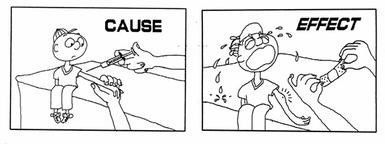
- Aso
- Band
- Cbut
- Dbecause of
- Edespite
- Fbut there are
- Gresult of
- Hresponse to
- Iprecaution against
- Jtherefore
- Know
- Lthus
10In any piece of writing, whatever the purpose, it is important to be able to use punctuation for effect. See if you can remember how to use the 7 most common punctuation marks by choosing from the drop-down menus to complete the explanations.
1) A full stop (.) is used to [blank_start]indicate that you have finished a point[blank_end] and are about to make a new one.
2) Commas (,) can indicate [blank_start]a pause[blank_end], [blank_start]separate clauses[blank_end], allow the use of more than one [blank_start]adjective or adverb[blank_end], [blank_start]separate items on a list[blank_end]
3) Exclamations marks (!) should be used sparingly at the [blank_start]end of sentences[blank_end] to convey [blank_start]emotions such as surprise, anger, fear[blank_end] etc. .
4) Questions marks (?) are used to [blank_start]turn sentences into questions[blank_end] which can be [blank_start]direct or rhetorical[blank_end].
5) A colon (:) is used to make a [blank_start]very definite pause[blank_end] and is most often used [blank_start]just before a list[blank_end].
6) A semi colon (;) is used instead of a [blank_start]full stop[blank_end] so that two sentences which [blank_start]are linked by theme[blank_end] can be joined.
7) The apostrophe (') has [blank_start]two[blank_end] main uses. It can be used to [blank_start]indicate possession[blank_end] or to show [blank_start]when a letter is missing.[blank_end]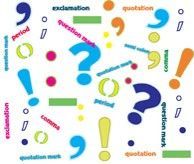
- Aindicate that you have finished a point
- Bindicate you need to take a breath
- Cindicate you are about to start a list
- Da pause
- Etime
- Fa stop
- Gseparate clauses
- Hjoin sentences
- Iend sentences
- Jadjective or adverb
- Knoun or verb
- Lword
- Mseparate items on a list
- Nseparate sentences
- Oseparate paragraphs
- Pend of sentences
- Qbeginning of sentences
- Rend of paragraphs
- Semotions such as surprise, anger, fear
- Temotions such as love, greed, and envy
- Uemotions clearly and concisely
- Vturn sentences into questions
- Wask rhetorical questions
- Xgrab the reader's attention
- Ydirect or rhetorical
- Zlong or short
- AAopen or closed
- ABvery definite pause
- ACslight pause
- ADdefinite stop
- AEjust before a list
- AFat the end of a sentence
- AGto separate clauses
- AHfull stop
- AIa comma
- AJa colon
- AKare linked by theme
- ALare not linked at all
- AMabout opposite ideas
- ANtwo
- AOthree
- APfour
- AQindicate possession
- ARindicate time
- ASindicate place
- ATwhen a letter is missing.
- AUwhen a word is missing
- AVwhen a sentence is missing
Informationen
- Beschreibung
- A resource to help learners understand the conventions of different non-fiction writing purposes. Covers writing to argue, persuade, advise, inform, explain.
- Autor
- Sarah Holmes
- Sprache
- English
- Aufrufe
- 152
- Schlagwörter
- Bewertung
- Noch keine Bewertungen Bewerte dieses Quiz