
The Nursing Process
Folien in diesem Satz (10)
-
- Identify what the Nursing Process is
- Framework
- used for nursing care plan/ pathways for individual patient
- Critical thinking
- used to develop individualised care plan, detailing care and outcomes for each
- patient
- Familiar sequence/ process for sorting out ‘what to do’ •
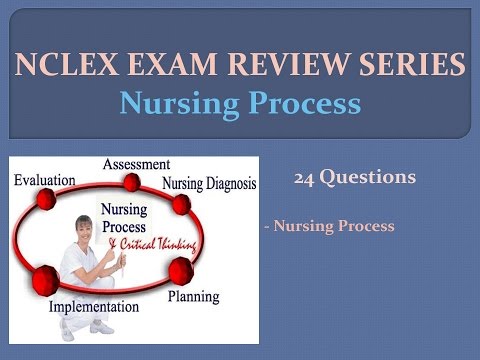
- ADPIE
- mnemonic (Assessment, nursing Diagnosis, Planning, Implementation, Evaluation)
- Nursing Process Overview: ADPIE (Assessment, Diagnosis, Planning, Implementation and Evaluation) (Einbetten)
- Bildunterschrift: Overview of the nursing process!
-
- Identify the individual steps and their components
- that are involved in the nursing process
- Assessment
- Data collection both objective (perceived by the person) (and subjective (perceived by the person)
- Diagnosis
- Nursing diagnosis based on assessment outcomes, Based on NANDA international NOT a medical diagnosis
- Planning
- Identify outcomes, Prioritize nursing diagnosis ,They may change , they should be SMART goals Specific, Measurable, Attainable, Relevant
- Implementation
- Actions to achieve goals EVIDENCE BASED, documented
- Evaluation
- Were the outcomes met, what is the evidence, what tools to use
- NCLEX Practice Quiz Nursing Process (Einbetten)
-
- NCLEX Exam Nursing Process (24 Questions) (Einbetten)
- The nursing process should aim to to be used with critical thinking and EBP. The patient should be consulted on their care and any decision made should take their values, beliefs and opinions into account.
-
- How should we prioritise/ what
- theories can we use to prioritise our actions?
- DRSABCD
- Primary Survey
- Airway - Is the airway patent?
- Breathing- Is breathing sufficient
- Circulation - is circulation sufficient
- Disability what is the level on consciousness
- Exposure - what might explain the patients condition
- Patient Priotization *Part 1* (Beyond the ABCs) (Einbetten)
-
- Evidence Based Practice (EBP) is the process of making clinical
- decisions based upon evidence, combined with clinical experience and
- patient expectations.
- EBP is used in a variety of fields, including medicine, nursing, psychology and allied health.
- The process involves an assessment of evidence using a hierarchy of
- evidence types, with Cochrane systematic reviews commonly considered the
- 'gold standard' for evidence. For example, see the EBP evidence pyramid, or the Joanna Briggs Levels of Evidence.
- To find evidence to base your decision upon, start by phrasing your
- scenario as a specific, answerable question. You can use 'PICO' for
- this.
- [P] Who or what is your patient or population group?
- [I] What is your intervention or indicator?
- [C] What is your comparison or control?
- [O] What outcome are you looking for?
- For example:
- A 47 year old woman comes to see you. She is overweight, concerned about
- her overall health, and would like to lose weight quickly. She has
- heard a report on the radio suggesting that resistant corn or potato
- starch can reduce obesity. You begin to investigate any evidence to
- support this.
- Rephrased as a specific, answerable question, using PICO:
- In [P] overweight, how does [I] resistant starch compared with [C] ordinary starch effect the [O] weight loss?
- Next, translate PICO into a search strategy which you can apply to a database to find evidence.
- treat each component as a separate concept.
- brainstorm for synonyms and alternative spellings and terminology
- for each concept, linking these with OR - this will broaden your search.
- combine your concepts with AND - this will focus your search.
- [P] overweight OR obese
- AND
- [I] resistant starch OR R.S.
- AND
- [C] ordinary starch
- AND
- [O] weight loss
- Choose the most relevant components to combine - you don't need to
- combine all four in a single search. For example, you could conduct a
- search on ([P] AND [I] AND [C]), or on ([I] AND [C]), or ([P] and [I]).
- Choose an appropriate EBP resource to search, select from the databases listed on the left, and conduct your search.
- Introduction to Evidence Based Practice (Einbetten)
-
What does the EBP process involve?
- There are a number of EBP
- processes which have been developed to help clinicians implement EBP in the
- workplace and a number of EBP websites which explain the steps involved.
- The most common procedure
- follows 6 steps:
- 1.
- Formulate a clinical question
- 2.
- Search the literature
- 3.
- Sort, read and critique the literature
- 4.
- Come to a “clinical bottom line”, in other words
- recommendations for day-to-day practice based only on the best available
- literature.
- 5.
- Implement the recommendations, documenting them, any changes you
- choose to make and the outcomes of your intervention. In implementing the
- recommendations you apply the research to your clinical setting and
- client. You need to include your client and the service provider in this
- implementation process. In other words, apply the evidence to the
- situation in consultation with those who it will affect.
- 6.
- Share the results of your EBP with others, ideally through
- writing them up.
- Although traditionally EBP
- training emphasised accessing and appraising the research evidence, recently
- there has been a drive to increase clinician awareness of the three components
- of the EBP process (research evidence, clinical data and informed
- client choice). This has led to the term E3BP being introduced to
- reflect these three essential components (Dollaghan, 2007).
- There are also a range of
- online EBP resources available to make the process easier, including already
- published systematic reviews, critically appraised papers (CAPs) and critically
- appraised topics (CATs).
-
Why should we only use accepted abbreviations? What can happen if we don’t?
- To avoid confusion. May provide
- care not nesessery / put patient in danger