
Karteikarten
Counting and Probability
Karten in diesem Stapel (12)
- 1Fundamental Principle of CountingWhen there are m ways to do one thing,
and n ways to do another,
then there are m×n ways of doing both.
For example, if there are 3 colours and 3 sizes of t-shirt, then there are 9 combinations available. - 2Sample SpaceThe set of all possible outcomes of an experiment. There are three types: list, tree diagram and two-way table
- 3Two-way tableA sample space for showing the combined outcomes of two independent events. For example a throw of a die and picking a card from a pack.
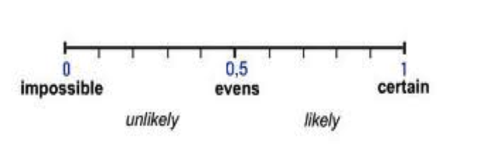
- 4Probability Scale
- 5TrialAny particular performance of a random experiment, e.g. one roll of a die
- 6OutcomeA result of a trial
- 7EventOccurrence of one or more specified outcomes. If we are looking to land an even number on a die, rolling a 6 would be an example of an event
- 8Relative Frequency = Experimental ProbabilityAn estimate of the probability of an event occurring based on outcomes of trials already carried out
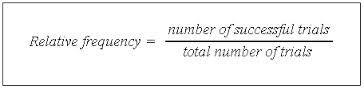
- 9Fair = UnbiasedIf all outcomes are equally likely to occur then the trial or experiment is considered to be fair or unbiased. For example, a fair die should land on heads around 50% of the time
- 10Theoretical Probability = ProbabilityProbability of an event happening found by dividing the number of desirable outcomes by the total number of possible outcomes. E.g. Probability of rolling a 3 on a fair die is 1/6 as there is one favourable outcome and six possible outcomes
- 11Expected FrequencyEstimate of how many times we'd expect an event to happen over a set number of trials
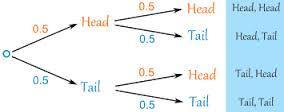
Expected Frequency = (no of trials) x (relative frequency or probability) - 12Tree DiagramUsed to write down all possible combinations for two or more trials. Example below is for flipping a coin two times
Informationen
- Beschreibung
- Karteikarten am Counting and Probability, erstellt von Culan O'Meara am 29/09/2014.
- Erstellt von
- Culan O'Meara
- Aufrufe
- 202
- Tags
- Bewertung