
GoConqr hat ein neues Design! Sag uns, wie es dir gefällt.

Karteikarten

Muscular System

RadTech Fairy Anatomy & Physiology I & II NCLEX Englisch 5,0Durchschnittliche Bewertung 5,0 von 5 (1 Bewertung) 40 Karten

Muscular System

Karten in diesem Stapel (40)

  1. 1—Gross Anatomy of Skeletal Muscle
    1. blood vessel
    2. fascicle
    3. Epimysium
    4. Myofibril
    5. Perimysium
    6. Endomysium
    7. tendon
    8. bone
    Gross Anatomy of Skeletal Muscle 1. blood vessel 2. fascicle 3. Epimysium 4. Myofibril 5. Perimysium 6. Endomysium 7. tendon 8. bone
  2. 2—Sarcomere of a Myofibril
    A. Z-Line
    B. H-zone
    C. I Band
    D. A Band
    E. M Line
    Sarcomere of a Myofibril A. Z-Line B. H-zone C. I Band D. A Band E. M Line
  3. 3—Neuromuscular Junction
    1. nerve
    2. sarcolemma
    3. synaptic vessel containing ACh
    4. acetylcholine (ACh) receptor
    5. mitochondrion
    Neuromuscular Junction 1. nerve 2. sarcolemma 3. synaptic vessel containing ACh 4. acetylcholine (ACh) receptor 5. mitochondrion
  4. 4—Elements of Fibers and Myofibrils
    A. T-tubule
    B. Triad
    C. H-Zone
    D. Z-Line
    E. Sarcomere
    Elements of Fibers and Myofibrils A. T-tubule B. Triad C. H-Zone D. Z-Line E. Sarcomere
  5. 5—Sarcomere
    1. Sarcomere
    2. Myofibril
    3. Actin
    4. Myosin
    5. I Band
    6. Z-disc
    7. A Band
    8. M Line
    Sarcomere 1. Sarcomere 2. Myofibril 3. Actin 4. Myosin 5. I Band 6. Z-disc 7. A Band 8. M Line
  6. 6—MASSETER
    origin: zygomatic arch
    insertion: mandible
    function: chewing
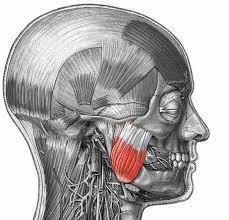
    MASSETER origin: zygomatic arch insertion: mandible function: chewing
  7. 7—ORBICULARIS OCULI
    origin: maxillary and frontal bones
    insertion: eyelid tissue
    function: closing eye, blinking
    ORBICULARIS OCULI origin: maxillary and frontal bones insertion: eyelid tissue function: closing eye, blinking
  8. 8—ORBICULARIS ORIS
    origin: maxilla and mandible
    insertion: with muscles and mouth tissues
    function: closes mouth, purses lips
    ORBICULARIS ORIS origin: maxilla and mandible insertion: with muscles and mouth tissues function: closes mouth, purses lips
  9. 9—STERNOCLEIDOMASTOID
    origin: manubrium, medial portion of clavicle
    insertion: mastoid process
    function: flex head, rotate head
    STERNOCLEIDOMASTOID origin: manubrium, medial portion of clavicle insertion: mastoid process function: flex head, rotate head
  10. 10—TRAPEZIUS
    origin: occipital bone, spines of C7, T1-12
    insertion: acromion process, scapular spine, clavicle
    function: stabilizes scapula, extends head
    TRAPEZIUS origin: occipital bone, spines of C7, T1-12 insertion: acromion process, scapular spine, clavicle function: stabilizes scapula,...
  11. 11—INFRASPINATUS
    origin: posterior surface of scapula
    insertion: greater tubercle of humerus
    function: rotates arm laterally
    INFRASPINATUS origin: posterior surface of scapula insertion: greater tubercle of humerus function: rotates arm laterally
  12. 12—RHOMBOID MAJOR
    origin: spines of upper thoracic vertebrae
    insertion: medial border of scapula
    function: raises and adducts scapula
    RHOMBOID MAJOR origin: spines of upper thoracic vertebrae insertion: medial border of scapula function: raises and adducts scapula
  13. 13—LATISSIMUS DORSI
    origin: iliac crest
    insertion: intertubercular groove of humerus
    function: extends, adducts arm
    LATISSIMUS DORSI origin: iliac crest insertion: intertubercular groove of humerus function: extends, adducts arm
  14. 14—PECTORALIS MAJOR
    origin: clavicle, sternum, 2nd-6th costal cartilages
    insertion: intertubercular groove
    function: flexes, extends arm
    PECTORALIS MAJOR origin: clavicle, sternum, 2nd-6th costal cartilages insertion: intertubercular groove function: flexes, extends arm
  15. 15—PECTORALIS MINOR
    origin: anterior surface 3-5 ribs
    insertion: coracoid process of scapula
    function: forward movement of scapula, or draws ribs superiorly
    PECTORALIS MINOR origin: anterior surface 3-5 ribs insertion: coracoid process of scapula function: forward movement of scapula, or draws...
  16. 16—SERRATUS ANTERIOR
    origin: lateral side of ribs 1-8
    insertion: anterior surface of scapula
    function: rotates scapula, abduction of arm
    SERRATUS ANTERIOR origin: lateral side of ribs 1-8 insertion: anterior surface of scapula function: rotates scapula, abduction of arm
  17. 17—EXTERNAL INTERCOSTALS
    origin: inferior border, rib above
    insertion: superior border, rib below
    function: forced inhalation, lifts rib cage
    EXTERNAL INTERCOSTALS origin: inferior border, rib above insertion: superior border, rib below function: forced inhalation, lifts rib cage
  18. 18—INTERNAL INTERCOSTALS
    origin: superior border below rib
    insertion: inferior border above rib
    function: forced exhalation, squeezes ribs together
    INTERNAL INTERCOSTALS origin: superior border below rib insertion: inferior border above rib function: forced exhalation, squeezes ribs t...
  19. 19—RECTUS ABDOMINIS
    origin: symphysis-pubis, crest of pubis
    insertion: xiphoid process, 5-7 costal cartilages
    function: flexes vertebral column
    RECTUS ABDOMINIS origin: symphysis-pubis, crest of pubis insertion: xiphoid process, 5-7 costal cartilages function: flexes vertebral column
  20. 20—EXTERNAL OBLIQUE
    origin: lower eight ribs
    insertion: iliac crest
    function: lateral rotations, tenses abdomen
    EXTERNAL OBLIQUE origin: lower eight ribs insertion: iliac crest function: lateral rotations, tenses abdomen
  21. 21—INTERNAL OBLIQUE
    origin: iliac crest
    insertion: lower three ribs
    function: lateral rotations, tenses abdomen
    INTERNAL OBLIQUE origin: iliac crest insertion: lower three ribs function: lateral rotations, tenses abdomen
  22. 22—DELTOID
    origin: acromium process, spine of scapula, clavicle
    insertion: deltoid tuberosity
    function: abducts arm
    DELTOID origin: acromium process, spine of scapula, clavicle insertion: deltoid tuberosity function: abducts arm
  23. 23—TRICEPS BRACHII
    origin: scapula, proximal humerus
    insertion: olecranon process of ulna
    function: extends forearm
    TRICEPS BRACHII origin: scapula, proximal humerus insertion: olecranon process of ulna function: extends forearm
  24. 24—BICEPS BRACHII
    origin: scapula, coracoid process above glenoid fossa
    insertion: radial tuberosity
    function: flexes forearm, supinates hand
    BICEPS BRACHII origin: scapula, coracoid process above glenoid fossa insertion: radial tuberosity function: flexes forearm, supinates hand
  25. 25—BRACHIORADIALIS
    origin: lateral supracondyle, humerus
    insertion: styloid process of radius
    function: forearm flexion
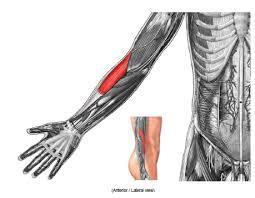
    BRACHIORADIALIS origin: lateral supracondyle, humerus insertion: styloid process of radius function: forearm flexion
  26. 26—FLEXOR CARPI ULNARIS
    origin: olecranon process and medial condyle of humerus
    insertion: base of 5th metacarpal
    function: wrist flexor
    FLEXOR CARPI ULNARIS origin: olecranon process and medial condyle of humerus insertion: base of 5th metacarpal function: wrist flexor
  27. 27—GLUTEUS MAXIMUS
    origin: dorsal ilium, sacrum, coccyx
    insertion: proximal femur
    function: extends thigh
    GLUTEUS MAXIMUS origin: dorsal ilium, sacrum, coccyx insertion: proximal femur function: extends thigh
  28. 28—GLUTEUS MEDIUS
    origin: ilium
    insertion: greater trochanter of the femur
    function: abducts thigh
    GLUTEUS MEDIUS origin: ilium insertion: greater trochanter of the femur function: abducts thigh
  29. 29—BICEPS FEMORIS
    origin: ischial tuberosity, distal femur
    insertion: head of fibula, lateral condyle of tibia
    function: extends thigh, flexes knee
    BICEPS FEMORIS origin: ischial tuberosity, distal femur insertion: head of fibula, lateral condyle of tibia function: extends thigh, flex...
  30. 30—SEMITENDONOSUS
    origin: ischial tuberosity
    insertion: medial proximal tibia
    function: extends thigh, flexes knee
    SEMITENDONOSUS origin: ischial tuberosity insertion: medial proximal tibia function: extends thigh, flexes knee
  31. 31—SEMIMEMBRANOSUS
    origin: ischial tuberosity
    insertion: medial condyle of tibia
    function: extends thigh, flexes knee
    SEMIMEMBRANOSUS origin: ischial tuberosity insertion: medial condyle of tibia function: extends thigh, flexes knee
  32. 32—SARTORIUS
    origin: anterior superior iliac spine
    insertion: medial proximal tibia
    function: rotates thigh laterally, flexes, abducts thigh, and flexes knee
    SARTORIUS origin: anterior superior iliac spine insertion: medial proximal tibia function: rotates thigh laterally, flexes, abducts thigh...
  33. 33—GRACILIS
    origin: body of pubis
    insertion: medial tibia just below the medial condyle
    function: adducts thigh, flexes leg
    GRACILIS origin: body of pubis insertion: medial tibia just below the medial condyle function: adducts thigh, flexes leg
  34. 34—RECTUS FEMORIS
    origin: anterior inferior iliac spine
    insertion: patella
    function: extends knee, flexes thigh
    RECTUS FEMORIS origin: anterior inferior iliac spine insertion: patella function: extends knee, flexes thigh
  35. 35—VASTUS LATERALIS
    origin: greater trochanter
    insertion: patella
    function: extends knee, stabilizes knee
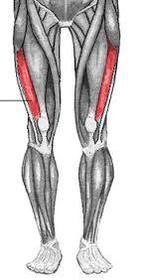
    VASTUS LATERALIS origin: greater trochanter insertion: patella function: extends knee, stabilizes knee
  36. 36—VASTUS MEDIALIS
    origin: greater trochanter
    insertion: patella
    function: extends knee
    VASTUS MEDIALIS origin: greater trochanter insertion: patella function: extends knee
  37. 37—VASTUS INTERMEDIALIS
    origin: proximal femur anterior
    insertion: patella
    function: extends knee
    VASTUS INTERMEDIALIS origin: proximal femur anterior insertion: patella function: extends knee
  38. 38—TIBIALIS ANTERIOR
    origin: lateral condyle fibula
    insertion: medial cuneiform, 1st metatarsal
    function: dorsiflexion of foot
    TIBIALIS ANTERIOR origin: lateral condyle fibula insertion: medial cuneiform, 1st metatarsal function: dorsiflexion of foot
  39. 39—GASTROCNEMIUS
    origin: medial and lateral condyles of femur
    insertion: posterior calcaneus
    function: plantar flexes foot
    GASTROCNEMIUS origin: medial and lateral condyles of femur insertion: posterior calcaneus function: plantar flexes foot
  40. 40—SOLEUS
    origin: superior tibia, fibula
    insertion: posterior calcaneus
    function: plantar flexes foot
    SOLEUS origin: superior tibia, fibula insertion: posterior calcaneus function: plantar flexes foot

Informationen

Beschreibung
NCLEX Anatomy & Physiology I & II Karteikarten am Muscular System, erstellt von RadTech Fairy am 14/04/2015.
Erstellt von
RadTech Fairy
Aufrufe
19
Bewertung
Durchschnittliche Bewertung 5,0 von 5 (1 Bewertung)

Feedback

Worum geht es?

Wie gefällt dir das neue Design?

Dein Eindruck