
4202802
Beschreibung

Karteikarten von Cooper Kane, aktualisiert more than 1 year ago

|
Erstellt von Cooper Kane
vor fast 11 Jahre
|
|
| Frage | Antworten |
| What is the literal translation of the word biology? | Study of life |
| What is a cell? | Smallest unit that can carry on the processes of life |
| What is the difference between an organism classified as unicellular and one classified as multicellular? | Unicellular is a single cell, Multicellular has two or more cells |
| List in order from simplest to most complex, the levels of organization in multicellular organisms | Cells, tissues, organs, organ systems, organisms |
| What is the ultimate source of energy for all living things? | The sun |
| What is an autotroph? | A self-feeding organism |
| What is the literal translation for autotroph? | Self consumer |
| What is a heterotroph? | an organism deriving its nutritional requirements from complex organic substances |
| What is the literal translation for heterotroph? | Different consumer |
| What is the literal translation for photosynthesis? | Light putting together |
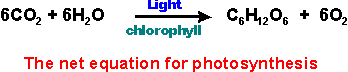
| Write the balanced equation for photosynthesis | |
| What is a response? | A reaction to a stimulus |
| What are the two ways living things grow? | Cell division & Cell enlargement |
| Which characteristic of life is not essential for an individual? | Reproduction |
| What is asexual reproduction? | Process in which an organism produces a new organism identical to itself |
| What is sexual reproduction? | Two cells unite to produce the first cell of a new organism |
| What is an adaptation? | Traits that give an organism an advantage in an environment |
| What is metabolism? | The sum of all the chemical operations (processes) underway in the body |
| What are the two parts of metabolism? | Anabolism & catabolism |
| What is anabolism? | Synthesizing complex substances |
| What is catabolism? | Breaking down complex substances |
| What is absorption? | An organisms need for energy makes it necessary for them to absorb materials from the environment |
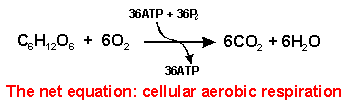
| Write the balanced equation for cellular respiration | |
| What is excretion? | Removing waste |
| What are the six steps to the scientific method (in order)? | 1. Observe/state a problem 2. Form a hypothesis 3. Experiment: materials and procedure 4. Collect and analyze data 5. Draw conclusions 6. Replicate your work |
| Observing | Using one or more of the five senses to perceive objects or events |
| Hypothesizing | Forming testable statements about observable phenomena |
| Predicting | Stating in advance the results that will be obtained from testing a hypothesis |
| Experimenting | Testing a hypothesis or prediction by carrying out data gathering procedures |
| Measuring | Determining the dimensions of an object, number of objects |
| Collecting data | Gathering and recording of specific information based on observations |
| Organizing data | Placing observations and measurements in some kind of logical order |
| Classifying | Grouping objects, organisms, or phenomenon |
| Modeling | Helps show relationships between data |
| Analyzing data | Determining whether data re reliable and whether they support or refute a given prediction or hypothesis |
| Inferring | Drawing conclusions on the basis or premises instead of direct perception |
| Communicating | Allows scientists to build on the work of others |
| What is a hypothesis? | A testable statement |
| Identify the scientific units of measuring for the following: 1. Length 2. Mass 3. Volume 4. Time 5. Temperature | 1. Meter 2. Gram 3. Liter 4. Seconds/hours 5. Celsius |
| what are four (different) ways data can be organized? | 1. Chart 2. Table 3. Graph 4. Model |
| What are the six kingdoms in modern classification? | 1. Plant 2. Animal 3. Fungi 4. Archaebacteria 5. Eubacteria 6. Protists |
| What is a theory? | Most probable explanation for a set of data based on the best available evidence; Explains WHY things happen |
| What is a law? | General statement that describes a wide variety of phenomenon; Explains HOW things happen |
| Eyepiece | Look through to view the specimen |
| Ocular lens | Magnifies |
| Arm | Main upright support for the microscope |
| Base | Main support for microscope |
| Stage | Holds the specimen |
| Iris diaphragm | Regulates the amount of light that passes through the stage |
| Stage clips | Holds the specimen in place |
| Light source | Focuses light through the specimen to the lens |
| Objective lenses | Magnifies the specimen 1. Scanning-4x 2. Low power-10x 3. High power-40x 4. Oil immersion |
| Revolving nosepiece | Holds two or more objective lenses and can be turned easily |
| Coarse adjustment knob | Brings the specimen closer or father away from the lens |
| Fine adjustment knob | Fine tunes the focus of the lens |
| How is total magnification determined? | Objective lens x Ocular lens |
| What are the three rules for properly carrying a microscope? | 1. Hold it against your body 2. Use one hand to hold the base 3. Use the other hand to hold the arm |
| The iris diaphragm functions like what eye structure? | Pupil |
| What is magnification? | The enlargement of an object |
| What is resolution? | A microscopes power to show detail clearly |
| What is diffraction? | Bending of light waves |
| What is the relationship between magnification and field of view? | As magnification increases, FOV decreases |
| What is centrifugation? | Separating cells by spinning fractionated cells at high speeds |
| What is electrophoresis? | Separating DNA on the basis of their electrical charge and size |
| What is cell culturing? | Growing a population of identical cells in the laboratory |
| What is chromatography? | Separating chemical components of a substance by passing them through a piece of paper or a column of beads |
| What is a characteristic of organic molecules? | Contains carbon (carbon backbone), derived from living things |
| What is characteristics of inorganic molecules? | No carbon, derived from non-living things |
| What is the general equation for a condensation reaction? | monomer + monomer = polymer + H2O |
| What is the general equation for a hydrolysis reaction? | polymer + H2O = monomer + monomer |
| What is a polymer? | Many units formed by monomers |
| What is a monomer? | One unit, makes up compounds |
| What are the monomers of lipids? | Fatty acids |
| What are the monomers of proteins? | Amino acids |
| What are the monomers of carbohydrates? | Monosaccharides |
| What are the monomers of nucleic acids? | Nucleotides |
| What are the polymers of lipids? | Triglycerides |
| What are the polymers of proteins? | Peptides |
| What are the polymers of carbohydrates? | Polysaccharides, glycogen, starch |
| What are the polymers of nucleic acids? | DNA/RNA |
| What characteristic is used to identify a substance as being polar? | Uneven charge |
| What are isomers? | Compounds with the same structure, but not molecular composition |
| What are the two parts of a solution? | Solute & solvent |
| What is Robert Hooke's "claim to fame"? | Came up with the word cell |
| What is a prokaryotic cell? | A cell without a nucleus |
| What is a eukaryotic cell? | A cell with a nucleus |
| What three scientists made major contributions to the cell theory? | 1. Schleiden 2. Schwann 3. Virchow |
| What are the three parts to the cell theory? | 1. All living things are made of cells 2. Cells come only from other cells 3. Cells are organisms' basic structure and function |
| Nucleus | Nucleic acid synthesis; directs the cells functions |
| Cell membrane | Lets certain things in or out of the cell |
| Ribosomes | Protein synthesis |
| Endoplasmic reticulum | Transports molecules from one part of the cell to another |
| Golgi apparatus | Processes, packages, and secretes |
| Mitochondria | Cellular respiration; powerhouse of the cell |
| Lysosomes | Early development |
| Microtubules/microfilaments | Shape and support for cells; forms cytoskeleton |
| Cilia/flagella | Movement |
| Cell wall | Protects cell |
| Vacuole | Stores enzymes and waste products |
| Plastids | Convert solar energy to chemical energy |
| What does permeable mean? | Lets in any material |
| What does semi-permeable | Allows some materials in but not others |
| Bio | Life |
| Ology | Study of |
| Hetero | Different |
| Homo | Same |
| Photo | Light |
| Syn | Put together |
| Troph | Consumer |
| A/an | Without |
| Cyte | Cell |
| Uni | One |
| Multi | Many |
| Auto | Self |
| Poly | Many |
| Uni | One |
| Bi | One |
| Lysis | Break apart |
| Fission | Split |
| Micro | Small |
| Hypo | Under/low |
| Hyper | High |
| Iso | Equal |
| Hydro | Water |
| Phobic | Not attracted to; fearing |
| Philic | Attracted to; loving |
| Endo | Inside; within |
| Exo | Outside |
Möchten Sie mit GoConqr kostenlos Ihre eigenen Karteikarten erstellen? Mehr erfahren.