
5010018
Beschreibung

Karteikarten von Macey Peterson, aktualisiert more than 1 year ago

|
Erstellt von Macey Peterson
vor mehr als 10 Jahre
|
|
| Frage | Antworten |
| What two phyla are contained within the grouping of deuterostomes? | Phylum Echinodermata Phylum Chordata |
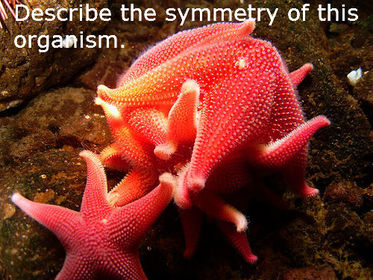
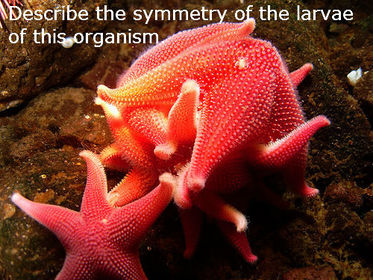
| Pentaradial symmetry | |
| Bilateral symmetry | |
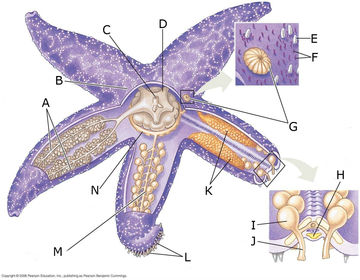
| A: Digestive Glands B: Central Disk C: Anus D: Stomach E: Spine F: Gills G: Sieve Plate H: Radial Nerve I: Ampulla J: Podium L: Tube Feet M: Radial Canal N: Ring Canal | |
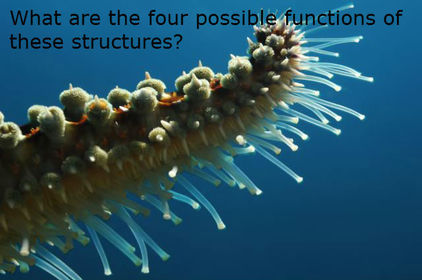
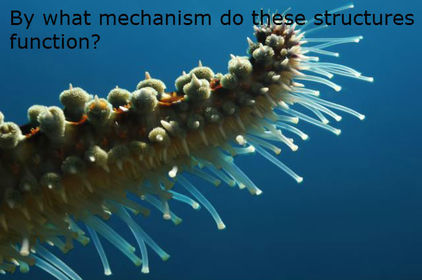
| Locomotion Feeding Gas exchange Sensory perception | |
| Hydraulic Pressure | |
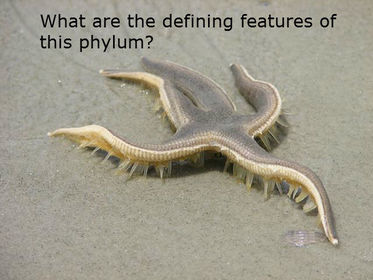
| 1. Adults have pentaradial symmetry 2. Water vascular system with tube feet 3. Endoskeleton of calcareous ossicles | |
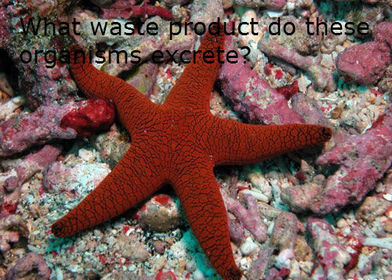
| Ammonia | |
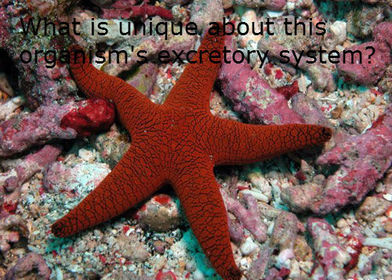
| It does not have one (Ammonia diffuses across the body surfaces and tube feet) | |
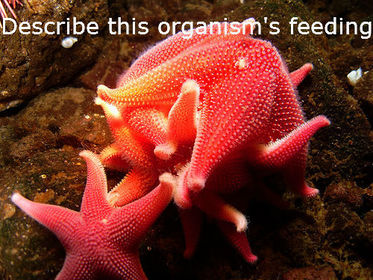
| Predatory carnivore; everts stomach to digest prey | |
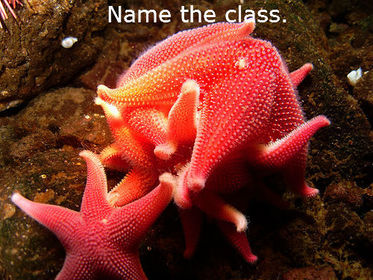
| Class Asteroidea | |
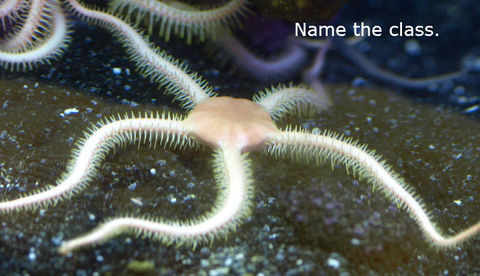
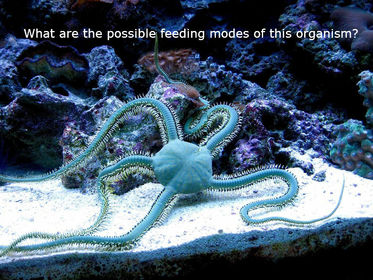
| Class Ophiuroidea | |
| Suspension feeding, Scavenging, Predation | |
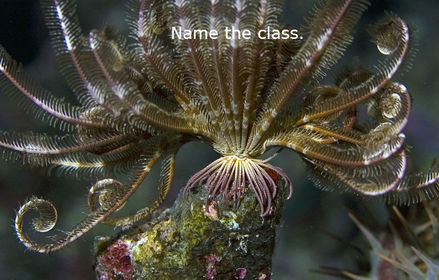
| Class Crinoidea | |
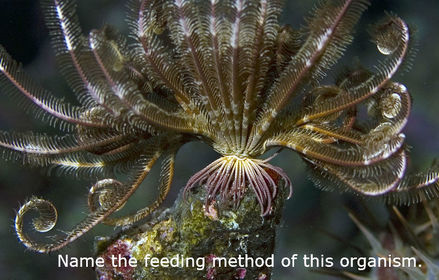
| Suspension feeding | |
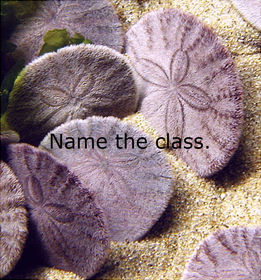
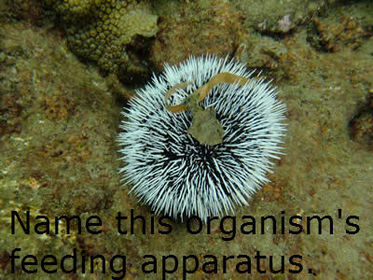
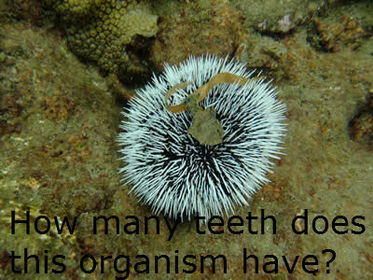
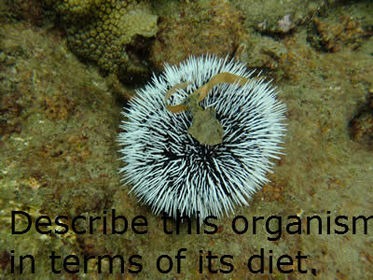
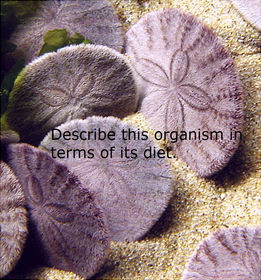
| Class Echinoidea | |
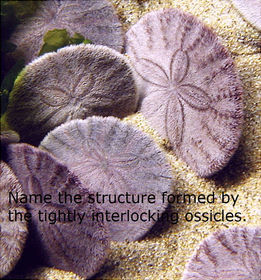
| Test | |
| Aristotle's Lantern | |
| Five | |
| Herbivore | |
| Deposit feeder | |
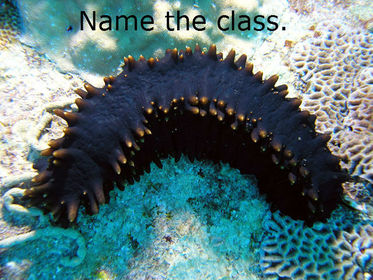
| Class Holothuroidea | |
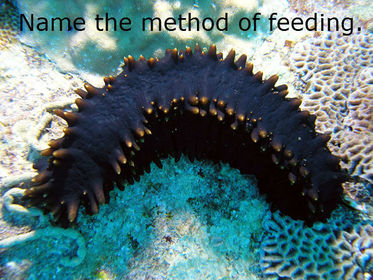
| Suspension or deposit feeding | |
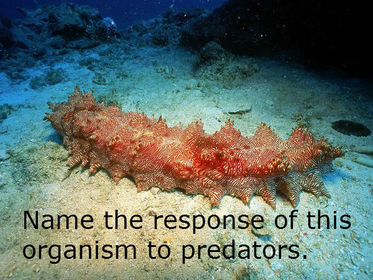
| Self-evisceration | |
| Name the four defining features of chordates. | Notochord Dorsal, hollow, nerve cord Pharyngeal gill slits Post-anal tail |
| From which embryonic germ layer does the notochord develop from? | Mesoderm |
| In organisms in which the notochord persists into adulthood, what are its functions? | Support and locomotion |
| From which embryonic germ layer does the dorsal, hollow nerve cord develop? | Ectoderm |
| What organ does the anterior portion of the neural tube develop into? | Brain |
| What organ does the posterior portion of the neural tube develop into? | Spinal cord |
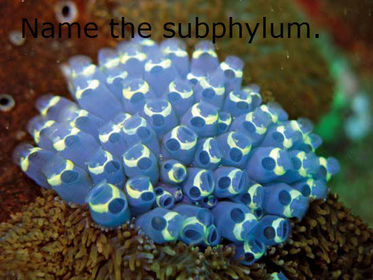
| Subphylum Urochordata | |
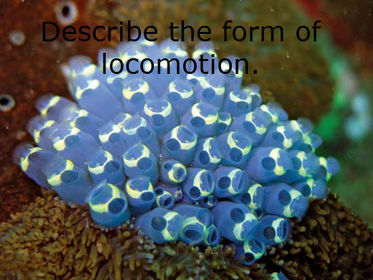
| None; most are sessile | |
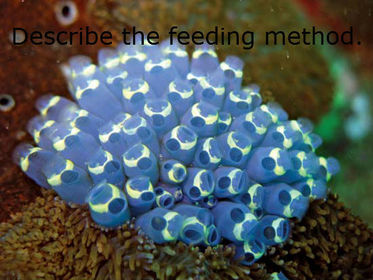
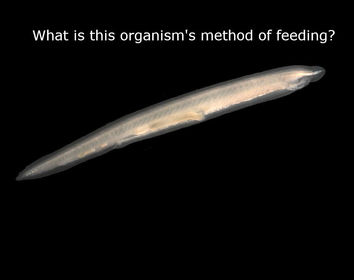
| Suspension feeding | |
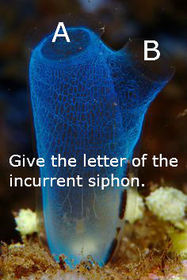
| A | |
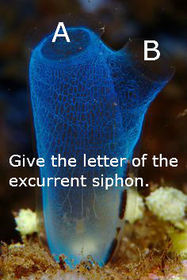
| B | |
| Suspension feeding | |
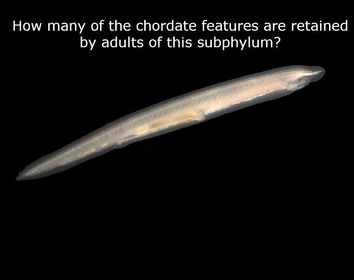
| All of them | |
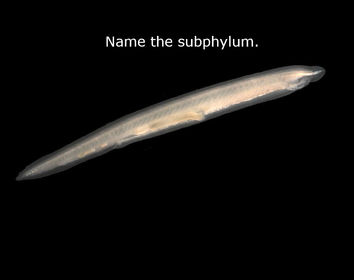
| Subphylum Cephalochordata | |
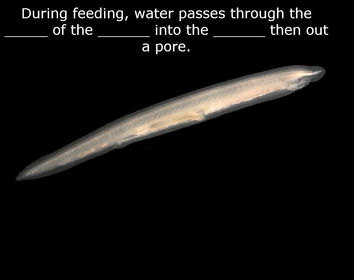
| During feeding, water passes through the SLITS of the PHARYNX and into the ATRIUM and then out a pore. | |
| What are the 6 defining features of members of subphylum Vertebrata? | - extreme cephalization -cranium -neural crest cells -gill arches -vertebrae (in most) -kidneys, liver, pancreas |
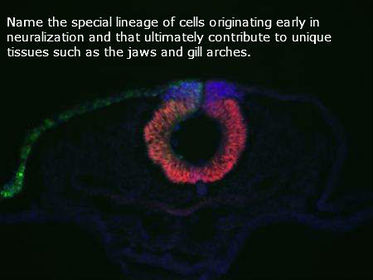
| Neural crest cells | |
| Name the skeletal support rods that form on both sides of the pharyngeal gill clefts. | Gill arches |
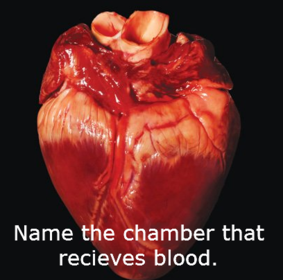
| Atrium | |
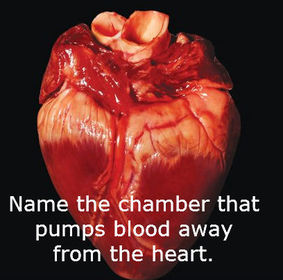
| Ventricle | |
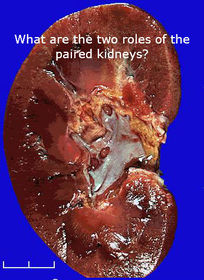
| Excretion Osmoregulation | |
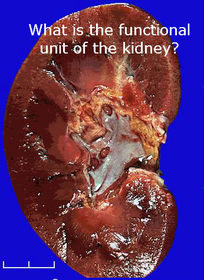
| Nephron | |
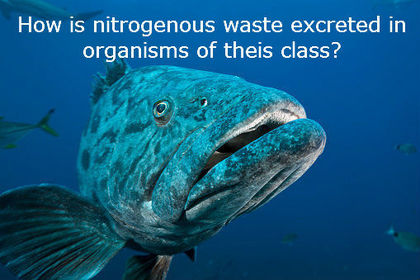
| Ammonia | |
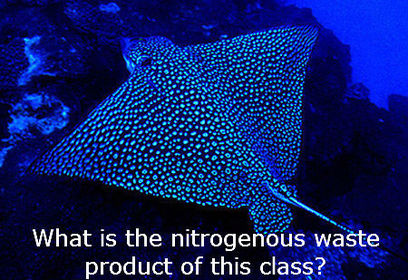
| Urea | |
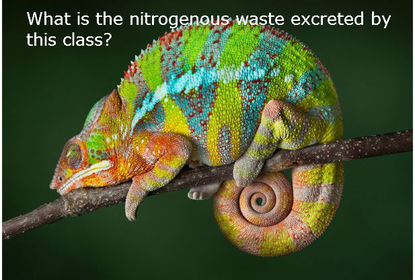
| Uric Acid | |
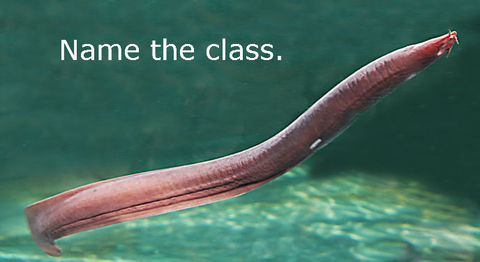
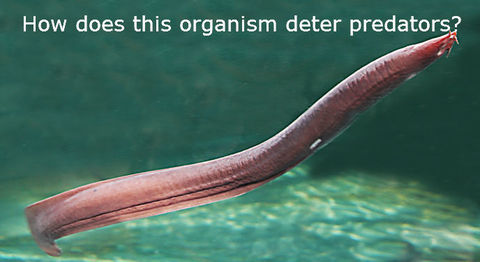
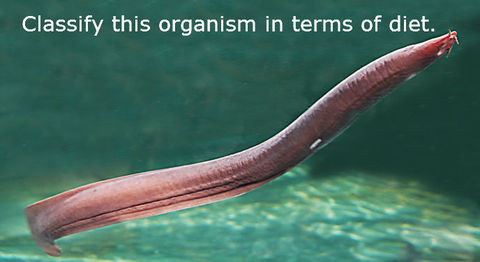
| Class Myxinoidea | |
| Slime secreted from slime glands | |
| Scavengers, use keratinized tooth-like structures for feeding | |
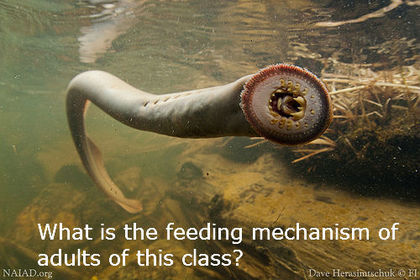
| External parasites; latch onto host w/ oral sucker and puncture skin with rasping tongue | |
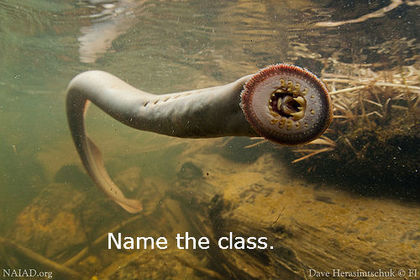
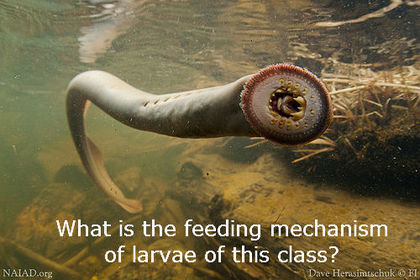
| Class Petromyzontoidea | |
| Suspension feeding | |
| Of what does the axial skeleton consist? | Vertebral column and cranium |
| Of what does the appendicular skeleton consist? | Pelvic and pectoral girdles and associated paired appendages |
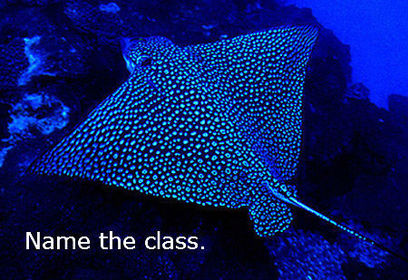
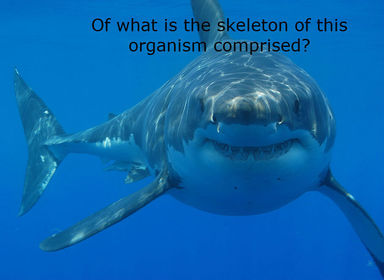
| Class Chondricthyes | |
| Cartilage | |
| Lateral line system | |
| Two-chambered heart, single circulation | |
| What is the term for organisms that bear live young that develop within a uterus and are fed via a placenta? | Viviparous |
| What is the term for organisms that produce yolky eggs that develop within the reproductive tract of the mother until they hatch? | Ovoviviparous |
| What is the term for organisms that lay eggs that develop and hatch outside the body? | Oviparous |
Möchten Sie mit GoConqr kostenlos Ihre eigenen Karteikarten erstellen? Mehr erfahren.