
4318270
Description

Flashcards by Ella-mentary, updated more than 1 year ago

|
Created by Ella-mentary
almost 11 years ago
|
|
| Question | Answer |
| Metabolism | All of the enzyme-catalysed chemical reactions in a cell. |
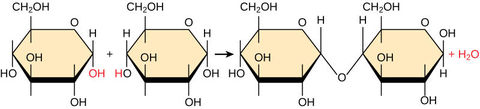
| Anabolism | The formation of larger molecules from smaller ones (e.g. monomers forming macromolecules from condensation reaction). |
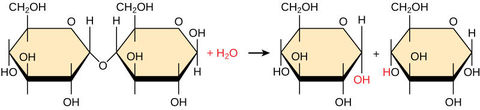
| Catabolism | The breakdown of complex molecules into simpler ones by hydrolysis. |
| Macromolecule | A very large organic molecule composed of monomers. |
| Hydrolysis reaction | A chemical reaction that breaks apart a larger molecule by adding a molecule of water. |
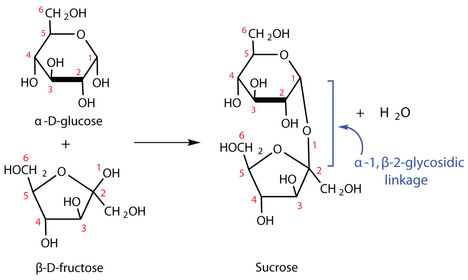
| Condensation reaction | A chemical reaction in which two molecules become covalently bonded to each other through the loss of a water molecule. |
| Urea | The toxic nitrogenous end product of protein breakdown (catabolism), excreted in urine. |
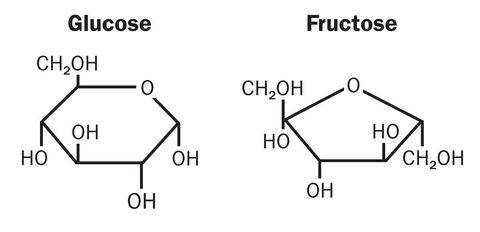
| Monosaccharide | A single sugar molecule such as glucose or fructose; the simplest type of sugar. |
| Disaccharide | A sugar made from two monosaccarides linked together (e.g. sucrose from glucose + fructose). |
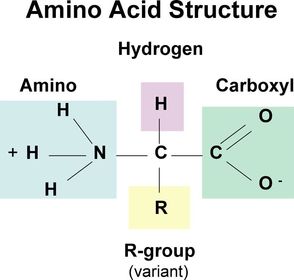
| Amino acid | Molecules which make up proteins; made of: a carbon atom, a carboxyl group, an amine group, a hydrogen atom, and an R-group. |
| R-group | The variable radical of amino acids, which is shown as 'R' in diagram. |
| Lipids | Fats made of carbon, hydrogen, and oxygen (e.g. oils, waxes, phospholipids, triglycerides, and steroids). |
| Polypeptide | A polymer of many amino acids linked together by peptide bonds. |
Want to create your own Flashcards for free with GoConqr? Learn more.