
2029764
Description

Mind Map by Shivam Patel, updated more than 1 year ago

|
Created by Shivam Patel
almost 11 years ago
|
|
Cell Activity
- Specialisation
- Fat Cells
- large surface area, storage cells, if you have more food than you need, fat
fills fat cells. They have: v. few mitochondria as they use v. little energy and
can expand (1000 times) its original size as it fills with fat.
- large surface area, storage cells, if you have more food than you need, fat
fills fat cells. They have: v. few mitochondria as they use v. little energy and
can expand (1000 times) its original size as it fills with fat.
- Root Hair Cell
- Plants absorb water from the soil by osmosis. Root hair cells are
adapted for this by having a large surface area to speed up osmosis.
- Plants absorb water from the soil by osmosis. Root hair cells are
adapted for this by having a large surface area to speed up osmosis.
- Specific Jobs controlled
by different genes
- Sperm
- long tail to help it swim, hard head so it can penetrate
the egg, head is filled with DNA as this is vital to its job
- long tail to help it swim, hard head so it can penetrate
the egg, head is filled with DNA as this is vital to its job
- Cone
- the light sensitive layer of your eye (retina) makes
you able to see in colour. They have: visual pigment
in outer layer which changes chemically in coloured
light. Middle segment, produces lots of energy that
means the visual pigment can reform and a
specialised nerve ending/synapse which connects to
optic nerve which carries impulses to your brain.
- the light sensitive layer of your eye (retina) makes
you able to see in colour. They have: visual pigment
in outer layer which changes chemically in coloured
light. Middle segment, produces lots of energy that
means the visual pigment can reform and a
specialised nerve ending/synapse which connects to
optic nerve which carries impulses to your brain.
- Fat Cells
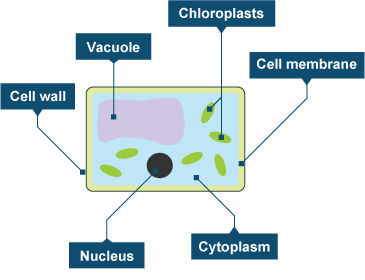
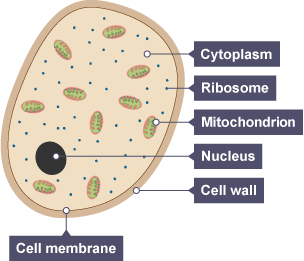
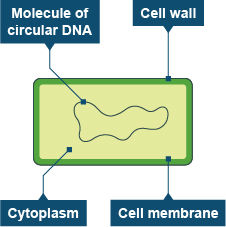
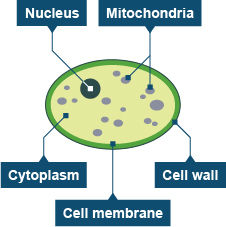
- Structure
- Plant
- Animal
- Bacteria
- Yeast
- Plant
- Movement Across a Membrane
- Diffusion
- Diffusion allows substances to pass in and out of the cell,
things such as oxygen and carbon dioxide.
- Diffusion allows substances to pass in and out of the cell,
things such as oxygen and carbon dioxide.
- Factors affecting Diffusion/Osmosis
- surface area to volume ratio,
tempreture, size of molecule
- surface area to volume ratio,
tempreture, size of molecule
- Osmosis
- a process by which molecules of a solvent tend to pass
through a semipermeable membrane from a less
concentrated solution into a more concentrated one.
- a process by which molecules of a solvent tend to pass
through a semipermeable membrane from a less
concentrated solution into a more concentrated one.
- Active Transport
- the movement of ions or molecules across a cell membrane into a region
of higher concentration, assisted by enzymes and requiring energy.
- the movement of ions or molecules across a cell membrane into a region
of higher concentration, assisted by enzymes and requiring energy.
- Diffusion
- Function of Organelles
- Mitochondria
- The main function of mitochondria in aerobic cells
is the production of energy by synthesis of ATP
- The main function of mitochondria in aerobic cells
is the production of energy by synthesis of ATP
- Ribosomes
- Produces Proteins
- Produces Proteins
- Chloroplasts
- Chloroplasts are the sites of photosynthesis within plant cells.
- Chloroplasts are the sites of photosynthesis within plant cells.
- Cell Membrane
- What comes in and out of the cell
- What comes in and out of the cell
- Cytoplasm
- Where all the the cells chemical reactions occur.
- Where all the the cells chemical reactions occur.
- Nucleus
- "Control Center" of the cell. "Contains the
cell's DNA (genetic information) in the form
of genes.
- "Control Center" of the cell. "Contains the
cell's DNA (genetic information) in the form
of genes.
- Mitochondria
Media attachments
Want to create your own Mind Maps for free with GoConqr? Learn more.