
7911691
Description

Mind Map by Josh Anderson, updated more than 1 year ago

|
Created by Josh Anderson
almost 9 years ago
|
|
OCR - A-Level -
Chemistry - Collision
Theory and Rates of
Reaction
- Rate = Change in concentration/time
- mol/dm^3/s
- mol/dm^3/s
- Initial rate - concentration of
reactants are highest at the
start of a reaction when the
rate is at its fastest
- Rate slows as reactant
concentration decreases
(as it gets used up)
- When any reactant has
a concentration of
zero, the reaction stops
- When any reactant has
a concentration of
zero, the reaction stops
- Rate slows as reactant
concentration decreases
(as it gets used up)
- Factors affecting
the rate of a
chemical reaction
- Temperature
- Temp increases,
rate increases
- Temp increases,
rate increases
- Pressure
(gas)
- Pressure increases,
rate increases
- Pressure increases,
rate increases
- Concentration
- Conc increases,
rate increases
- Conc increases,
rate increases
- Surface area
- SA increases,
rate increases
- SA increases,
rate increases
- Catalysts
- Rate increases
in presence
- Rate increases
in presence
- Must be sufficient
energy to overcome
activation energy
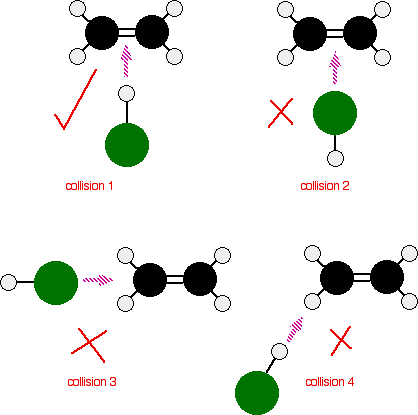
- Correct orientation of
reactants for collisions
- Temperature
Media attachments
Want to create your own Mind Maps for free with GoConqr? Learn more.