


Page 1
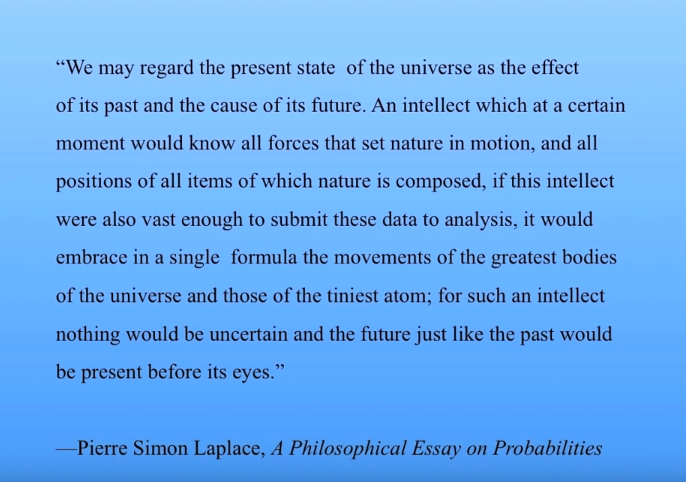
Iteration of simple behaviors give rise to complex patterns Model of population growth -> Gives rise to unexpected behavior Aristotle - Laws of physics are different for the earth and the heavens Copernicus - Sun stationary and planets orbit around it. Galileo Newton - the Modern science of dynamics (Gravity is a universal force = laws are equal for earth and heavens.) Leibnitz - calculus LaPlace- Newtonian determinism Poincare - Why perfect prediction "as LaPlace mentioned" might not be possible? - Notion of Chaos -
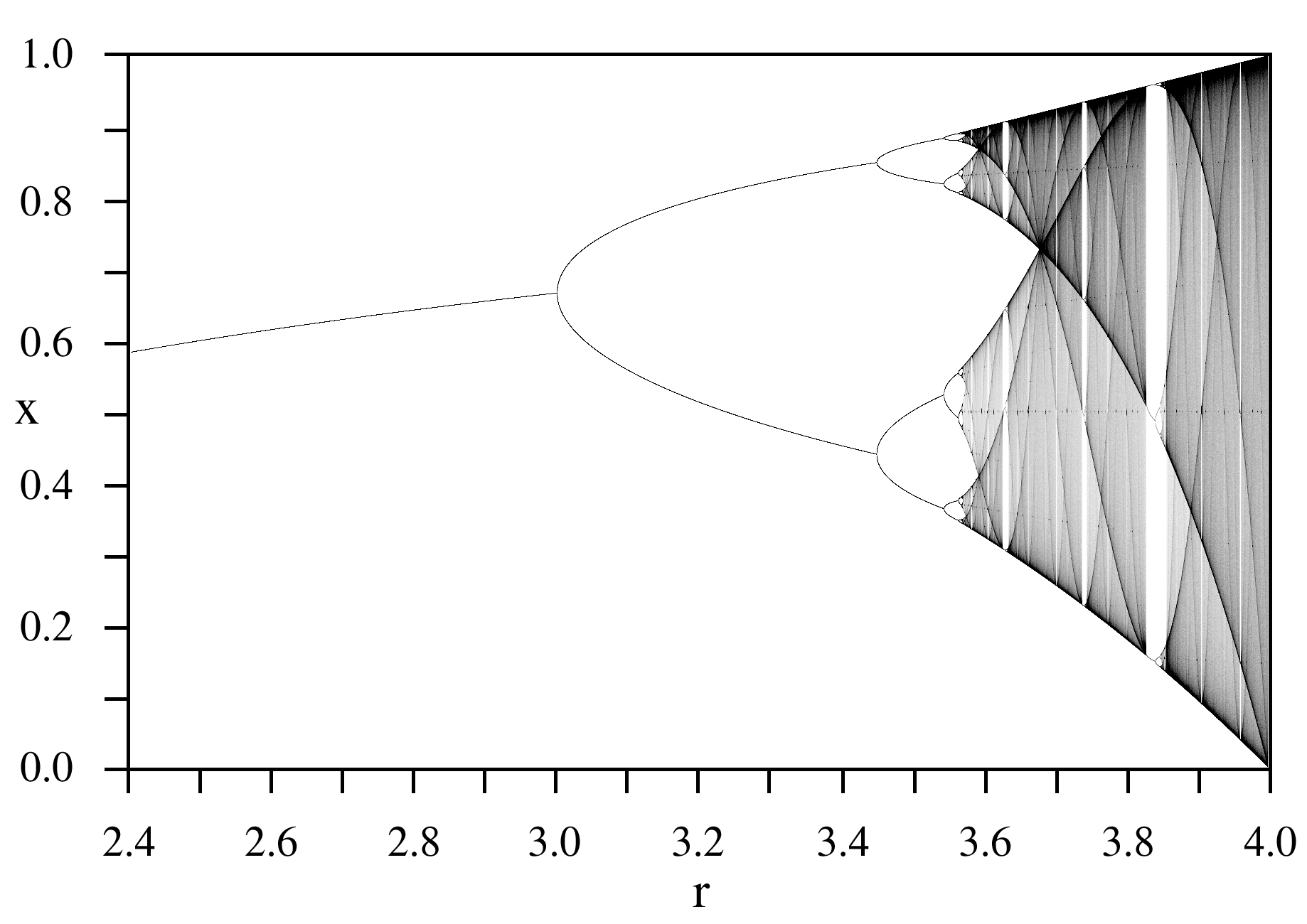
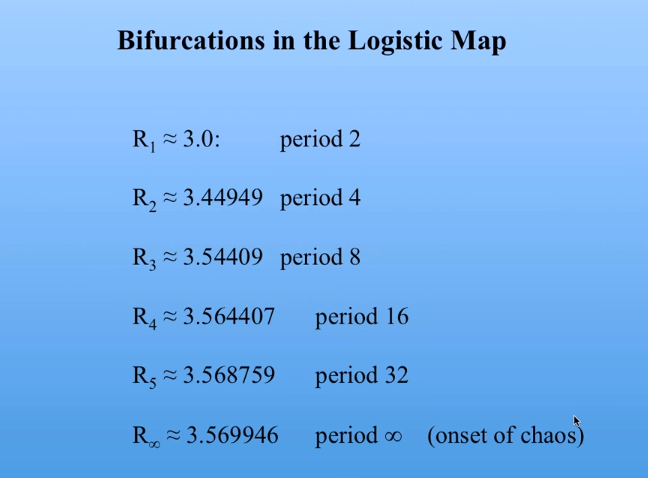
Iteration - Doing something again and again. Eg. Population growth Linear vs non-linear systems A linear system = sum of the parts A non-linear system != sum of the parts Logistic model: n_t+1 = (birthrate – death-rate) * [n_t - (n_t ^2 / k)] Logistic map: x_t+1 = R (x_t – x_t ^2) Fixed-point attractor, Period 2 attractor (oscillates between two values), period 4 attractor. The doubling of period 2 attractor to period 4 attractor Period doubling rate to chaos Growth rate = 4 (Very hard to predict the future of the system) Robert May - Long-term prediction is impossible. Logistic function = One hump map Feigenbaums constant Sine map:
Unit 3: Fractals Look into: https://www.complexityexplorer.org/courses/89-introduction-to-complexity/segments/7707 Fractals: Objects with self-similarity at different scales. Benoit Mandelbrot
Want to create your own Notes for free with GoConqr? Learn more.