
Apuntes
C4
Contenido del apunte (1)
Página 1
History of Atoms
John.D discovered atom
J.J Thomson all atoms for same element are the same
Ernest Rutherford discovered nucleus
Model of atom changed over time to explain it
Structure of Atom
Nucleus surrounded by neg charged electrons
Nucleus made of pos charged protons and neutrons (no charge)
Atom has no overall charge
Relative mass of electron is 0 others are 1
Elements and Compounds
Elements are 1 type of atom
Over 100
Compound are 2 or more elements chemically combined
Mass and Atomic Number
Mass number top
Total number of pro and neu
Atomic number bottom
Total number of protons
mass take atomic= number of neutrons
Protons=atomic number
Electrons=protons
Period number- how many shells used
Group number- how many electrons in outer shell
Elements arranged by increasing atomic number
Isotopes
Atoms of same element, same atomic number, different mass number so different number of neutrons
Carbon has 3 isotopes (12,13, 14)
Electron configuration
how electrons are arranged
2,8,8
atomic number=number of electrons
Ions
Charged atoms
If atom loses electrons, positive ion
If atom gains electrons, negative ion
Ionic Bonding
Metal atom loses outer shell, becomes positive
Non-metal gains electrons to fill outer shell, becomes negative (forms stable octet)
They are attracted
E.G.sodium chloride and magnesium oxide- high melting points, only conduct in solution and when molten, can dissolve in water
Structure and Physical properties
Sodium chloride and magnesium oxide form Giant ionic lattices- pos and neg ions strongly attracted
Ions in solution are free to move so can conduct
Magnesium oxide has higher melting point
Making Ionic Compounds
If an atom has 1 electron on outer shell and the other needs 1 electron.It transfers making atoms ions.(The atoms become charged.
If an atom has 1 electron on outer shell, but other atom needs 2 another of the first atom is needed.
If an atom has 2 electrons on outer shell and the other only needs one, another atom of the second is needed.
Groups
Groups
Vertical group on periodic table
Have same number electrons on outer shell as group number
Group 0 has full outer shell
Similar chemical properties
Periods
Horizontal row of periodic table
Same number as elements used shells
Electronic Structure
Can find elements position on periodic table using group and row
Bonding
Covalent-all non metals
Ionic- metals and non metals
Metallic- all metals
Covalent Bonding
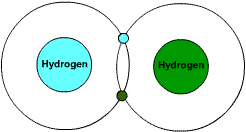
Non metals share pairs of electrons
E.g. Water- H2O liquid at room temp, doesn't conduct, low melting point
Carbon dioxide- CO2, dosen't conduct, gas at room temp and low melting point
Weak intermolecular forces so low melting point, no free electrons
Representing Molecules
H2- share electrons
H-H
Development of the Periodic Table
Dobereiner- law of triads, elements with similar properties, did not work
John Newlands- first "periodic table" included compounds as he thought they were elements, Law of Octaves
Mendeleev- modern periodic table, left gaps in, but made predictions and was later found to be correct
Alkali Metals
Group 1 elements
Alkali metals stored under oil as reactive with air and water
Reactions with water
Alkalis react with water produce a hydroxide and hydrogen. Produce alkaline solution.This is why they are called alkali metals
Lithium reacts gently
Sodium more vigorously
Potassium produces lilac flame
Flame Tests
Sodium yellow
Potassium lilac
Lithium Red
Nichrome wire dipped in water, then in solid compound, then in flame
Properties of Alkali Metals
Rubidium reacts with water-fast, violent and exothermic
Density increases as go down group 1
Caesium- greatest density, lowest melting and boiling point
Trends in group 1
Have similar properties
Lose one electron from outer shell as react
Positive ion made
Get more reactive down the group as outer shell gets further away from pos nucleus. Makes losing electron easier.
Oxidation-electron lost
Group 7-halogens
Non metals
At room temp: chlorine green gas, bromine orange liquid, iodine grey solid
Iodine used to sterilise wounds
Chlorine sterile water, make plastic and pesticides
React vigorously with alkali metals, make halides
Replacement Reactions
Reactivity of group 7 decreases as you go down
More reactive reactive halogen will displace less reactive halogen
Chlorine displace bromides and iodide
Bromine displace iodides
New Page
Información
- Descripción
- Apunte sobre C4, creado por Katy Prior el 06/10/2013.
- Creado por
- Katy Prior
- Visitas
- 48
- Valoración