
Apuntes
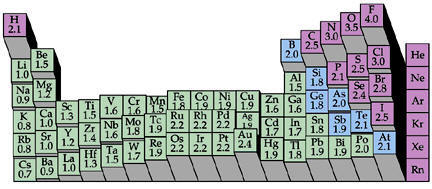
Trends in the periodic table- Electronegativity
Contenido del apunte (1)
Página 1
Electronegativity is defined as the relative attraction of an atom for shared pairs of electrons in a covalent bond. An atom's electronegativity is affected by both its atomic number and the distance that its valence electrons reside from the charged nucleus. The higher the associated electronegativity number, the more an element or compound attracts electrons towards it.
Electronegativity in terms of the periodic table decreases going down a group. This is due to an increase in the atomic radius as the outermost electron is becoming further away from the attractive force of the nucleus. There is a smaller attraction between nucleus and the shared pair of electrons
As well as this, the screening effect cancels out the assumed effect of the increase in nuclear charge meaning that attraction of the nucleus for the outer electrons decreases.
Electronegativity increases across a period due to an increase in nuclear charge and a decrease in atomic radius as the attraction of the nucleus increases towards the electrons as they are pulled closer to it
Some general guidelines are: Metals are generally low in terms of electronegativity and non-metals have high values in comparison. Fluorine is more elcertonegative than oxygen, nitrogen and chlorine
New Page
Información
- Descripción
- An explanation of electronegativity in terms of the periodic table
- Creado por
- mia.rigby
- Visitas
- 930
- Etiquetas
- Historial
-
- Creado por eoin.examtime · 22 ene 2014
- Copiado por mia.rigby · 22 ene 2014
- Valoración