
Fichas
Glomerulonephritis
Fichas del conjunto (26)
- 1Targets for injury in the nephron- Mesangial cells (secrete matrix)
- Basement membrane (collagen IV)
- Epithelial cells (podocytes)
- Capillary endothelial cells
- Vasculature.
- Tubular structures.
- Integrity of glomerulus and tubules - 2extrinsic and intrinsic mechanisms of glomerulonephritisEXTRINSIC
Antibodies.
Immune complexes.
Complement.
Cytokines.
Lymphocytes
Other infiltrating cells.
INTRINSIC
Cytokines.
Growth factors.
e.g. TGF-beta, PDGF, IFN-gamma.
e.g. Vasoactive factors.
Proteinuria. - 3Kidney biopsy - why - how examinedRequired for clinical diagnosis of glomerulonephritis
Biopsy of kidney cortex examined under
- Light microscopy (glomerular and tubular structure)
- Immunofluorescence (looking for Ig and complement)
- Electron microscopy (glomerular basement membrane and deposits)
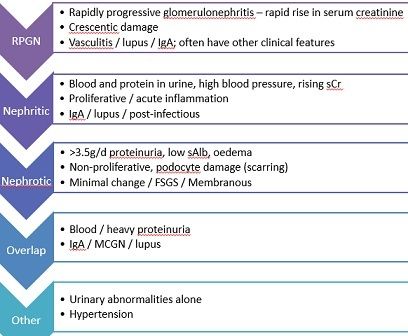
Many diseases are a clinical and pathological spectrum - 4Subtypes of glomerulonephritis (5)
- 5Nephrotic syndrome - 4 features - types - risks- 3.5g proteinuria per 24h (urine PCR >300)
- Serum albumin <30
- Oedema
- Hyperlipidaemia
Non-proliferative, podocyte damage (scarring)
Minimal change / FSGS / Membranous
Risk of venous thromboembolism
Increased risk of infection - 6Nephritic - features - causesBlood and protein in urine, high blood pressure, rising sCr
Proliferative / acute inflammation
IgA / lupus / post-infectious - 7RPGN - features - causesRapidly progressive glomerulonephritis – rapid rise in serum creatinine
Crescentic damage
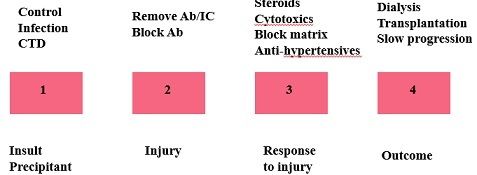
Vasculitis / lupus / IgA; often have other clinical features - 8Glomerulonephritis model and possible therapeutic strategies
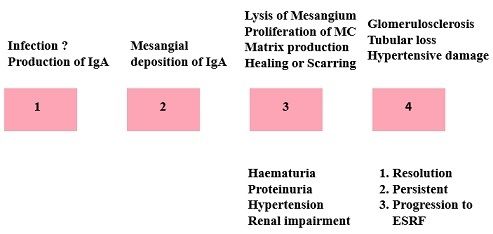
- 9pathophysiology of IgA nephropathy
- 10IgA nephropathy - epidemiology - secondary to?The most common primary glomerular disease.
Up to 1% of the “normal” population.
Precipitated by infection? Synpharyngitic
May be 2° to HSP, cirrhosis, coeliac disease. - 11IgA nephropathy - pathology - clinical featuresAbnormal/ over-production of IgA1, IgA I/C.
Mesangial IgA, C3 deposition.
Mesangial proliferation.
Tubular atrophy/interstitial fibrosis
Haematuria.
Hypertension.
Proteinuria (varies with prognosis) - 12IgA nephropathy - progression - predictors of progression - therapyAbout 1/3 progress to ESRF.
10% at 10 years, 20% at 20 years ……..
Predictors of ESRF- uPCR, sCr at diagnosis, BP.
No specific therapy.
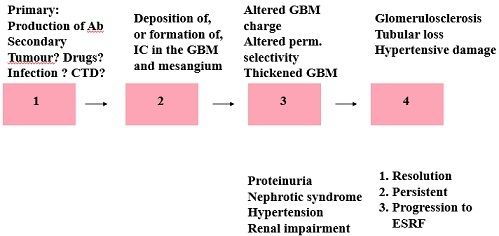
Antihypertensive Rx, ACE inhibitors. - 13Pathophysiology of membranous GN
- 14Epidemiology and aetiology of membranous GNA disease of adults.
Presents with the nephrotic syndrome –
commonest primary cause.
10% secondary to malignancy, CTD, drugs - 15Pathology and progression of membranous GNAnti-phospholipase A2 receptor antibody in 70%
Immune Complexes in basement membrane/ sub-epithelial space.
IC deposited (preformed) or formed in situ.
Variable natural history.
A third spontaneously remit.
A third progress to ESRF over 1-2 years.
A third persistent proteinuria, maintain GFR. - 16How to treat membranous nephropathy?1. Treat underlying disease if secondary
2. Supportive non-immunological – ACEi, statin, diuretics, salt restriction
3. Specific immunotherapy
- Steroids
- Alkylating agents (cyclophosphamide)
- Cyclosporin
- Alternatives– rituximab, anti-CD20 MAb
Outcomes – Complete remission, partial remission, ESRD, relapse, death. - 17Minimal Change Disease - who - causes what - pathogenesis - causeThe commonest form of GN in children.
(90% of GN < 10 years, 20% of adults of all ages.)
Causes the nephrotic syndrome.
EM - foot process fusion.
Pathogenesis - T cell, cytokine mediated.
Target glom. epithelial cell, GBM charge
Idiopathic but may be 2° to malignancy - 18Minimal change disease - presentation - GFR - outcomeAcute presentation - may follow URTI.
GFR - normal, or reduced due to intravascular depletion.
Very rarely causes renal failure.
Relapsing course (50% will relapse). - 19Treatment of minimal change disease1. High dose steroids.
Prednisolone 1mg/Kg for up to 8 weeks. Failure to respond, consider FSGS
2. Cyclophosphamide / calcineurin inhibitor - 20Pathophysiology of post-infectious GN
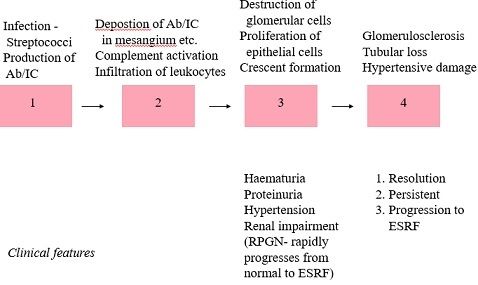
- 21post-infectious GN - cause - pathologyUsually post-streptococcal type 12, gp A strep.
Production of Ab (cross-reactive) and I/C.
Sub-epithelial I/C deposition.
Complement consumption and hypocomplementaemia.
Days after URTI (10-21) – latent period
Oliguric ARF.
Haematuria, variable proteinuria, oedema.
Hypertension.
Urinary red cell casts. - 22outcome of post-infectious GNProliferation of all glomerular cells, crescents.
Infiltrating cells.
Resolves over weeks in most cases.
May require dialysis.
Antibiotics? no other specific therapy.
The prognosis is usually, but not always, benign. - 23—crescentic disease
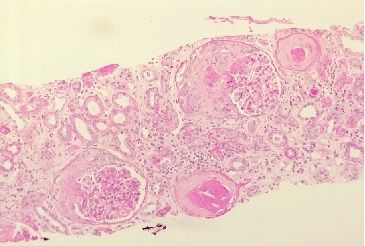
- 24Crescentic GN/RPGN - histology - progressionA group of conditions linked by natural history/ histology.
Crescents on biopsy.
Progression to ESRF over a few weeks, untreated high mortality. - 25common causes of crescentic GN/RPGN- Goodpastures syndrome – Anti-GBM antibody.
- Pauci-immune:
Microscopic polyangiits – MPO antibody (positive pANCA)
Granulomatosis with polyangiitis (GPA) – PR3 antibody (positive cANCA)
- Post infectious/ bacterial endocarditis.
- Lupus.
- Idiopathic.
- Rarely others e.g. IgA nephropathy. - 26Tests in renal disease (and associated diseases)HbA1c/random glucose (diabetic nephropathy)
ANCA/anti-GBM (vasculitis)
ANA/PLA2R/virology (membranous)
complement/ANA/dsDNA (lupus)
complement/virology (hep BC, HIV)/Igs/RF (MPGN, FSGS)
SEP/BJP/SFLC (amyloid/light chain deposition (myeloma)
Información
- Descripción
- Nephrology Fichas sobre Glomerulonephritis, creado por Ellie Britt el 15/01/2018.
- Creado por
- Ellie Britt
- Visitas
- 47
- Valoración