
Fichas
Lecture 4 Summary
Fichas del conjunto (11)
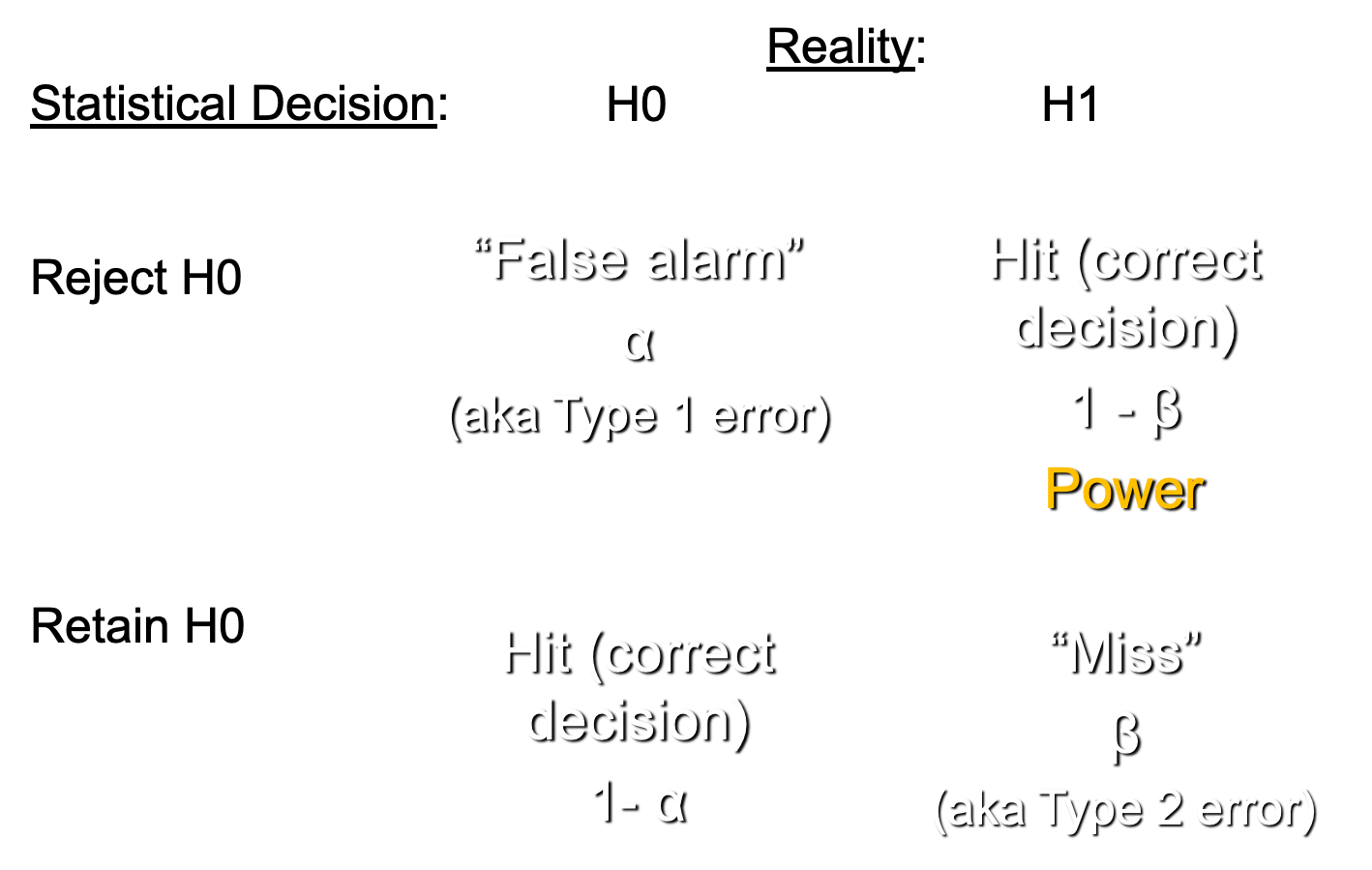
- 1Define 'power'“the ability of a test to detect an effect (if it exists)”
- 2How do you test significance?we reject H0 when the probability of getting a difference this great or greater, is less than .05
alpha (a) specifies the acceptable risk of rejecting H0 when H0 is true (type I error rate) - 3can you reduce the risk of a type 1 error by reducing the a (alpha) level to a=.01yes, but would increase the risk of making a type II error (saying theres no effect when there really is)
- 4Type I and II errors
- 5pregnancy examples of type II and II errorse.g. type I error- telling a man their pregnant (false positive)
type II error- telling a very pregnant women that they're not pregnant (false negative)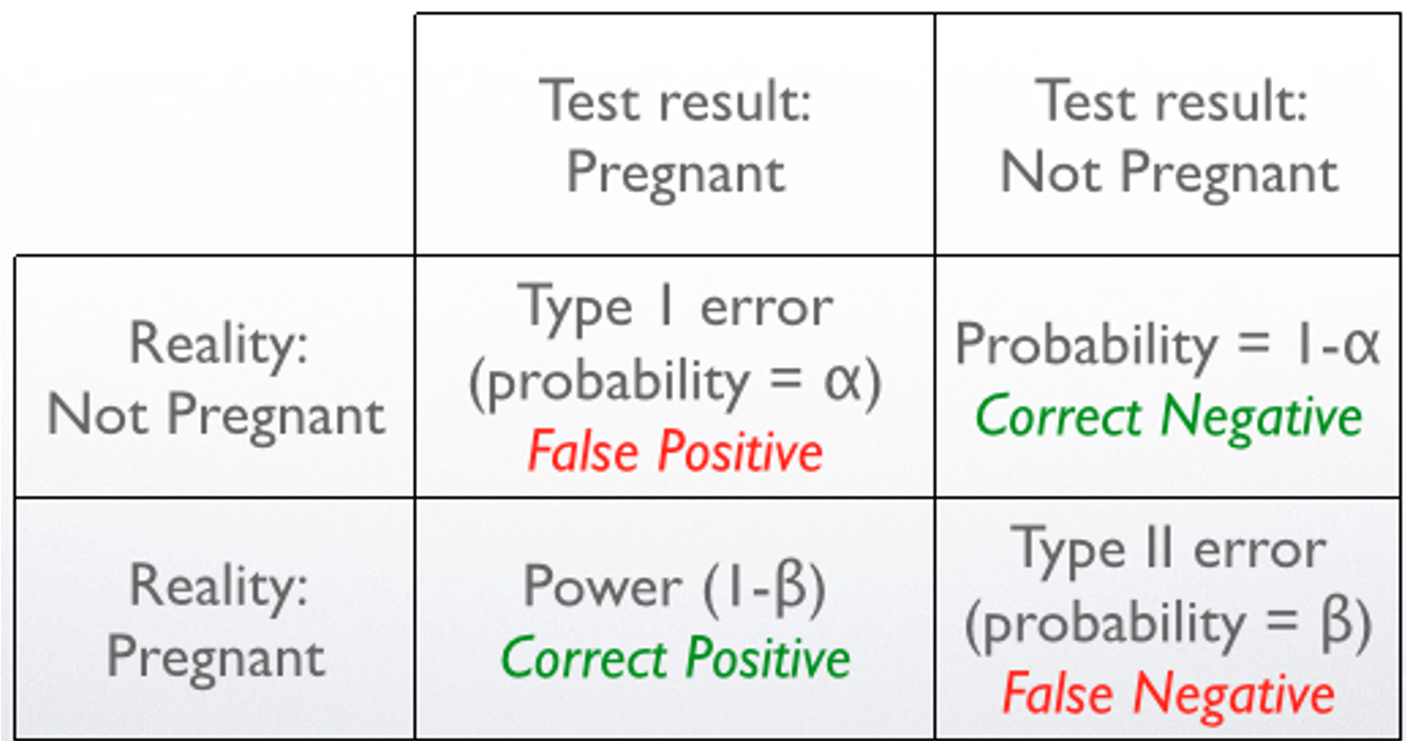
- 6limitations of statistical significance testingstatistical significance is affected by sample size
- two studies conducted in the same way in every respect except sample size may lead to different conclusions
statistical probability cannot be used as a measure of the magnitude of a result
- significant effects could be quite small in magnitude - 7concepts that will provide solutions to the two limitationsWe can calculate the power of a statistical test
- helps researchers decide on the likelihood that we will find an effect (if it really exists in reality)
We can calculate an effect size
- gives a measure of magnitude of a result that is independent of sample size - 8what factors influence power?a level (alpha)
the size of the effect (d)
sample size (N)
variance of scores in the population (std dev squared) - 9what is alpha level what is the standard convention for alpha?defines the probability of making a Type I error
a= .05 - 10more or less power if we increase a?- our critical value becomes lower, making it easier to reject H0
- increases power, but also increases type I error - 11—
Información
- Descripción
- Fichas sobre Lecture 4 Summary, creado por Hailey Brown el 08/04/2020.
- Creado por
- Hailey Brown
- Visitas
- 0
- Valoración