
Hypothesis Testing
22 resources created by 21 users
This Hypothesis Testing page on GoConqr gathers community-made quizzes, mind maps, flashcards, notes and slide sets, from null and alternative hypotheses and p-values to t-tests, chi-square and non-parametric tests. It's built for university students practising how to choose and run a test, and for teachers after ready-made material. There are over 120 resources here, including more than 20 quizzes, more than 40 mind maps and more than 40 flashcard decks. Open a quiz to find your gaps, then revisit the maps.
Top Hypothesis Testing resources
-
43 questionsASM 1 The term statistical significance means
-
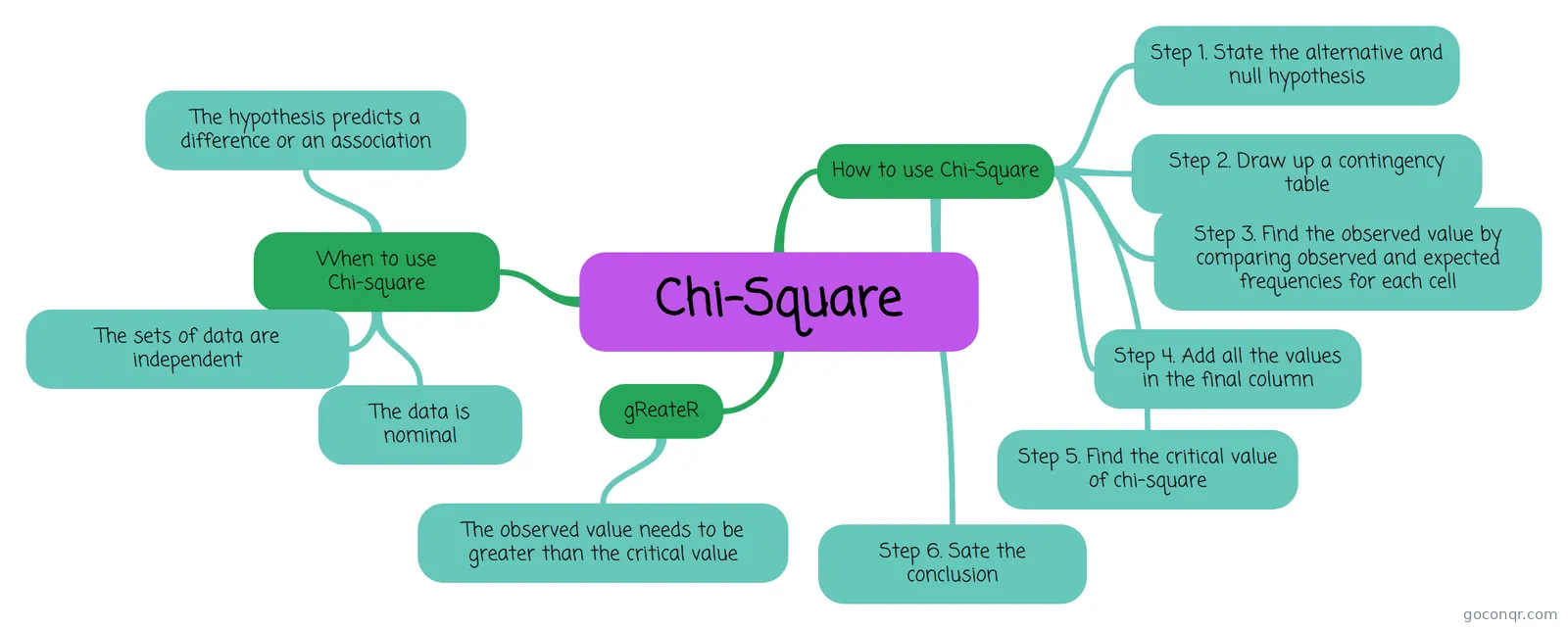 Mind map Chi-Square
-
4 questionsWhat are the types of non parametric tests? What are the non parametric tests?
-
17 cardsHypothesis tests - T-tests, Z-tests, and percentage variations What is the first step of a hypothesis test?
-
37 cardsECO 351 - Business Statistics II - Vocabulary and Equations Standardized random variable
-
21 cardsHypothesis Testing Procedures Ho [Null hypothesis]
-
21 cardsChapter 8 Testing Research Hypothesis
-
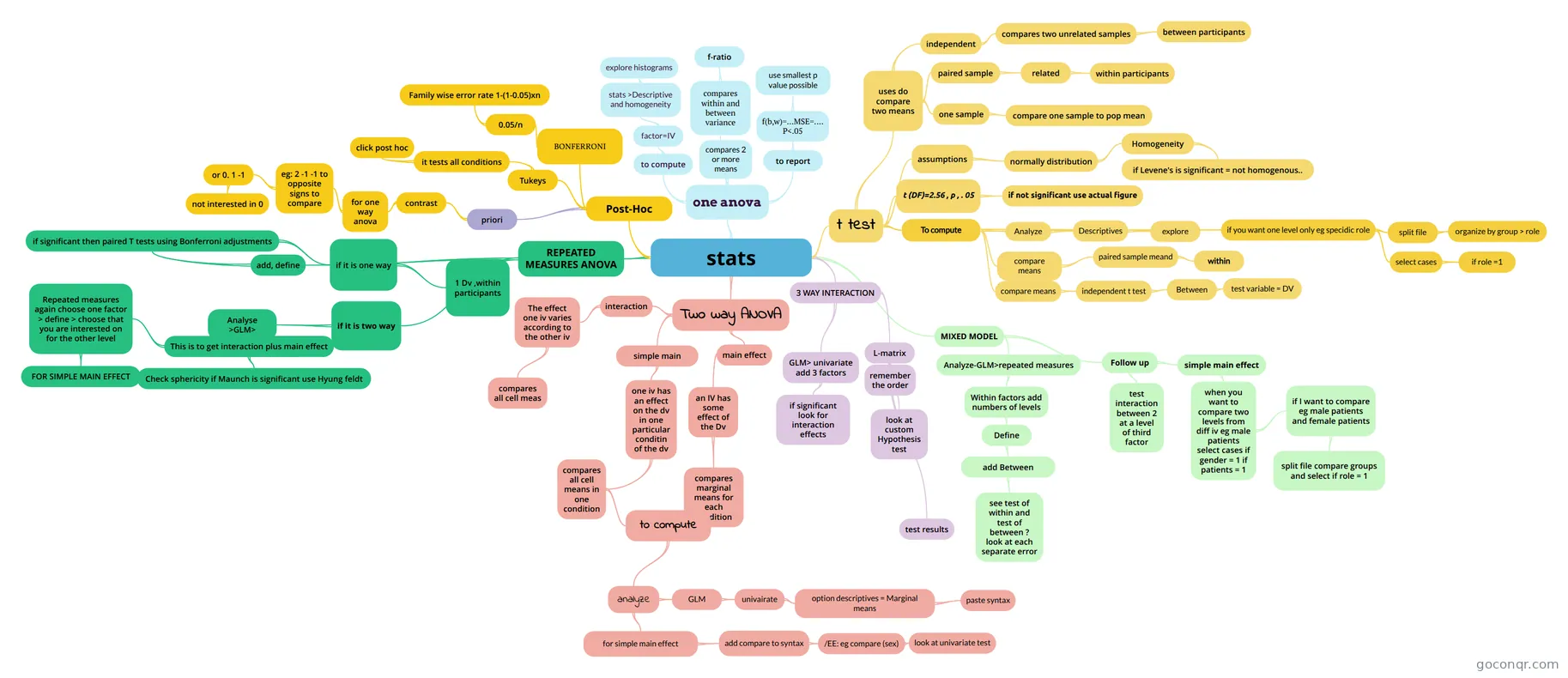 Mind map stats anova for stats
Quizzes
-
43 questionsASM 1 The term statistical significance means
-
4 questionsWhat are the types of non parametric tests? What are the non parametric tests?
-
8 questionsIP 196 (1718) 1st Exam Quiz The following are Hypothesis Testing definitions/functions, except for one.
-
5 questionsBIOL2022 L01 Why statistics? Organisms are variable in a variable world. Module 1, Lecture 1 SUMMARY: - Must make questions explicit, and state hypotheses and logical predictions -...
-
19 questionsOMIS 41q2 For each of the following three statements, formulate the correct null and alternative hypotheses The avera...
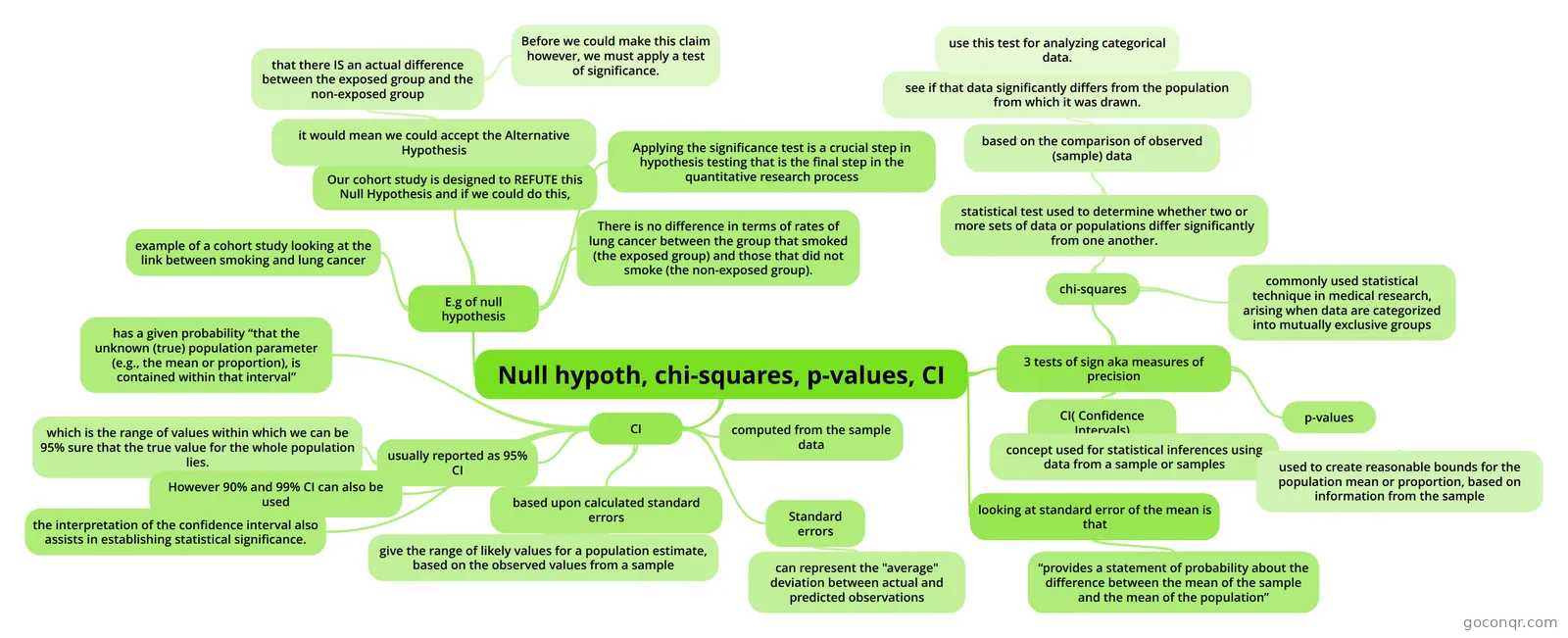
Mind maps
Flashcards
See all 10 flashcards-
17 cardsHypothesis tests - T-tests, Z-tests, and percentage variations What is the first step of a hypothesis test?
-
37 cardsECO 351 - Business Statistics II - Vocabulary and Equations Standardized random variable
-
21 cardsHypothesis Testing Procedures Ho [Null hypothesis]
-
21 cardsChapter 8 Testing Research Hypothesis
-
23 cardsHypothesis Tests It is known that 78% of patients recover from a disease without treatment. In a trial, 100 patients take a ...
-
17 cardsAnalytics W3 What is the significance level
-
11 cardsStats 151 - Testing a Hypotheses how do claims work?
-
3 cardsWordy Questions Explain what significance level of 5% means
Slides
More Statistics and probability topics
About Hypothesis Testing
GoConqr OriginalWhat the page covers
The resources follow the usual path of a hypothesis test. Early items deal with the null and alternative hypothesis, type I and type II errors, p-values and confidence intervals. Later ones move on to choosing between tests and reading the result.
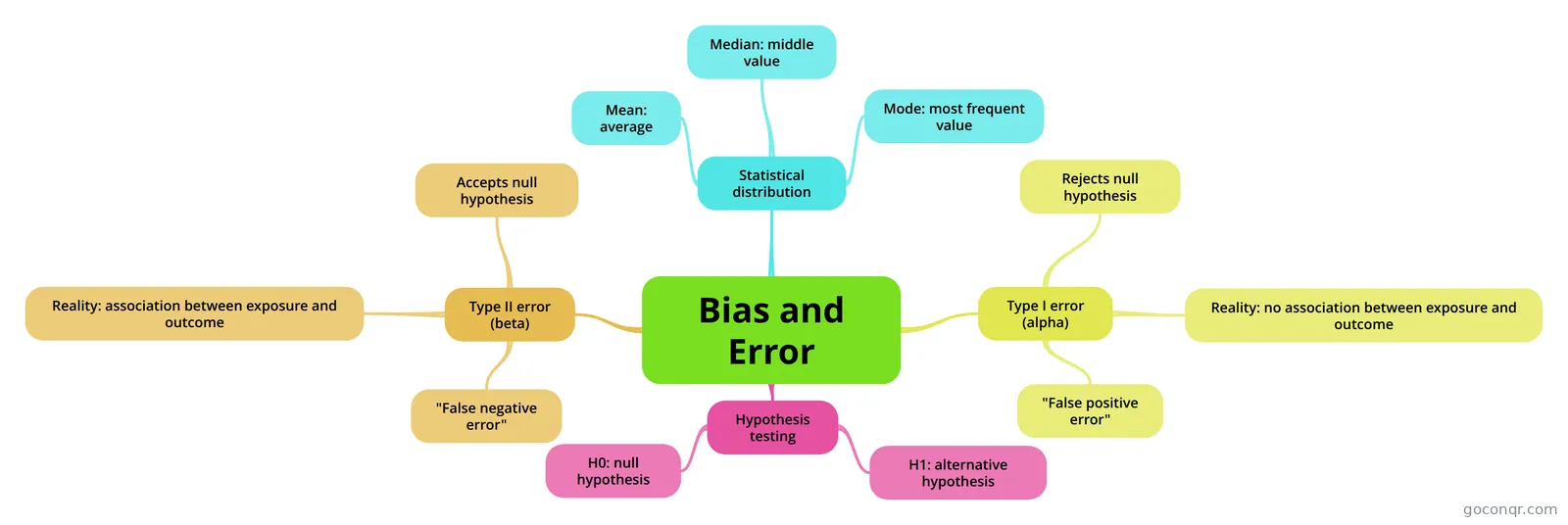
- Hypotheses and errors: the mind maps Null + Alternative Hypothesis and Null hypothesis significance testing, and the flashcard deck Type 1 and II Error.
- Means: the mind maps The Student T-test, Independent T-test and Dependent (related) t-test, with matching quizzes.
- Categories and ranks: the Chi-Square mind map and the quiz on the types of non parametric tests.
- Proportions: the mind maps Single Population Proportion and Compare 2 Population Proportions.
Where to start
Begin with the Statistics mind map or the Hypothesis Testing notes to fix the vocabulary. Then try the flashcards in Stats 151 - Testing a Hypotheses, which ask what Ho and Ha are and how the two kinds of error differ. Once those feel familiar, move to one-sample tests, such as the mind map Chapter 10: One-Sample Tests of Hypothesis, and then to two-sample tests.
Using quizzes and maps together
Read a mind map first to see the steps of a test: state the hypotheses, pick the test, work out the statistic, decide. Then take a quiz on the same test. The quiz ASM 1 opens with a question on what statistical significance means, and it includes a worked scenario about stream acidity. When you miss a question, go back to the map branch it belongs to.
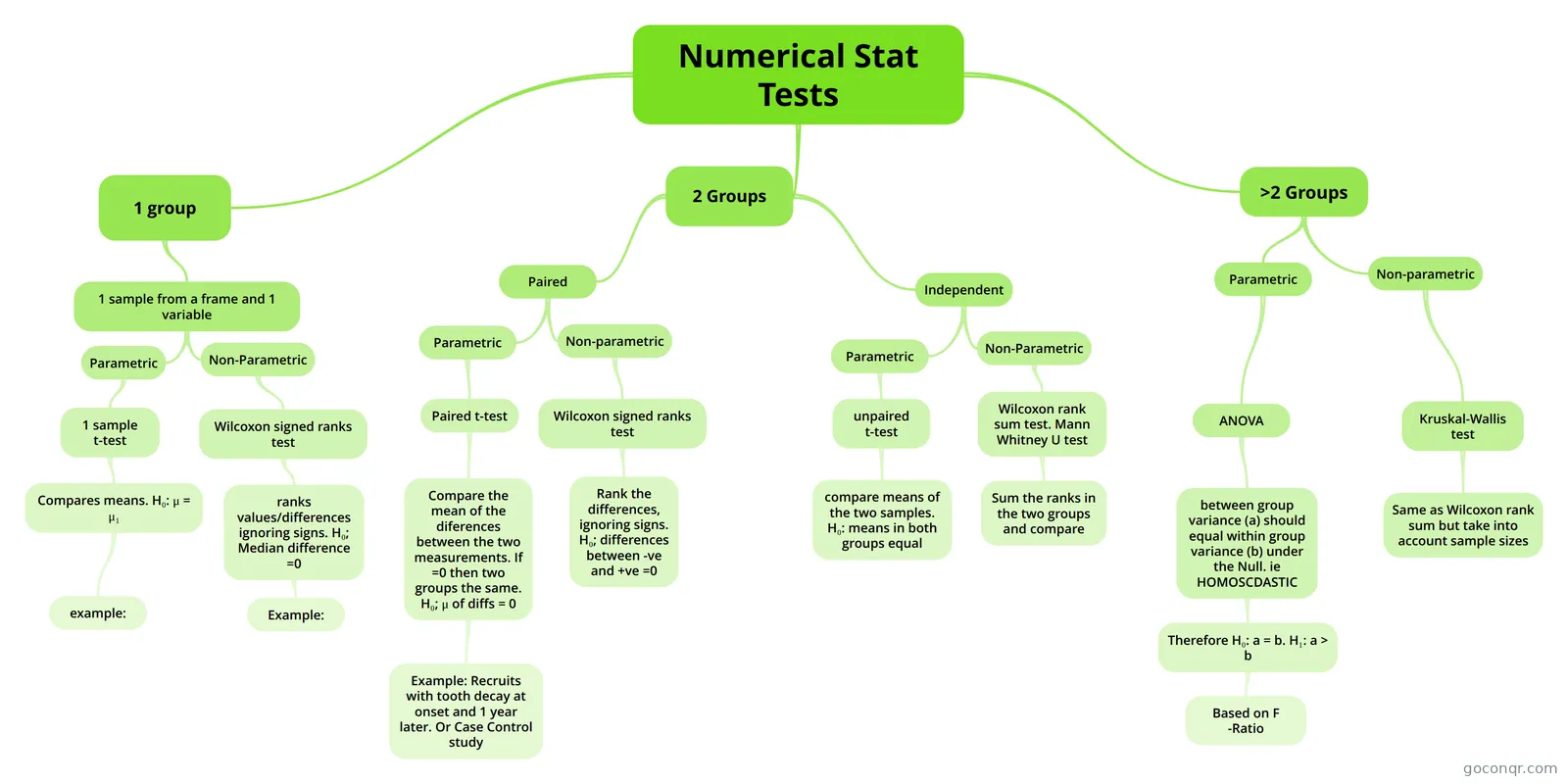
The Numerical Stat Tests mind map is useful for the choosing step. It sorts tests by one group, two groups or more than two groups, and by parametric or non-parametric.
Where it sits
This unit belongs to the Statistical Inference strand of Statistics and probability. The page also lists items on ANOVA, Pearson Correlation and power analysis, which sit close by.
Make it your own
Pick one test you find hard, work through its map and quiz, and then write a few flashcards in your own words. Teachers can set a deck or quiz from the list as ready-made practice.
Frequently asked questions
Which resource should I open first?
For a gentle start, open the Statistics mind map or the Hypothesis Testing notes to meet the key terms. Then try the flashcards in Stats 151 - Testing a Hypotheses, which cover Ho, Ha and the two types of error. After that, a quiz will show what has stuck.
What do the mind maps on this page cover?
There are more than 40 mind maps. They cover null and alternative hypotheses, p-values and confidence intervals, t-tests, chi-square, non-parametric tests, ANOVA, correlation and tests for proportions. Numerical Stat Tests helps with choosing a test, since it sorts them by number of groups.
Are the resources free to use?
Yes. Every resource listed here is free to open, study and take, with no account needed. They were made by GoConqr users rather than by GoConqr itself. A free account also saves your quiz scores and lets you make your own quizzes, mind maps, flashcards and notes.
Who are these resources for?
They mainly suit university students, since most of the material is at that level, and a small share is aimed at school. Students use them to practise stating hypotheses, picking a test and interpreting results. Teachers can use the quizzes and decks as ready-made practice.
How can I practise choosing the right test?
Start with the Numerical Stat Tests mind map and the flashcard deck Which statistical test to use? Then try the quiz Statistics Scenario Quiz, where you decide which test fits a situation. The quiz on non-parametric and chi squared tests gives extra practice.
What if I can't find the exact topic I need?
Look at neighbouring items first. Topics such as ANOVA, power and effect size, Pearson Correlation and the sign test have their own resources here. If a gap remains, you can make your own mind map, quiz or flashcards and use them for revision.