


| Pregunta | Respuesta |
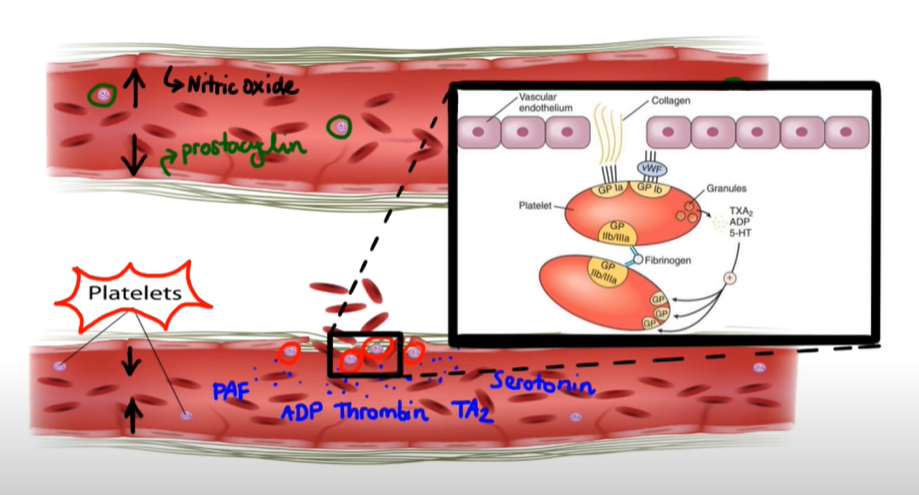
| Platelet Physiology - Antiplatelets: prevent platelets from clumping together to form clots | Endothelial damage stimulates intrinsic pathy way Exposed collagen enables platelets to bind to VWF Changing shape of platelet and causing the release of chemical mediators: ADP, Thromboxane, Thrombin |
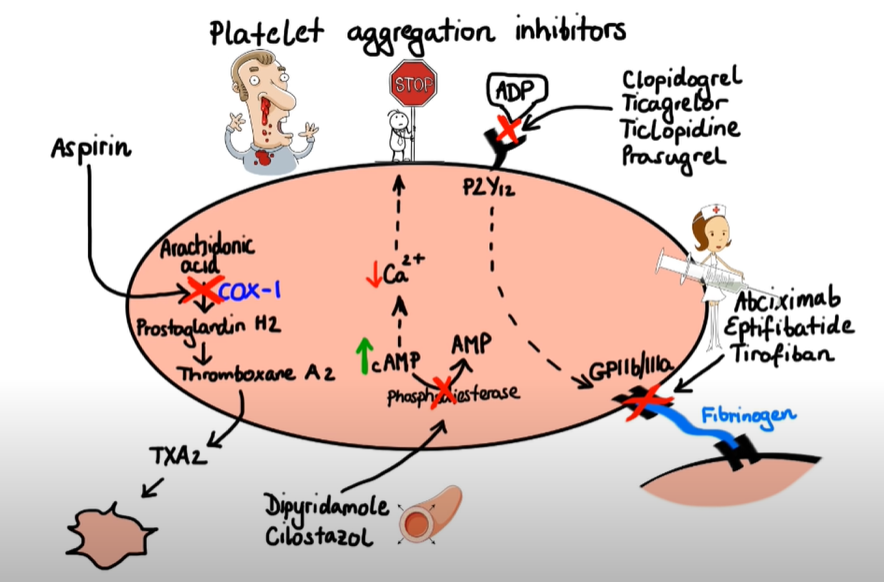
| How do platelets adhere together? | ADP binds to receptor P2Y12 on platelet causing the activation of glycoprotein 2a/2b Allowing cross-link via fibrinogen to an adjacent platelet |
| MOA | |
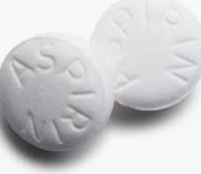
| ASPIRIN |
Image:
Asprin (binary/octet-stream)
|
| Indication | Secondary Prevention of Cardiovascular disease (75ng) UA, NSTEMI, STEMI (300mg) AF (following an ischaemic stroke) Other: TIA, Acute Ischaemic Stroke, Acute Migraine Pyrexia, Pain, Pre-eclampsia |
| Contraindication | Allergic disease, Anaemia, Asthma, Previous peptic ulceration Pregnancy (third trimester) - the risk of haemorrhage |
| Side effects | Dyspepsia, Haemorrhage |
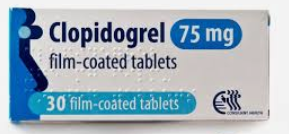
| CLOPIDOGREL | |
| Indication | Those who present with aspirin hypersensitivity can take it for TIA| Acute Ischemic Stroke| Peripheral Arterial Disease ACS (+aspirin) Acute MI with NSTEMI (+aspirin) Acute MI with STEMI (+aspirin) |
| Contraindication | Active bleeding |
| Side effects | Diarrhoea, haemorrhage |
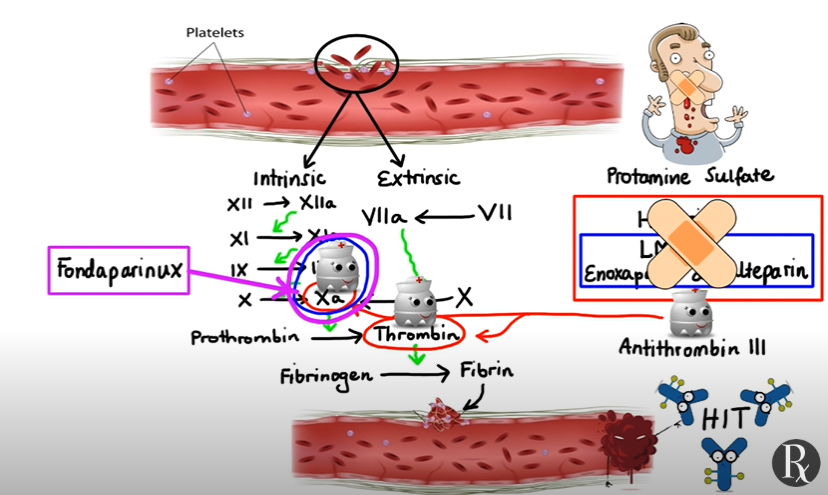
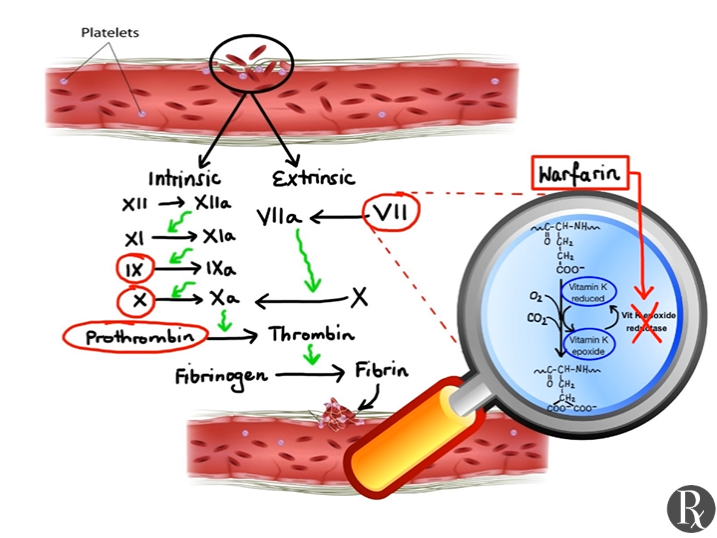
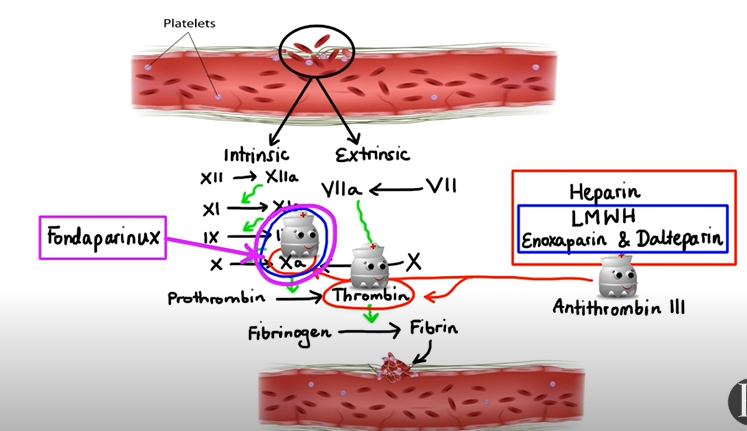
| Coagulation Physiology - Anticoagulant: slow the process of making clots | |
| General MOA | Block production of proteins (cofactors) made in the liver that causes blood to clot Cofactors e.g. Thrombin & Fibrin Vitamin K controls the production of these cofactors Therefore a therapeutic target is a disruption of: Vitamin K and these cofactors |
| Warfarin MOA | |
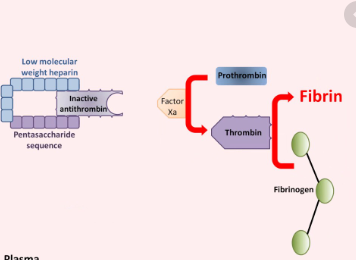
| Heparin MOA | |
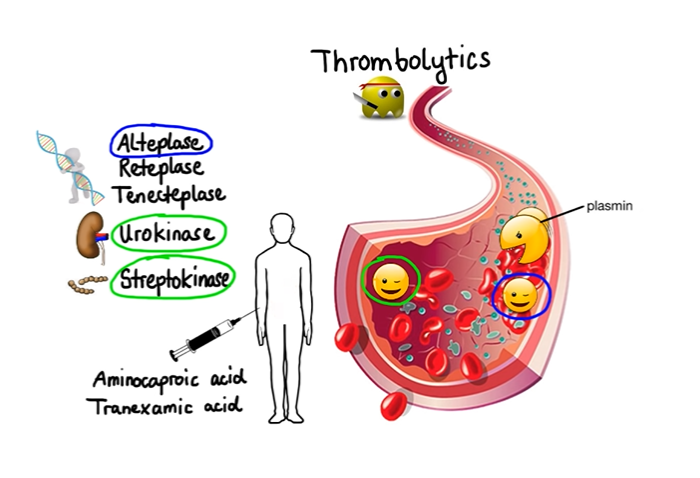
| Thrombolytics | |
| B - BLOCKERS | ... |
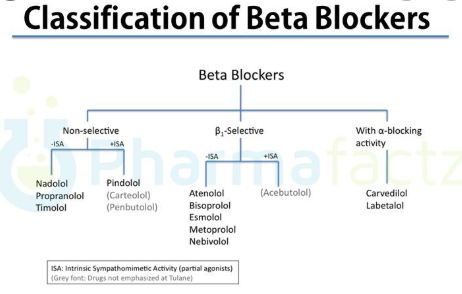
| B-Blocker Classification | |
| Mechanism of Action | Blocks Beta adrenoceptors Antagonising the sympathetic nervous system |
| Blocking B1 receptors | Negatively inotropic (rate) & chronotropic (contraction) |
| Blocking B2 receptors | Induces Peripheral Vasoconstriction & Bronchoconstriction |
| Uses | Angina| Hypertension| Antidysrhythmic| Post MI| Heart failure |
| Contraindicated | Severe Asthma/COPD| Heart block |
| Side effects | Lethargy, Erectile Dysfunction, Headache |
| Hypertension | Mode of action in hypertension not properly understood, but they: Reduce CO| Alter Baroceptor reflect sensitivity| Block peripheral adrenoceptors |
| Angina | Reduce cardiac work Evidence that withdrawal may cause exacerbation of angina |
| MI | Reduce the recurrence rate of MI |
| Arrhythmias | Esmolol hydrochloride: Cardioselective BBlocker - IV for short term management of supraventricular arrhythmias, sinus tachycardia or hypertension. Sotalol hydrochloride: Non-cardioselective BBlocker - Suppresses ventricular ectopic beats & non-sustained ventricular tachycardia |
| Heart Failure | B-Blocker - block sympathetic activity. Bisoprolol fumarate & carvedilol reduced mortality in stable heart failure |
| Thyrotoxicosis | Used in peri-operative preparation for thyroidectomy Propranolol hydrochloride - can reverse clinical symptoms of thyrotoxicosis within 4 days. |
| Propanolol | NON-CARDIOSELECTIVE Use: Hypertension, thyrotoxic crisis, phaeochromocytoma (+ alpha-blocker) |
| Contraindicated | Contraindicated: Asthma, bronchospasms, obstructive airways disease cardiogenic shock, hypotension |
| Atenolol | Uses: Hypertension, Angina, Arrhythmias, |
| Contraindicated | General side effect: Asthma, cardiogenic shock, marked bradycardia, However: This is cardioselective - so side effects will be minimal |
| ACE INHIBITORS | |
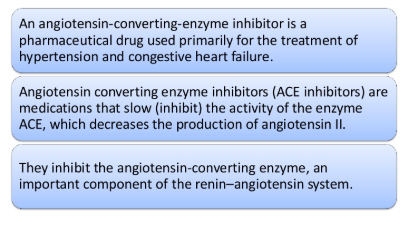
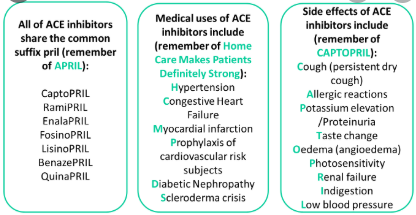
| Classification |
Image:
Ace (binary/octet-stream)
|
| Side effects | Alopecia, angina pectoris, angioedema, hyperkalaemia |
| Contraindication | hypersensitivity to ACE inhibitors Pregnancy Breastfeeding eGFR < 60mL/min |
| Monitoring Requirements | BEFORE STARTING ACE - or INCREASING DOSAGE Monitor Renal function & Electrolytes should be checked Renal dysfunction may present as renal artery stenosis or reduce eGFR |
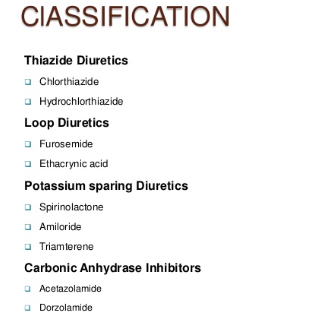
| Diuretics | |
| Loop Diuretics | (Used in Pulmonary oedema due to LVF & Patients with Chronic Heart Failure) Inhibit the Na/2Cl/K cotransporter SEs, dehydration, hypo Na+, K+, Ca2+ |
| Thiazides | Used in Hypertension (& in Heart failure to relieve oedema): |
| Potassium-sparing Diuretics | Aldosterone antagonist: Block Aldosterone antagonists Amiloride: Blocks Epithelial Na channels in DCT |
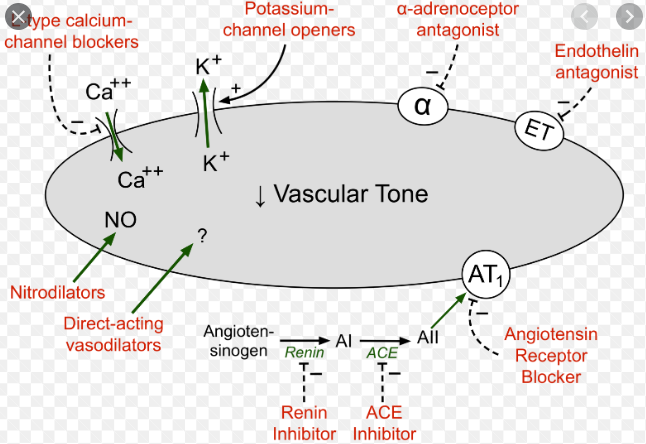
| Vasodilators Image on MOA | |
| Indication for use | Heart failure, IHD, Hypertension |
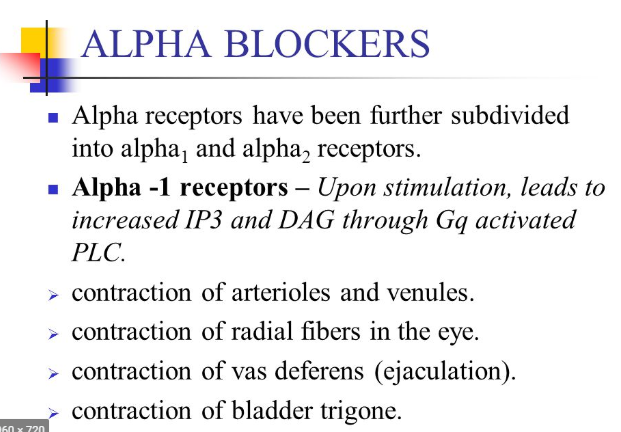
| Examples | Nitrates: Dilate veins and large arteries Reducing preload Hydrazine: (used with nitrate) Dilates resistant vessels, Reducing afterload Alpha-blocker: see next revision card |
| Alpha-blocker: Prazosin | Prazosin: Dilates arteries and veins |
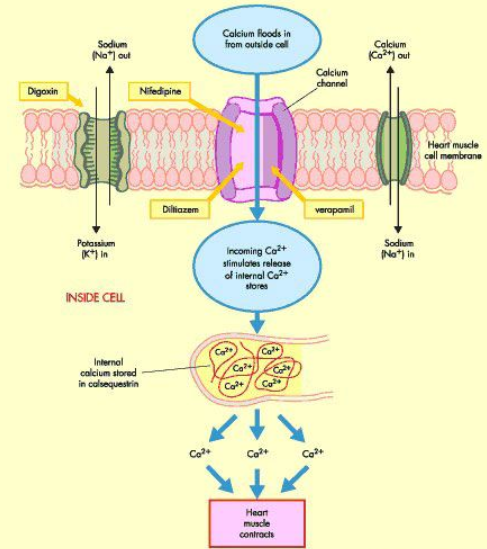
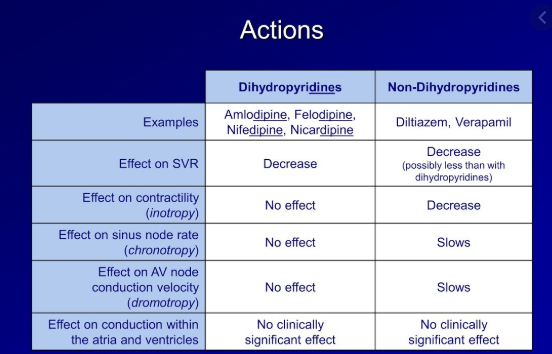
| Calcium Antagonist | Reduce cell entry of calcium via voltage gated calcium channels in smooth muscle Result: increased coronary and peripheral vasodilation & reduce heart muscle O2 consumption |
| Classification |
Image:
Ccb (binary/octet-stream)
|
| Dihydropyridine (peripheral vasodilators) | Nifedipine Amlodipine |
| Dihydropyridine (Slow conduction at AV & SA Node) | Verapamil Diltiazem (can also be used to treat hypertension, angina & dysrhythmias) Dilate coronary arteries and can cause reflex tachycardia, therefore often use with B blockers |
| Contraindication for non-dihydropyridine | Never prescribe with B Blockers Risk of: Severe Bradycardia, +/- LVF |
| Side effects of CCBlockers | Flushes, Headaches, Ankle oedema (diuretic unresponsive), Reduced LVF |
| Digoxin | Blocks Na/K+ pump Slowing pulse in fast AF |
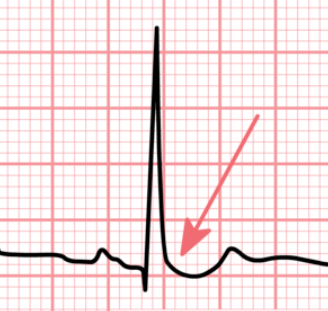
| Risk of digoxin toxicity | esp in the elderly Often divided into acute or chronic toxicity. In both of these toxicities, cardiac effects are of the greatest concern Visible on an ECG |
| Management of toxicity | Stop Digoxin, correct electrolyte imbalances: K+, Mg, Ca, Treat arrhythmias IV Digifab (antibody) |
| Sodium Channel blocker | Class I antiarrhythmics PROCAINAMIDE & LIDOCAINE - terminate VT Note QT interval may be prolonged |
| Amiodarone | Class III antiarrhythmic Prolonges Cardiac Action Potential - reducing potential tachyarrhythmias USED IN: Supra & Ventricular Tachycardia & Cardiac Arrest. |
| Ivabradine | BLOCKS 'funny current'/ pacemaker potential 1) slowing pulse rate (without significant drop in bp) USED IN: Angina, Heart Failure, |
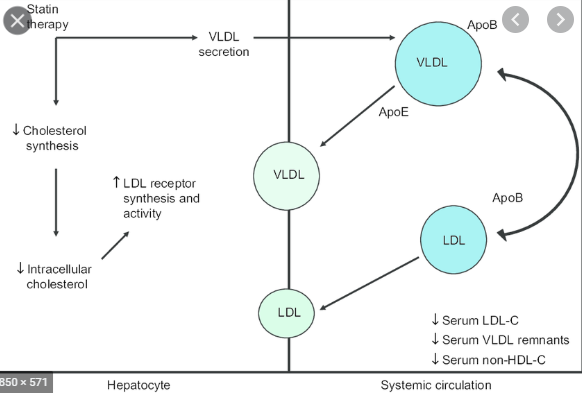
| Statins | MOA: Inhibit HMG-COA Reductase, causing synthesis of cholesterol in the liver Increasing LDL receptor expression on hepatocytes leading to reduced circulating LDL cholesterol |
¿Quieres crear tus propias Fichas gratiscon GoConqr? Más información.