
3905936
Descripción

Fichas por sujenphea9487, actualizado hace más de 1 año
|
|
Creado por sujenphea9487
hace casi 11 años
|
|
| Pregunta | Respuesta |
| How to safely turn on a bunsen burner | close airhole light fire on gas |
| 3 Lab Safety Rules | Tie Hair back no drinking or eating wear goggles |
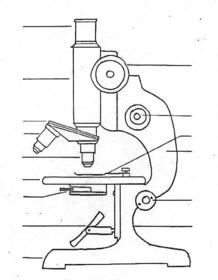
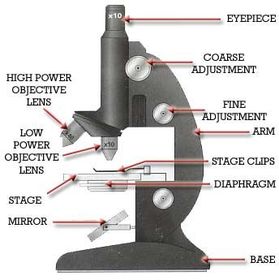
| How do magnification work? | Eyepiece x Lens |
| Equipment list | Beaker Gauze pad Bunsen Burner Test tube measuring cylinder tripod conical flask evaporating dish |
| What are the magnifications of the objective lenses? Eye Piece? | Eye Piece = 10 times Red = 4 times Yellow = 10 times Blue/Black = 40 times |
| You need this to reflect light onto the microscope | Mirror |
| Bar Graph | Used for displaying values for non-related variables |
| Line Graph | Used for showing changes over time with one variable |
| The part you put your eye closest to | Eyepiece |
| Something that can change | Variable |
| This is where you put the specimen | Stage |
| When you change one thing . . . causes another thing to change | relationship |
| Where do you find E . Coli in your body? | In the instestines |
| Where do you find E . Coli outside your body? | Animals and water |
| What do bacteria need to grow? | warm temperature moisture space nutrience |
| How long does it take bacteria to double? | 15 minutes |
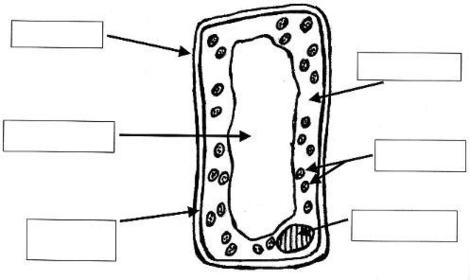
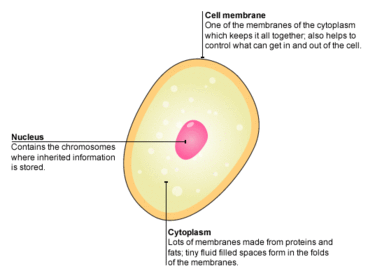
| left : top to bottom right : top to bottom | 1 . Cell Wall 2. Vacuole 3. Cell Membrane 4. Cytoplasm 5. Chloroplast 6. Nucleus |
| Top , Left, Bottom | |
| What do the cell wall in plant cells do? | The cell wall support the tree and protect the plant from various things |
| What do vacuole do? | Vacuole stores food or nutrient a cell might need to survive. OR store waste |
| What are atom made of? | 99.9% Space |
| What is Mass number? | It is the top number and it tells us the number of proton plus neutron. |
| What is atomic number? | It is the number of neutron and located at the bottom of an element |
| Electron Configuration | 1st shell = 2 2nd shell = 8 3rd shell = 8 4th shell = 2 |
| At what temperature does the particles stop moving? | -273'C |
| 3 states of matter | Solid Liquid Gas |
| Solid to Gas | Sublimation |
| Temperature to turn glass to liquid | 1320'C |
| LAW OF CONSERVATION OF ENERGY | Energy cannot be destroyed nor created. It can only be transferred from one form to another. |
| Native | not introduced, originally found in NZ, could have flown another country. |
| Introduced | Brought from another country |
| Endemic | Only found in NZ |
| Indigenous | Originally found in NZ but other countries may also have it. |
| Darwin's Hypothesis | 1 . More offspring are produced than will survive to adulthood. 2 . Not all individuals are the same - there is variation in a population. 3 . Some adaptations increase rates of survival. 4 . These adaptations can be passed to the next generations - they are heritable. |
| 3 Types of Erosion | Ice Water Wind |
| Why don't earth show any craters | It's been eroded. |
| Order of EMS | Radio wave Microwave Infra-red Visible Light UV ray X-ray Gamma Ray |
| Radio Wave | Uses to transfer info from one point to another via Electromagnetic radiation |
| Microwave | Will cook your food in minutes. Also used by astronomers to look at the structure of galaxies. |
| Infrared | Night vision goggles that picks up heat emitted by our skin and objects with heat. |
| Visible Light | Our eyes detect this. Fireflies, light bulbs and stars all emit this. What we see |
| Ultra Violet | This is emitted by the sun and are the reason for skin tans and burns. Can cause skin cancer |
| X Ray | A dentist uses this to image your teeth, and airport securities uses them to see through your bag, doesn't go through bones. |
| Gamma Ray | Very high energy electromagnetic waves. Use to sterilize surgical equipment and to kill cancer cells. |
| Green + Red | Yellow |
| Red + Blue | Magenta |
| Blue + Green | Cyan |
| Additive light | Light source |
| Answers in front | |
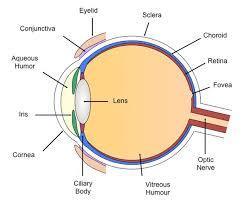
| Three structures that focus light rays entering | Lens Cornea Aqueous/ Vitreous Humor |
| Three layers that make up the wall of an eyeball | Sclera Choroid Retina |
| Refraction | Bending of light |
| TIR | If light coming exceeds a certain degree, it will be totally internally reflected. |
| Proteins are made of __ | Amino Acid |
| Test for Starch Colour | Iodine Bluey black colour |
| Test for Glucose Colour | Blue Benedict's Solution Blue - green - yellow - orange - red |
| Test for Protein Colour | Copper Sulphate, Sodium Hydroxide Purple |
| Test for Lipid Colour | Meths Cloudy emulsion |
| MRSGREN | Movement Respiration Sensitivity Growth Reproduction Excretion Nutrience |
| Lack of Vit C | scurvy - swollen bleeding gums |
| Lack of Vit D | Rickets- fractures and deformity |
| Lack of Iron | Anaemia - deficiency of red blood cells |
| Lack of Calcium | Osteoporosis - hallucinate, muscle spasm |
| No. of Incisor Function | 8 Cut food |
| No. of Canine Function | 4 Stabbing, rib meat |
| No. of Premolar Function | 8 Chew and grind food |
| No. of Molar Function | 12 Chew food |
| Enzymes for: Protein Fat Starch | Protease Lipase Amylase |
| Things in mouth to break down food | Saliva and Amylase |
| Things in stomach to break down food | Protease |
| Things in Duodenum that breaks down food | Protease, Bile, Lipase, Amylase |
| Function of Small Intestine | Absorbs nutrience |
| Function of Large Intestine | Absorbs water |
| Stimulants | Caffeine Nicotine Meths |
| Deppresant | Alcohol |
| Hallucinogen | Marijuana LSD |
| Layers of teeth | Enamel Dentine Pulp Cavity - Nerve endings, blood vessel |
| What does Cornea do | Outermost transparent layer of eye. Begins Focusing |
| What does Pupil do? | The opening in the iris through which light passes. |
| What does Iris do? | The coloured portion of the eye that controls the size of pupil |
| What does lens do | This structure changes shape to focus light on the retina |
| What does retina do? | Contains sensory receptors for vision |
| What does ciliary muscle do? | Controls shape of lens |
| Optic Nerve | Carries impulses from eye to the brain. |
| Cone? | detects colour |
| Rod? | detect black and white |
| Vitreous humor? | Helps the eyeball keep its round shape and prevents it from collapsing |
| sclera? | Outer layer of the eye. Protects the eye and helps it keep its shape. |
| Aqueous humor? | Fills space between the lens and cornea. Plays a part in focusing light ray. |
¿Quieres crear tus propias Fichas gratiscon GoConqr? Más información.