
Fichas
M7.10
Fichas del conjunto (40)
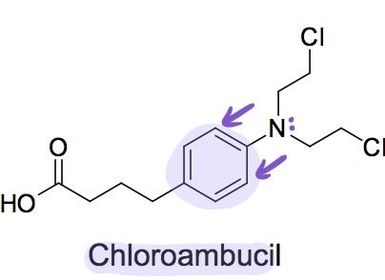
- 1Name 4 chlormethine analoguesChloroambucil
Melphalan
Estramustine
Uracil Mustard - 2Describe Chloroambucilaromatic ring is electron withdrawing
lowers nucleophilic strength of nitrogen
much less reactive first step
less reactive alkylating agent (lasts longer in vivo, more chance of reaching target)
less side reactions and less toxic - 3Describe Melphalanaromatic ring present
less reactive alkylating agent
mimics amino acid phenylalanine
transported into cells by transport proteins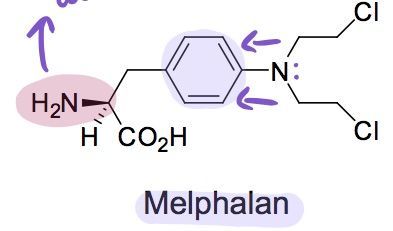
- 4Describe EstramustineUrethane group is electron withdrawing
Lowers nucleophilicity of nitrogen
Alkylating group is attached to estradiol
Steroid is hydrophobic - capable of crossing cell membranes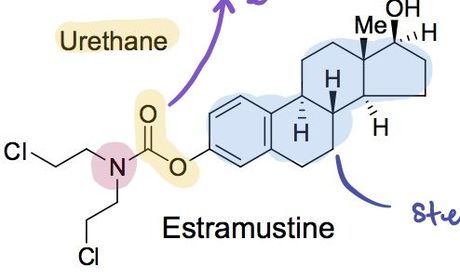
- 5Describe Uracil mustardUracil ring is electron withdrawing
Less reactive alkylating agent
Mimics a nucleic acid base
Concentrated in fast growing cells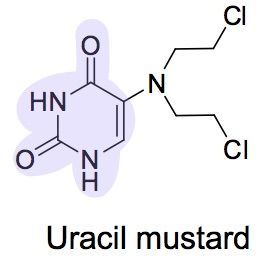
- 6what is the effect of DNA alkylation?miscoding resulting from alkylated nucleic acid bases
- 7what is the preferential tautomer for guanine and alkylated guanine?G - keto tautomer
Alkylated G - enol tautomer - 8Difference in H bonding in guanine and alkylated guanineG - H bond acceptor, donor, donor
Alkylated G - H bond donor, acceptor, donor - 9name the most commonly used alkylating agentcyclophosphamide
- 10what is cyclophosphamide? how is it administeredit is a non-toxic pro drug
orally active - 11what is the by-product of the reaction of cyclophosphamide that is associated with toxicity?acrolein
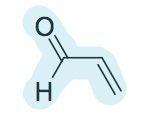
- 12what is the structure of the alkylating agent that arises upon activation of pro drug cyclophosphamide
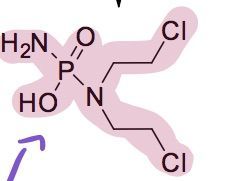
- 13name to nitrosoureas alkylating anticancer agents
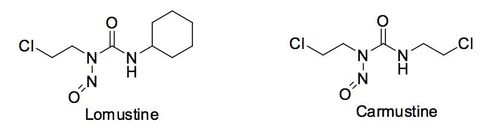
- 14what is the alkylating agent that arises from the decomposition of nitrosoureas prodrugs?
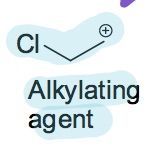
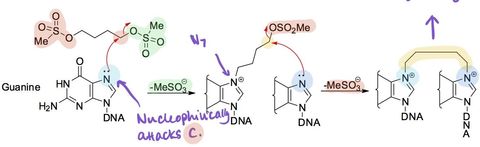
- 15what is the anticancer effect of nitrosoureas alkylating agentsalkylating agent causes interstrand crosslinking between G-C or G-G
- 16what is the synthetic compound used as an anticancer agent that causes interstrand crosslinking via Sn2 reaction?Busulfan
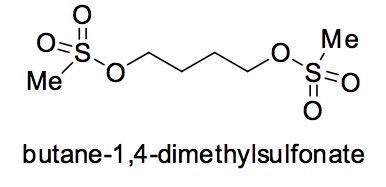
- 17write down the mechanism for busulfan reacting with DNA
- 18What prodrug is this: What is its method of action?mitomycin C
one of the most toxic anticancer drugs in clinical use
DNA alkylation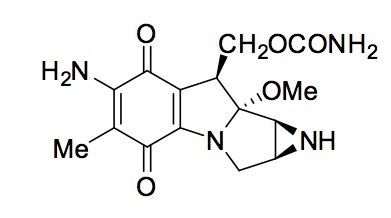
- 19name the naturally occurring alkylating agent which binds to a minor groove in DNA and alkylates adenine bases.CC1065
it is 1000x more active than cisplatin in vitro - 20what are oestrogen antagonists?agents that antagonise the action of oestrogens
they are of interest for the treatment of oestrogen dependent breast cancer - 21name an oestrogen antagonist agenttamoxifen
- 22What is tamoxifenAgent used to treat oestrogen hormone dependent breast cancer
it is also referred to as a partial agonist - 23what is 17B-estradiola steroid hormone that promotes the growth of certain tissues
- 24what is the action of tamoxifen?§it binds to the oestrogen receptor binding site without fully activating the receptor, preventing 17B-estradiol from binding
- 25What are antimetabolites?compound that prevent the biosynthesis of normal cell metabolites
- 26name an antimetabolite5-Fluorouracil (5-FU)
- 27what is the significance of the structure of 5-FUexperimental observation that some tumour cells preferentially use uracil for the synthesis of the DNA base thymidine using a biosynthetic pathway not used by normal cells
presence of fluorine at key position of the molecule prevents thymidine biosynthesis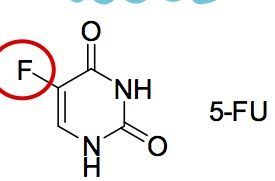
- 28how are cancer cell plasma membranes altered?contain distinctive antigens which are overexpressed when compared to normal cells
- 29what is the significance of the presence of antigens on the plasma membranes of cancer cells?possibility of using antibodies against the disease
- 30How do monoclonal antibodies work in the treatment of cancer?they are produced for several tumour associated antigens
can act to activate the body's immune response to direct killer cells against the tumour - 31monoclonal antibodies are useful in the treatment of what cancers?breast
colorectal
lymphomas - 32disadvantage of using monoclonal antibodies?level of anticancer activity is usually low so they are often used in combination with small molecule anticancer drugs
- 33what is herceptin?a humanised monoclonal antibody which targets the HER-2 growth factor receptor which is overexpressed on 25% of breast cancers
it was approved in 1998 for treatment of HER-2 + metastatic breast cancer in combination with the mitotic inhibitor paclitaxel - 34what drug was approved in 1997 for the treatment of non-Hodgkin's lymphoma?Rituximab
- 35What is Rituximab?a chimeric monoclonal antibody against the protein CD20 (primarily found on the surface of immune system B cells)
it destroys B cells and is used to treat diseases which are characterized by excessive numbers of B cells or dysfunctional B cells (includes many lymphomas and leukaemias) - 36what are chimeric antibodies?proteins created through the joining of two or more genes that originally coded for separate proteins
- 37Combination therapies are called _________.R-CHOP
one of the more widely used combination chemotherapy regimens - 38in 2006 FDA approved R-CHOP as a first line treatment for?non-Hodgkin's lymphoma (NHL)
- 39R-CHOP is used for the treatment of a wide range of B-cell NHL subtypes including _______follicular lymphoma
mantle cell lymphoma
Burkitt's lymphoma
primary mediastinal large B-cell lymphoma
primary cutaneous B-cell lymphoma
primary CNS lymphoma - 40outline R-CHOP treatment for beating cancer6-8 treatments separated by 21 days
Rituximab (monoclonal antibody)
Cyclophosphamide (guanine alkylating agent)
Vincrinstine (mitotic inhibitor)
Doxorubicin (DNA intercalator acting as topoisomerase II poison)
Información
- Descripción
- FY sem II Medicine Module 7 Fichas sobre M7.10, creado por Erica Lai el 02/04/2017.
- Creado por
- Erica Lai
- Visitas
- 23
- Valoración