
Fichas
Hypothesis testing
Fichas del conjunto (52)
- 1What is an inference?An inference is the act or process of reaching a conclusion about something from known facts or evidence.
- 2What is Foundationalism?Foundationalism is the view that all knowledge or justified belief rest ultimately on a foundation of non-inferential knowledge or justified belief.
- 3What is Coherentism?Coherentism is the view according to which a belief (respectively, a set of beliefs) is justified, or justifiably held, when the belief coheres with a set of existing beliefs (respectively, the set of beliefs is self-coherent).
- 4What is a valid (deductive) inference?A valid deductive inference is the act of deducing one or more observable consequences from a hypothesis.
For example, if I have the hypothesis "All horses are blue." (assuming that we have well-working definitions of "horse" and "blue"), then a valid deductive inference is "The King's horse is blue." - 5What is an inductive inference?An inductive inference is the process of amplifying one's knowledge by generalizing some knowledge that we have previously acquired by observations.
For example, if I observe 10 butterflies and I find that they are all blue, then I may conclude that all butterflies are blue, thus expanding my knowledge beyond my observations.
Inductive inferences are fallible (i.e., they may lead to false conclusions.) - 6What is Inductivism?Inductivism is the practice of drawing general explanations from particular observations.
For example, if I observe 10 butterflies and I find that they are all blue, I may draw the conclusion that all butterflies are blue. - 7What are the problems with inductive inferences?The main problem with inductive inferences is that they draw conclusions on a more general class of objects than the set of the observed objects. Therefore, inductive inferences are fallible, because it may happen that the particular set that was observed happens to have a property that is not shared by the rest of the category.
For example, if I observe 10 butterflies and I find that they are all blue, I may draw the conclusion that all butterflies are blue. However, my conclusion may be wrong because there may be more butterflies that are not blue. - 8What is the example of the black swan?No answer found on the slides.
This answer is put together from Wikipedia and guesswork.
A black swan is a metaphor for an event that comes as a surprise, has a major effect, and is often inappropriately rationalized after the fact with the benefit of hindsight.
The example is based on the fact that black swans were once not believed to exist. - 9How does the example of the black swan relate to the problem of induction?The black swan is the textbook example of an observation that would disprove a conclusion drawn from inductive inference.
Such incident would play out as follows.
I observe one hundred white swans, and I feel quite legitimated into drawing the conclusion that all swans are white.
However, one day I observe a black swan. This observation is an unexpected event that, alone, has the "major effect" of disproving my conclusion drawn on the basis of one hundred observations. - 10What is David Hume’s (skeptical) response to the problem of induction?No clear answer found on slides.
The answer is built upon Wikipedia search and guesswork.
Hume argued that inductive reasoning, and belief in causality, cannot, ultimately, be justified rationally; our trust in causality and induction instead results from custom and mental habit, and are attributable to only the experience of "constant conjunction" rather than logic.
In other words, we do not perceive that one event causes another, but only that the two are always conjoined, and to draw any inductive causal inferences from past experience first requires the presupposition that the future will be like the past, a presupposition which cannot be grounded in prior experience without already being presupposed.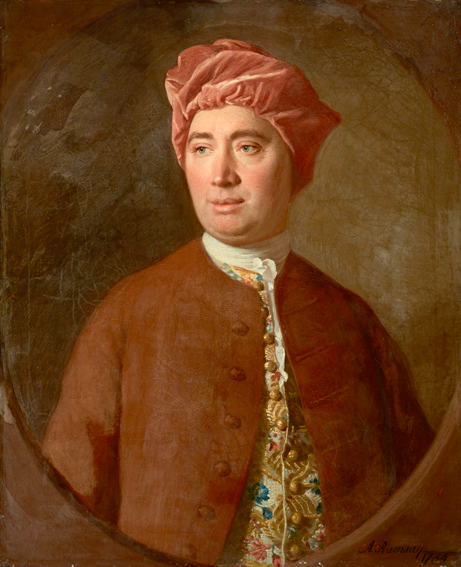
- 11What is Popper’s criterion for the demarcation of science?No clear answer found on slides.
The answer is built upon Wikipedia search and guesswork.
Popper proposes falsifiability as a criterion for the demarcation of science.
More precisely, Popper proposes that a scientific hypothesis should be falsifiable, in the sense that it must be capable of conflicting with possible or conceivable observations. - 12What is a claim?No clear answer found on slides.
The answer is built upon Wikipedia search and guesswork.
A claim is a statement or assertion that something is the case.
For example, "This sentence is a claim." is a claim.
In science, a claim is often formulated as an observable consequence of a theory or a hypothesis, and may be used in conjunction to observations to verify or falsify that hypothesis. - 13What is a question?No clear answer found on slides.
The answer is built upon Wikipedia search and guesswork.
A question is any sentence expressed in such a way to elicit information.
For example, the sentence "Is this sentence a question?" is a question.
In science, questions can be used as the basis for observations, in the sense that the information elicited by the questions is pursued by conducting observations. - 14What is the difference between a claim and a question?No clear answer found on slides.
The answer is built upon Wikipedia search and guesswork.
A claim is a statement or assertion that something is the case, while a question is any sentence expressed in such a way to elicit information.
Claims can be reduced to questions whose answer is either "Yes." or "No.".
For example, the claim "This sentence is either a claim or a question." corresponds to the question "Is this sentence either a claim or a question?". - 15What is a hypothesis?No clear answer found on slides.
The answer is built upon Wikipedia search and guesswork.
In science, a hypothesis is a statement that can be either true or false and is not necessarily true nor necessarily false.
A hypothesis is considered good if it has some generality or refers to some unobservable property.
For example, "This sentence contains a spelling mistake." is not a good hypothesis, because it does only refer to a single sentence, and it does not refer to something unobservable. - 16What is a theory?No clear answer found on slides.
The answer is built upon Wikipedia search and guesswork.
A theory is a coherent system of hypotheses intended to explain a particular class of phenomena. - 17What is testability?Testability, a property applying to an empirical hypothesis, involves two components:
The logical property that is variously described as contingency, defeasibility, or falsifiability, which means that counterexamples to the hypothesis are logically possible.
The practical feasibility of observing a reproducible series of such counterexamples if they do exist.
In short, a hypothesis is testable if there is some real hope of deciding whether it is true or false of real experience. Upon this property of its constituent hypotheses rests the ability to decide whether a theory can be supported or falsified by the data of actual experience. - 18How do you test a theory?No clear answer found on slides.
The answer is built upon Wikipedia search and guesswork.
A theory is tested by testing the hypotheses therein. Typically, it is not possible to test each hypothesis in isolation, but one ends up testing the theory as a whole. - 19What is verification?No clear answer found on slides.
The answer is built upon Wikipedia search and guesswork.
Verification is the process of assessing the veracity of a hypothesis or theory.
Verification is often performed by conducting observations and assessing that they are coherent with the claims drawn from the hypothesis.
However, because hypotheses refer to general categories, while the nature of human observations is intrinsically finite, it commonly accepted that there is no way of assessing the veracity of a hypothesis with certainty. - 20How do you verify a hypothesis or theory?No clear answer found on slides.
The answer is built upon Wikipedia search and guesswork.
In order to verify a hypothesis, you first draw one or more claims as consequences of that hypothesis.
Then, you conduct observations to assert the veracity of the claims. These observations need to be organized in such a way that they can confirm or contradict the claims.
If the claims turn out to be true, then we say that the hypothesis is verified, to an extent - 21Can you ultimately and objectively ever verify a hypothesis or theory? Motivate and explain your answer.No clear answer found on slides.
The answer is built upon Wikipedia search and guesswork.
In general, you can.
In fact, hypotheses that refer to abstract objects or logical constructions can be ultimately demonstrated by deductive reasoning. For example, the hypothesis "all isosceles triangles have two congruent angles" can be verified by deductive reasoning starting from the related definitions and axioms.
On the other hand, hypotheses that pertain the physical world cannot be verified ultimately, because, while a theory produces "general" claims, observations in the physical world are inherently finite and limited. - 22What is falsification?Falsification is the practice of proving that a hypothesis is false by drawing observations that contradict that hypothesis.
- 23How do you falsify a hypothesis?A hypothesis can be falsified by drawing observable consequences of that hypothesis, and then collecting observations that contradict those consequences.
- 24How do you falsify a theory?No clear answer found on slides.
The answer is built upon Wikipedia search and guesswork.
A theory is falsified by falsifying the hypotheses contained in it. - 25What is Karl Popper ́s theory of falsificationism?Falsificationism is a theory of science that prescribes that hypothesis formulation and acceptance or rejection be based on falsification rather than verification.
In particular, falsificationism prescribes the following:
- Only conjecture falsifiable hypotheses;
- Seek observable evidence to falsify these hypotheses;
- Reject any falsified hypothesis as false;
- Never accept non-falsified hypotheses as true, but maintain them as so-far-not-rejected.
Moreover, according to falsificationism, the quality of a hypothesis is measured in terms of its falsifiability; i.e., a better hypothesis has more observable consequences. - 26What does it mean to say that an hypothesis is ”falsifiable”?A hypothesis is called "falsifiable" if it has observable consequences .
This concept is also quantitative: a hypothesis is more falsifiable if it has more observable consequences. - 27What does it mean to say that a theory is ”falsifiable”?No clear answer found on slides.
The answer is built upon Wikipedia search and guesswork.
A theory is called falsifiable if the related hypotheses are falsifiable. - 28What conclusions can you infer from having falsified a hypothesis or theory? Why?No clear answer found on slides.
The answer is built upon Wikipedia search and guesswork.
When we have falsified a hypothesis, we know that either the hypothesis is itself false, or our observations were based on an auxiliary hypothesis which is false. - 29Can you ultimately and objectively ever falsify a hypothesis or theory? Motivate and explain your answer.No clear answer found on slides.
The answer is built upon Wikipedia search and guesswork.
In general, yes.
As long as a hypothesis is self-contained, a single observation that contradicts the hypothesis is sufficient to ultimately falsify it.
For example, the hypothesis "all triangles are equilateral" is ultimately falsified by constructing a single non equilateral triangle.
However, hypotheses on the physical world are never completely self-contained, but they rely on auxiliary hypotheses, whose veracity is not known a-priori.
Therefore, hypotheses on the physical world cannot be ultimately verified. - 30What is confirmation?Confirmation is the practice of increasing confidence in a hypothesis or theory when drawing observations that agree with that hypothesis or theory.
- 31How do you confirm a hypothesis or theory?A hypothesis or theory is confirmed by drawing observations that agree with that hypothesis or theory.
- 32What conclusions can you infer from having confirmed a hypothesis or theory? Why?No clear answer found on slides.
The answer is built upon Wikipedia search and guesswork.
No ultimate conclusion can be drawn by confirming a hypothesis, because confirmation does not prevent further observations to disprove the same hypothesis. - 33What is the hypothetico-deductive method for hypothesis testing?The hypothetico-deductive method is a scientific method based on the following steps.
1. Formulate a hypothesis;
2. Deduce observable consequences of that hypothesis;
3. Test whether the consequences are true.
4. If the consequences are true, increase confidence in the hypothesis;
5. If the consequences are false, conclude that the hypothesis is false. - 34What is an “observable consequence” of a hypothesis?An observable consequence of a hypothesis is a statement that must be true if the hypothesis is true, and whose veracity can directly be tested by observation.
For examples, an observable consequence of the hypothesis "all swans are white" is "the next swan that I will see is white". - 35Can theories about unobservable entities have observable consequences? In what ways and why?No viable answer whatsoever found in any of the material.
- 36What is “causal”?No clear answer found on slides.
The answer is built upon Wikipedia search and guesswork.
Something is "causal" to something else if the occurrence of the former produces the occurrence of the latter. - 37What is a cause?No clear answer found on slides.
The answer is built upon Wikipedia search and guesswork.
A cause is something whose occurrence results into something else happening. The latter is called the "effect" of the cause. - 38What is an effect?No clear answer found on slides.
The answer is built upon Wikipedia search and guesswork.
An effect is something whose occurrence results from the occurrence of something else. The latter is called the "cause" of this effect. - 39What is cause and effect?No clear answer found on slides.
The answer is built upon Wikipedia search and guesswork.
"Cause and effect" is a phrase to refer to a pair of phenomena where one is the cause of the other (and consequently, the latter is the effect of the former). - 40What is a causal relation?No clear answer found on slides.
The answer is built upon Wikipedia search and guesswork.
A causal relation is a relation between two entities where one is the cause of the other (and consequently, the latter is the effect of the former). - 41Give an example of when an observable consequence (or effect) are mistaken for a true causal observable consequence. That is, give an example of when something can seem to be a causal relation but where there is actually not a causal relation (i.e. it is a false causal relation).On an international scale, chocolate consumption correlates very firmly with scientific development. One may be led to conclude that there exists a causal relation between chocolate consumption (which would be the cause) and making good science (which would be the effect).
However, this causal relation is only apparent: eating more chocolate does not make one a better scientist.
This example is one of a class where two phenomena seem to be in a causal relation, but are better described as being simultaneous effects of a third factor (in this case, the economical wealth of the country in question). - 42What is an alternative hypothesis?In statistical hypothesis testing, the alternative hypothesis is one of the two rival hypotheses compared under a statistical hypothesis test (the other being called "null hypothesis). In general, the alternative hypothesis is contrary to what could be described as "default belief" on the subject of investigation. For example, if we are investigating gravity, "objects with different weights fall at equal speed" could be the alternative hypothesis, while "heavier objects fall faster" could be the null hypothesis.
- 43What is a null hypothesis?In statistical hypothesis testing, the null hypothesis is one of the two rival hypotheses compared under a statistical hypothesis test (the other being called "alternative hypothesis). In general, the null hypothesis is what could be described as "default belief" on the subject of investigation. For example, if we are investigating gravity, "heavier objects fall faster" could be the null hypothesis, while "objects with different weights fall at equal speed" could be the alternative hypothesis.
- 44What conclusion can you infer when the null hypothesis is confirmed? Why?Confirmation of the null hypothesis can be explained in several ways.
First, it could happen that the particular observations that we have made polarise towards the null hypothesis, while further observations would point towards the alternative hypothesis.
Second, it could happen that our observations relied on auxiliary hypotheses that happened to be false.
Third, it could be that the null hypothesis is actually true.
The reason why we have these three possibilities (rather than just rejecting the alternative hypothesis) is that our observations are inherently limited and dependent on auxiliary hypotheses. - 45What is an auxiliary hypothesis?An auxiliary hypothesis is a condition that needs to be true in order to draw observable conclusion for another hypothesis (called the main hypothesis).
- 46What is an ad hoc hypothesis?An ad hoc a hypothesis is a new auxiliary hypothesis (substituting the original auxiliary hypothesis) in order to save the main hypothesis from being falsified by the data.
- 47What is the difference between an auxiliary hypothesis and an ad hoc hypothesis?An auxiliary hypothesis is introduced before making observations, while an ad hoc hypothesis is introduced in light of the observations.
- 48What is the difference between putting forward an ad hoc hypothesis and “calibrating” a model to fit the data?Putting forward an ad hoc hypothesis does not require to change the main hypothesis at all. Calibrating a model to fit the data corresponds to modifying the main hypothesis so that it is not falsified by the data.
Typically, introducing ad hoc hypotheses does not help scientific progress, while calibrating a model may lead to formulating further falsifiable claims, offer new insights, and ultimately contribute to scientific discovery. - 49What is the Quine-Duhem thesis?The Quine-Duhem thesis states that we never test one hypothesis in isolation, but we test our theories whole.
- 50Why does the Quine-Duhem thesis present a problem for Popper’s falsifcationalism?Because under the Quine-Duhem thesis, falsification of a hypothesis can always be ascribed by some auxiliary hypothesis being false.
- 51Give standard criteria for when a hypothesis can be taken to have support (think about: how do these relate to inductivism and popper’s criterion for the demarcation of science?)Watch out! This question does not even make sense grammatically. It does seem to require a synthesis of the content of the corresponding lecture, but it is hard to tell. The provided answer is a shot in the dark, and your teacher is likely not to grade it positively.
A hypothesis has support when one collects observations that agrees with that hypothesis. The more observations are collected the more support is gained by that hypothesis. The strength of the support depends on how lean the hypothesis is to falsification from those observations.
For example, if I want to support my hypothesis that "all crows are black", I should go somewhere where I can expect to see non-black things as well as crows (one of the two is not sufficient). Which, by the way, is also a one-sentence solution to the riddle of induction. - 52How do you test a hypothesis?A hypothesis is tested by drawing conclusions in the form of claims from it, and then either: (i) conducting observations and assessing whether the observations are coherent with the claims; (ii) using logic to demonstrate that the claims are true or false. The second approach is typically applied only to purely abstract hypotheses, such as hypotheses on mathematical objects.
Información
- Descripción
- Fichas sobre Hypothesis testing, creado por Antonio Adaldo el 06/05/2017.
- Creado por
- Antonio Adaldo
- Visitas
- 0
- Valoración