Fichas
African Art
Fichas del conjunto (15)
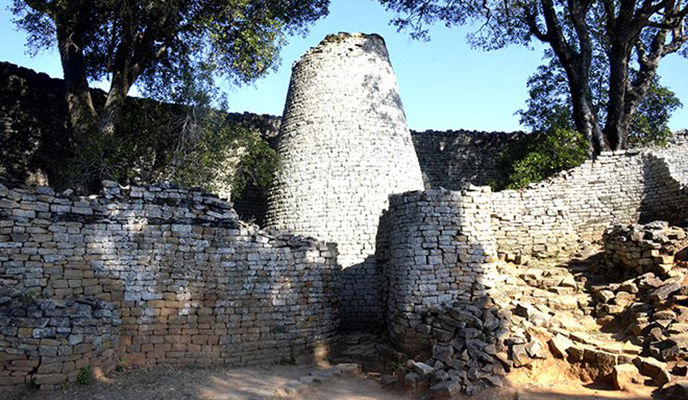
- 1Title, date, form, culture, medium, materials, content, symbolism, original context, purpose, theme, other worksTitle: Great Zimbabwe
Date: c1000-1400
Form: walls: 800ft long, 32ft tall, 17ft thick at base; walls slope inward toward the top; internal and eternal passageways, forcing occupants to walk in single file; stone enclosure
Culture: Great Zimbabwe
Medium: ashlar masonry
Materials: exfoliated granite
Content: Zimbabwe derives from a Shona term meaning “venerated houses” or “houses of stone”; conical tower modeled on traditional shapes of grin silos; passageways parallel experiences in African bush; tower resembles a granary
Symbolism: control over food: wealth, power, and royal largesse; granary: good harvest and prosperity
Original Context: Zimbabwe
Purpose: prosperous trading center and royal complex; probably a royal residence
Theme: ashlar masonry; royal residence
Other Works: Saqsa Woman, Angkor Wat, Parthenon; Palace of Versallis, Macchu Picchu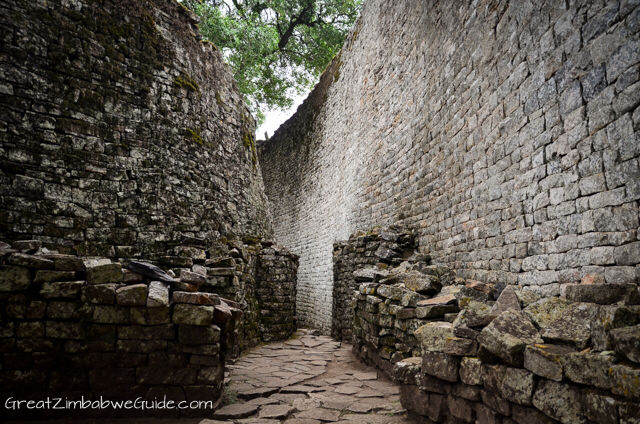
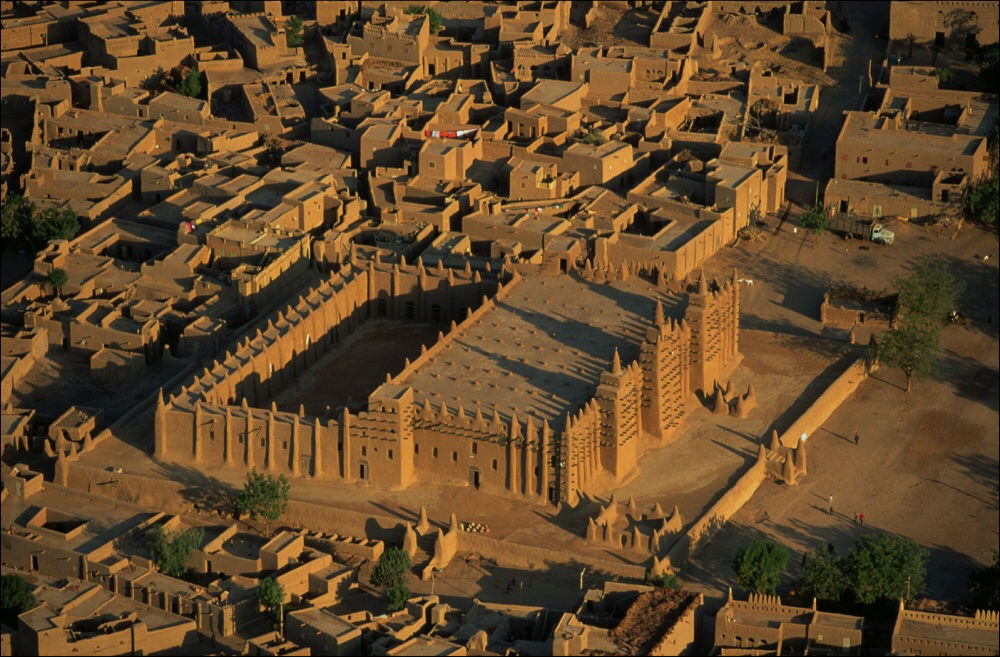
- 2Title, date, form, culture, medium, content, practicality, original context, changes, innovation, theme, other worksTitle: Great Mosque
Date: c1200, remodeled 1906-1907
Form: three tall towers; crowning ornaments have ostrich eggs; torons: old beams projecting from walls
Culture: African
Medium: adobe(mud-brick)
Content: center tower is mihrab; ostrich eggs: fertility and purity; torons act as permanent ladders for the maintenance of the building; largest adobe mosque in the world
Practicality: torons: maintenance; vertical fluting drains water off surfaces quickly
Original Context: Djenné, Mali
Changes: remodeled in 1907
Innovation: torons
Theme: mosque
Other Works: Córdoba Grey Mosque, Mosque of Selim II, Isfahan Great Mosque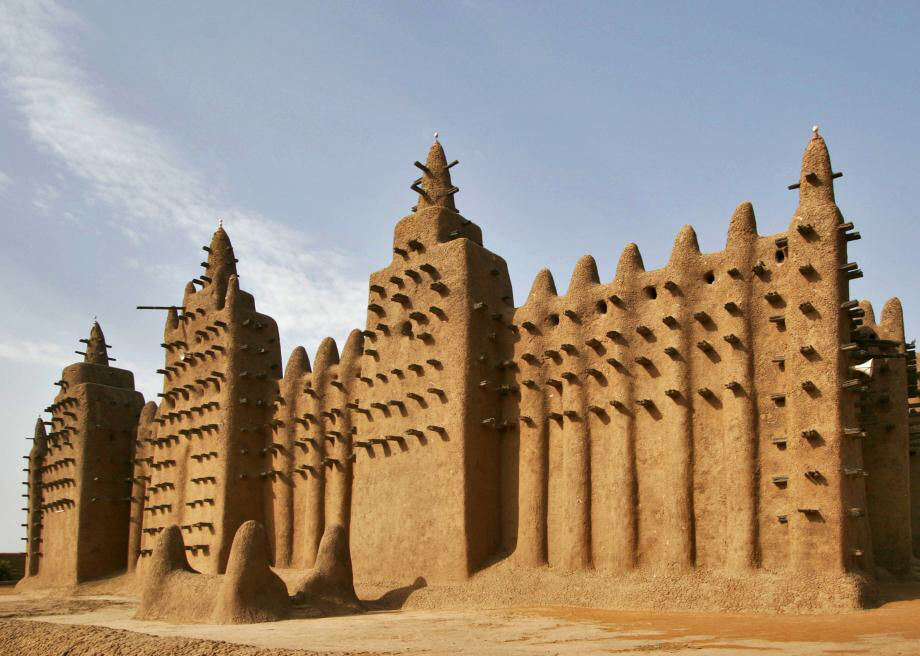
- 3Title, date, form, culture, medium, content, technique, original context, changes, purpose, theme, other worksTitle: Wall plaque from Oba’s palace
Date: 1550-1680
Form: emphasis on heads; bodies are often small and immature; high relief; hierarchical scale; possibly stepping on fallen leader
Culture: Benin
Medium: brass
Content: 900 plaques made; between 16-18 in; part of sprawling palace complex; wooden pillars covered with plaques; shows aspects of court life in Benin culture; Oba(king) believed to be direct descendant of Oranmian, the legendary founder of the dynasty; only the Oba was allowed to be shielded in the way depicted on the plaque; symbols of high rank are emphasized; ceremonial scene at court
Technique: lost wax process(cire Perdue)
Original Context: Metropolitan Museum of Art, New York; Nigeria
Purpose: decorated walls of royal palace in Benin
Theme: bronze/brass work
Other Works: David by Donatello, Great Buddha at Todai-ji; Shiva as Lord of Dance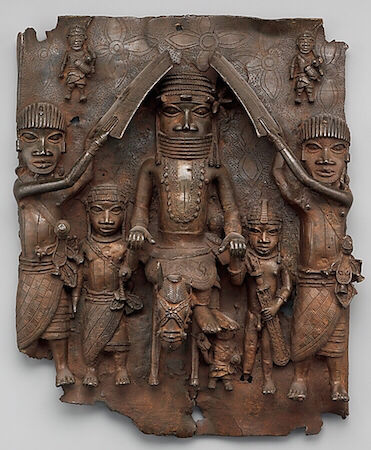
- 4Title, date, form, culture, medium, content, original context, changes, purpose, theme, other worksTitle: Golden Stool
Date: c1700
Form: bells hang from the side; entire surface inlaid with gold
Culture: Ashanti
Medium: gold over wood
Content: symbol of Ashanti nation; never actually used as a stool; never allowed to touch the ground; new king is raised over it; carried to the king on a pillow; he alone is allowed to touch it; taken out on special occasions; bells rung to arm the king of danger; replicas often used in ceremonies , but each replica is different; War of the Golden Stool: March-September 1900, conflict over British sovereignty, they tried to sit on the stool, caused an uproar and subsequent rebellion, war ended in British annexation and Ashanti de facto independence; the stool fell from the sky into the lap of the first king Osei Tutu
Original Context: Ghana(Gold Coast); location unknown
Changes: hidden from the British and never found
Purpose: contains the soul of the nation
Theme: sacred objects
Other Works: Kaaba, Landon Stella, Gold and Jade Crown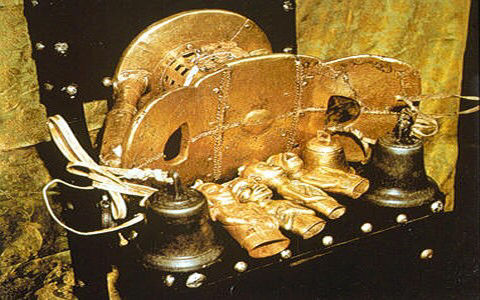
- 5Title, date, form, culture, medium, materials, content, original context, changes, purpose, theme, other worksTitle: Ndop (portrait figure) of King Misheard miShyaang maMbul
Date: 1760-1780
Form: cross-legged pose, sits on a base, face seems uninvolved; above moral affairs; a peace knife in left hand, handle facing out; royal regalia: bracelets, arm bands, belts, headdress
Culture: Kuba
Medium: wood
Materials: wood and oil
Content: presented in an ideal state; not an actual representation of a deceased king, but his spirit; made after death of the king; each king is commemorated by symbols on the base figure; one of the earliest existing African wood sculptures; oldest Ndop in existence; kept in the king’s shrine with other work called a set of “royal charms”
Original Context: Congo
Purpose: commemorative portraits of Kuba rulers, acted as a surrogate for the king in his absence
Theme: authority figures
Other Works: George Washington by Houdon, Tamati Waka Nene by Lindauer, Stele of Hammurabi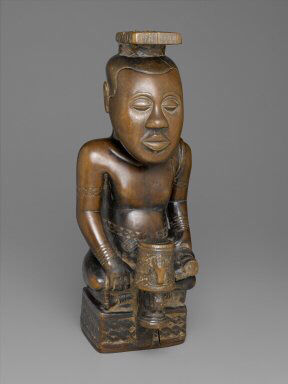
- 6Title, date, form, culture, medium, content, original context, purpose, theme, other worksTitle: Kuba Nyim(ruler) Kot a Mbweeky III in state dress with royal drum
Date: 1971
Form: photo of Kuba ruler enthroned wearing royal regalia: headdress, necklace of leopard teeth, sword, lance, drums of reign, basket; elaborate costume, could weigh 1855 pounds
Culture: Kuba
Medium: photo
Content: he needed help to move in it; costume: splendor of his court, his greatness, his responsibilities, earth, status, and power; ruler often buried with the material after his death
Original Context: Congo
Purpose: royal ceremonies
Theme: display of leadership
Other Works: Augustus of Prima Porta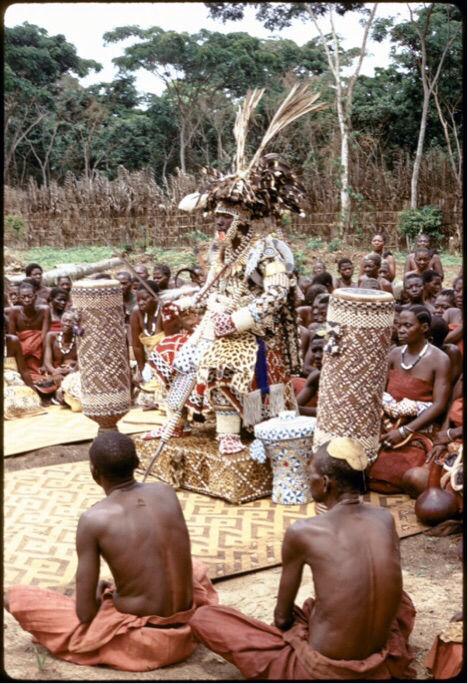
- 7Title, date, form, culture, medium, materials, content, performance, symbolism, original context, changes, purpose, theme, other worksTitle: Nkisi n’kondi (Power figure)
Date: c late 19th century
Form: alert pose, emphasized delvous(navel), pierced with many nails
Culture: Kongo
Medium: power figure
Materials: wood and metal
Content: spirits are embedded in the images; spirits can be called upon to bless or harm others, cause death, or give life;
Performance: nails and blades are inserted or removed from it; medicine was placed inside the delvous
Symbolism: figure: spirits; navel: person’s life/soul
Original Context: Congo
Changes: was painted
Purpose: recovery from disease, helping communities out of difficulties, destroying enemies
Theme: wood; used to gain a power
Other Works: Rottgen Pieta, Transformation mask, Nio guardian figure; Ahu ‘ula, Transformation mask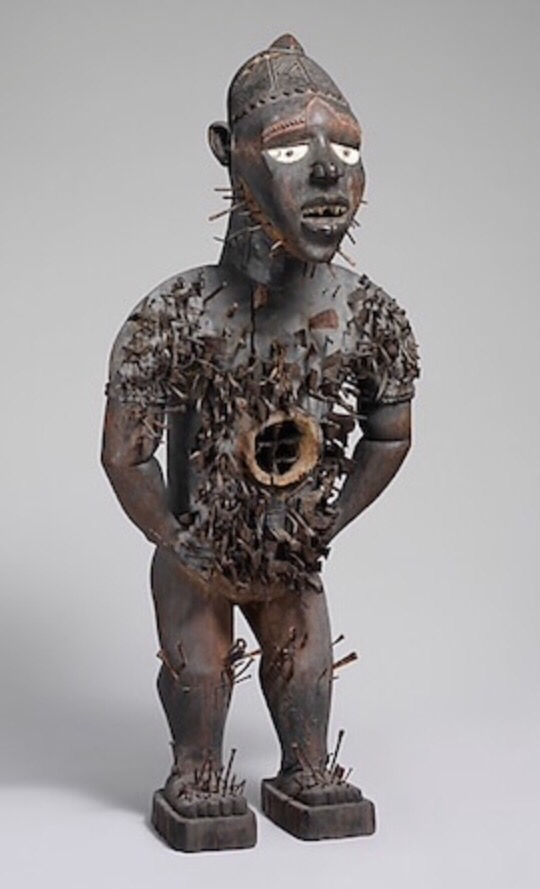
- 8Title, date, form, culture, medium, content, performance, original context, patron, purpose, theme, other worksTitle: Mblo (Portrait mask)
Date: late 19th - early 10th century
Form: broad foreheads, pronounced eye sockets, column-shaped nose; quiet faces; introspective look; peaceful face, meditative; eyebrows in an arch, scarification
Culture: Baule
Medium: wood and pigment
Content: dancer wears it and clothes of the honored person and is accompanied by the actual person during the performance; idealized representation of a real person; not a portrait in the modern sense of the term; portraits of real people, even if commemorative, are rare in African art
Performance: presented at performances in which a person is honored by having ritual dances and tributes are performed in someone’s honor
Original Context: Côte d'Ivoire
Patron: masks commissioned by a group of admirers, not by one person
Purpose: given as a gift that reflects an artistic double
Theme: Performance Art
Other Works: Presentation of Fijian mats; The Crossing by Viola; Plague of Ergastines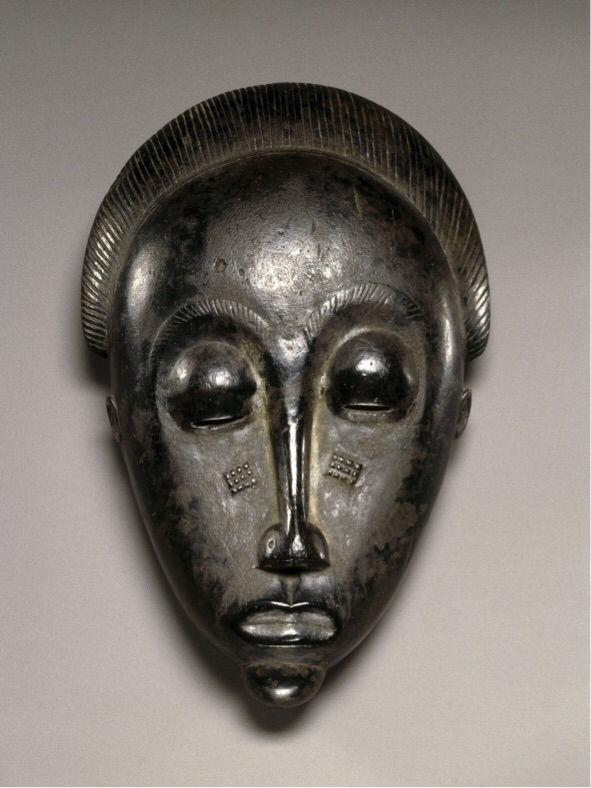
- 9Title, date, form, culture, medium, materials, content, technique, original context, purpose, theme, other worksTitle: Pwo (female) mask
Date: late 19th - early 20th century
Form: enlarged eye sockets, pushed in chin, slender nose, high forehead, balanced features, almost closed eyes, scarification
Culture: Chokwe -matriarchy
Medium: wood
Materials: old, pigment, fiber, and metal
Content: masks depict females, but worn by men, male dancers are covered with their identities. Masked; dressed as omen with braided hair; ritual in which men move like women; closed eyes: death, mysticism; is discarded when not in use; can be burned with the dancer; ideal beauty
Technique: created in secret
Original Context: Congo
Purpose: depict female ancestors
Theme: faces; Performance Art
Other Works: roman patrician, transformation mask, Tamati Waka Nene by Lindauer; Presentation of Fijian mats; The Crossing by Viola; Plague of Ergastines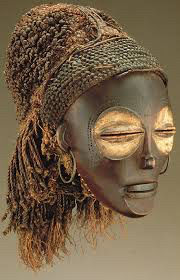
- 10Title, date, form, culture, medium, materials, content, practicality, original context, changes, purpose, theme, other worksTitle: Bundu Mask
Date: 19th - early 20th
Form: large forehead, small silt eyes, tight-lipped mouth, wears rings
Culture: Mende: Sande Society(all female) - prepared girls for adulthood
Medium: wood
Materials: wood, cloth, and fiber(raffia), palm oil
Content: only worn by women; rite of passage in which they had to live outside society for a year and then have this ritual; prepared them for marriage; idealized female beauty; elaborate hairstyle: wealth and status; lips: secrets not revealed; women wear black raffia gown hides the body: Sowei, the water spirit; rings: concentric waves when Sowei breaks through surface water; large forehead: knowledge; individualized; masks rests on head; black: water, coolness, and humanity
Practicality: oil for protection and lustrous effect
Original Context: Sierra Leone
Changes: was a secret until a European exposed the ritual
Purpose: rite of passage from girls to become women and into the Sande society
Theme: performance art
Other Works: Presentation of Fijian mats; The Crossing by Viola; Plague of Ergastines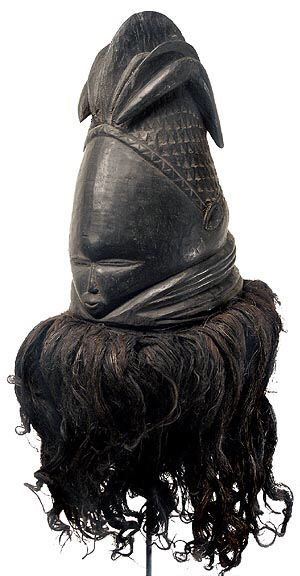
- 11Title, date, form, culture, medium, materials, content, technique, practicality, original context, changes, purpose, theme, other worksTitle: Ikenga “strong right hand” (shrine figure)
Date: c19th -20th century
Form: ram’s horns, may hold sword in right hand
Culture: Igbo
Medium: wood
Materials: the specific wood is hard to carve which symbolizes strength
Content: honors right hand which holds tools or weapons, makes sacrifices, conducts rituals, and alerts to speak at public forums; personal god of achievement and success, horns: power; as man achieves more success he might commission a more elaborate version or more; it is maintained in the man’n home; destroyed when the owner dies; another can reuse it if not destroyed
Tradition: masculine associations of strength and potency
Performance: requires blessings before use; consecrated with offerings before kinsmen
Practicality: oil for protection
Original Context: Nigeria
Purpose: to tell of the owner’s morality, prosperity, achievements, genealogy, social rank
Theme: sculpture in the round
Other Works: Queen Hatshepsut with Offering jars, The Bur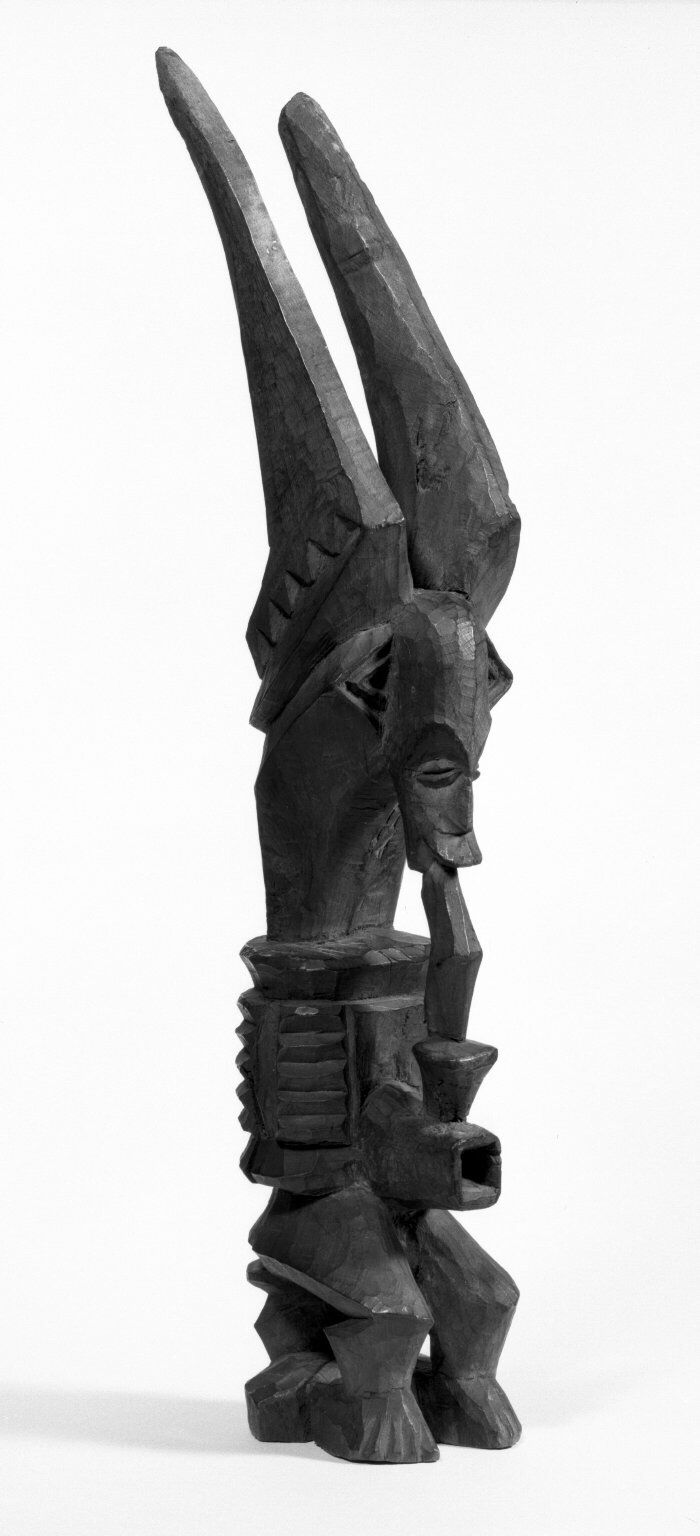
- 12Title, date, form, culture, medium, materials, content, performance, technique, practicality, original context, purpose, theme, other worksTitle: Lukasa (Memory Board)
Date: c19th-20th century
Form: many beads in various patterns on wood
Culture: Luba
Materials: woods, beads, and metal
Content: ability to read is limited to a few people; Mbudye Society: a council of men and women who interpret the political and historical aspects of society and Diviners: fortune tellers
Performance: reader holds lukasa in left hand and traces the designs ith the right index finger
Technique:
Practicality: each beads symbolize elements in a story
Original Context: Democratic Republic of Congo
Purpose: helps the user remember key elements in a story(court ceremonies, migrations, heros, kinship, genealogy, lists of kings)
Theme: Story Telling
Other Works: Bayeuux Tapestry, Column of Trajan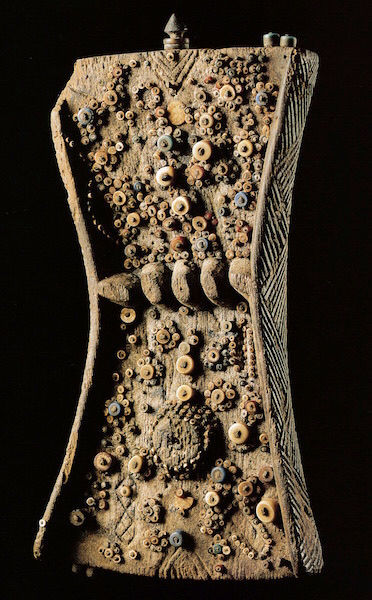
- 13Title, date, form, culture, medium, materials, content, technique, practicality, original context, changes, purpose, theme, other worksTitle: Aka Elephant Mask
Date: c19th - 20th century
Form: human face
Culture: Bamileke: Kuosi Society
Materials: wood, woven raffia, cloth, and beads
Content: only important people could own and wear it; used in royal court, worn on important ceremony occasions; beadwork: power; elephant: strength and power; fits over head and two folds hang in front and behind body; maskers dance barefoot to a drum and gong and wave spears and horsetail
Original Context: Cameroon
Purpose: performance ritual
Theme: Spiritual World, Performance Art
Other Works: Ecstasy of Saint Teresa by Bernini, Staff God; Queen Hatshepsut with Offering Jars; Presentation of Fijian mats; The Crossing by Viola; Plague of Ergastines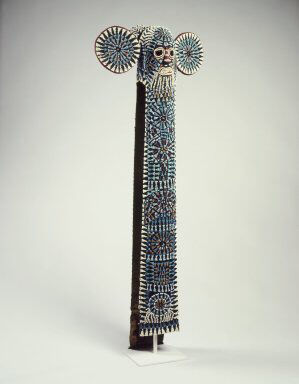
- 14Title, date, form, culture, materials, content, performance, original context, purpose, theme, other worksTitle: Nlo Bieri (reliquary guardian figure)
Date: c19th - 20th century
Form: long body, small, baby-like, but adult, muscular arms and legs, closed eyes, prominent navel, genitals, and head, sitting down, stylized geometric; prayerful gesture and somber look
Culture: Fang: likes opposites of balance
Performance: figures placed on wooden boxes that hold bones of important clan leaders
Materials: wood and oil to add luster and protect against insects
Content: get dangling over the rim in a gesture protecting the contents; composed of characteristics the Fang people highly valued: tranquility, introspection, vitality; prominent navel and genitals: life; prayerful gesture and somber look: death
Will Influence: abstraction of human body an attraction for the early 20th century artists
Original Context: Cameroon
Purpose: guards the head box against the gaze of women or young boys
Theme: male figure
Other Works: Apollo from Veii, David by Donatello, Nio guardian figure
Title, date, form, culture, materials, content, performance, original context, purpose, theme, other works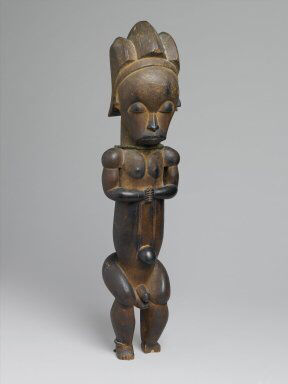
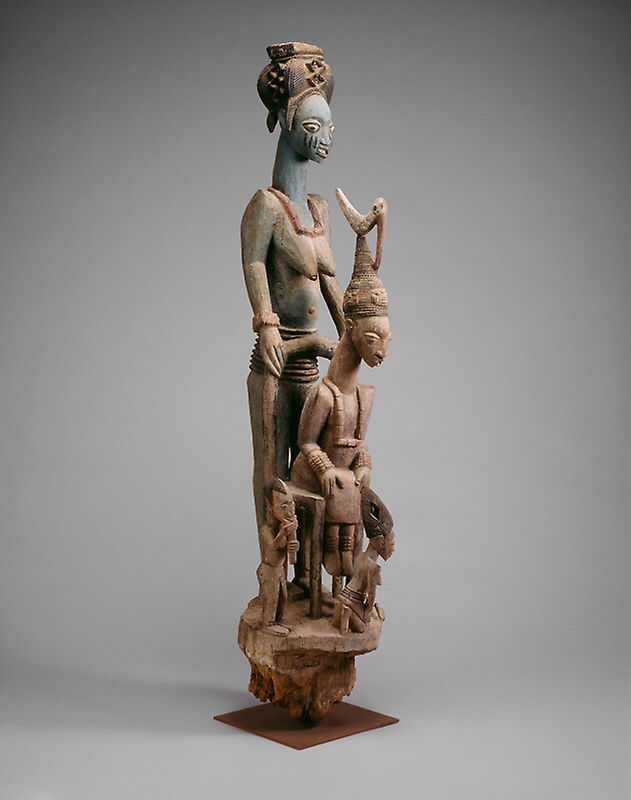
- 15Title, Artist, date, form, culture, materials, content, original context, changes, theme, other worksTitle: Veranda post of enthroned king and senior wife(Opo Ogoga)
Artist: Olowe of Ise: carved posts for the rulers of the Ekiti-Yoruba kingdom in Nigeria
Date: 1910-1914
Form: king is focal pint in relationship between his figure and other represented on this post
Culture: Yoruba
Materials: wood and pigment
Content: one of four carved for the palace at Ikere; negative space creates an openness in the composition; behind him his large-scale senior wife supporting the throne; she crown the king during the coronation; protects him during his reign; small figures, junior wife, flute Esu, the trickster god; a now missing fan bearer
Tradition: most veranda posts were painted
Original Context: Nigeria
Changes: traces of paint remain
Theme: multi-figure sculptures
Other Works: Horses and Dionysos by Helios The Burghers of Calais by Rodin, Menkaura and His Queen