
Fichas
Electricity

Fichas del conjunto (69)
- 1Where does a radio get energy from to make sound?The radio works because ther are batteries inside it. Each cell pushes electricity through the radio's wiring, producing sound.
- 2What energy sources can a radio use?A radio can run off cells, mains electricity, or both.
- 3What is electricity?Electricity is an energy that is used to power electrical items.
- 4In how many directions does electricity flow?In one direction.
- 5What do we call the flow of electricity?Electrical current.
- 6What creates electrical current?The flow of electrons.
- 7What are electrons?Particles in an atom.
- 8What does the current need in order to power something?It needs a continuous path.
- 9What do we call a continuous path along which a current can travel?A complete circuit.
- 10What is a battery/ cell?A battery is a container that stores energy until it is needed.

- 11Give 3 examples of items that only use cells.torches, calculators, TV remotes
- 12Why can we only power small objects with cells?Cells can only store small amounts of power.
- 13What is inside the cell that allows it to store energy?Cells have harmful chemicals in them that store energy and provide it when needed.
- 14What do we call the two sides of a cell?All cells have a positive (+) and negative (-) terminal.
- 15Which direction does the current flow in a cell?The current flows from the positive (+) terminal to the negative (-) terminal.
- 16How should 2 or more cells be placed against each other in order for the current to flow?The negative terminal (-) of one cell must always be against the positive (+) terminal of the next cell.
[-+][-+] - 17What are electrical circuits made up of?Components.
- 18What are the basic parts of a circuit?Components.
- 19Name 3 things to remember when building a circuit.1. A simple circuit is made up of components.
2. Connect the metal part of the wires to the metal parts of the components.
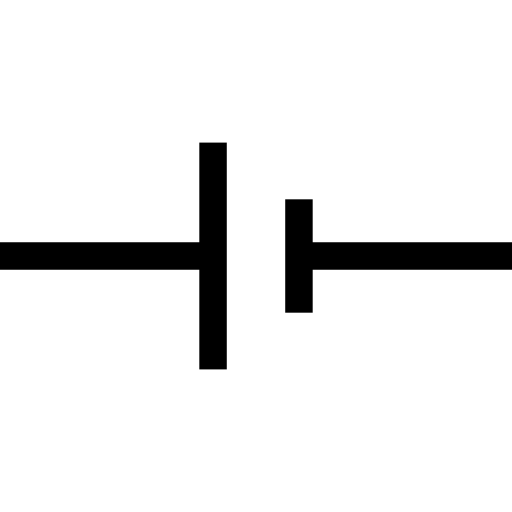
3. Connect all components carefully to allow the current to flow. - 20What component is this the scientific symbol for?A cell
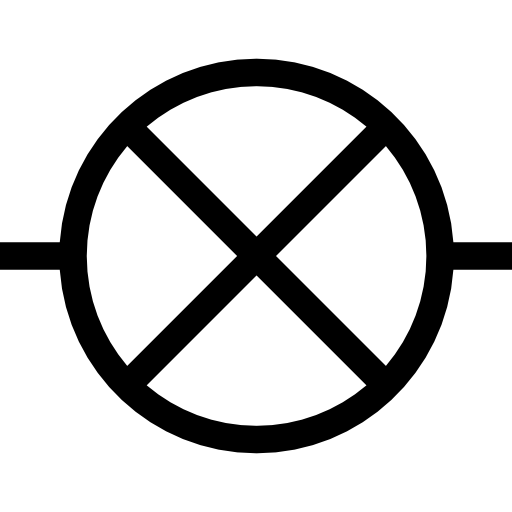
- 21What component is this the scientific symbol for?A lamp.

- 22What component is this the scientific symbol for?An open switch.
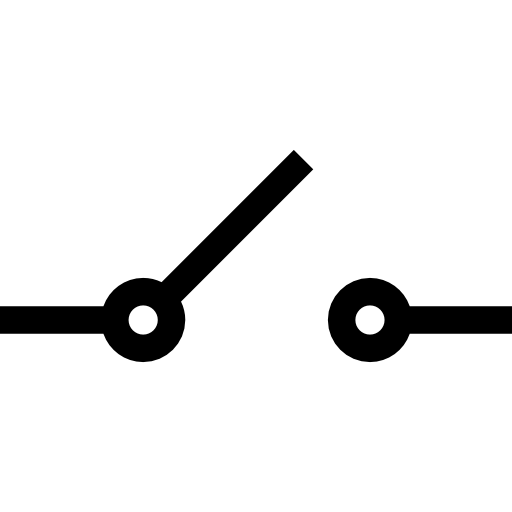
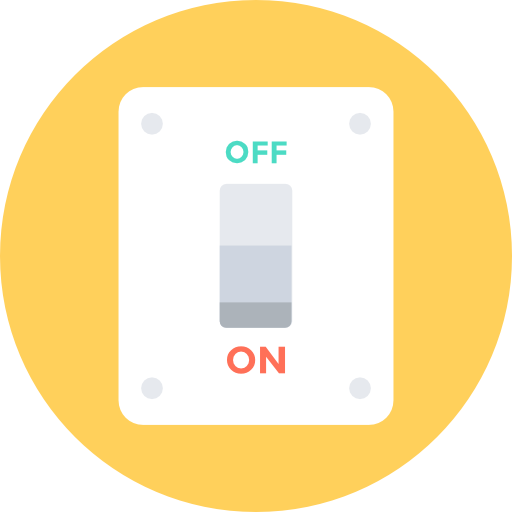
- 23What component is this the scientific symbol for?A closed switch.

- 24______________ What component is this the scientific symbol for?A cable.
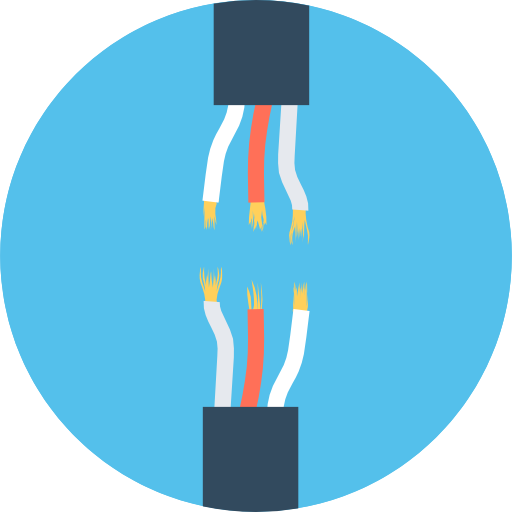
- 25What component is this the scientific symbol for?A buzzer.


- 26What components does this simple circuit comprise of?A cell, a light bulb, and electrical wire.
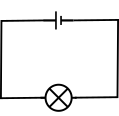
- 27Will the lamp light up in this circuit?Yes. There is a closed circuit.
- 28What would happen if you released one of the wires from the cell?The circuit would be broken and the light bulb would go off.
- 29What happens when you turn on a light switch?The switch closes the circuit and the light shines.
- 30What happens when you turn off a light switch?You create a break in the circuit and the light goes off.
- 31What does a switch do?It controls the electrical current, it turns it on and off.
- 32What are the components in this circuit?A lamp, a cell, an open switch, and electrical wire.
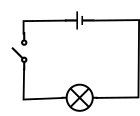
- 33What will happen when you close the switch?The current will flow through the wires and the light will go on.
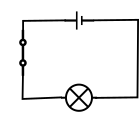
- 34How would you create a break in the circuit?You can open the switch.
- 35What are the components in this circuit?2 cells, 3 lamps, an open switch, and electrical wires.
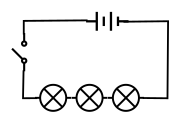
- 36Why do you need more cells in this circuit?You need more cells to provide enough energy for the 3 lamps.
- 37What would happen if you removed one lamp, why?The two remaining lamps will burn brighter than the 3 lamps did.
There is more energy for the 2 lamps to use.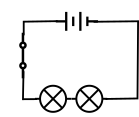
- 38What unit do we use to measure electricity?volts (V)
- 39What does voltage refer to?Voltage refers to the amount of electricity flowing through a wire, as well as the strength of electricity that a component needs.
- 40What will determine how many cells a circuit needs?The voltage required by the buzzer/s or light bulb/s in the circuit.
- 41If there is a 3V buzzer in a circuit, how many V should the cell be?3V
- 42How many 1.5V cells would you need in a circuit in order to power a 3V buzzer?2
- 43What voltage do AA batteries have?1.5V
- 44What voltage did the lamps in your class experiments require?1.5V
- 45What voltage did the buzzer in your class experiments require?9V
- 46If you have a toy that needs 7.5V, why would it not work properly if you only use two 1.5V cells?There would not be enough energy for the toy.
- 47How many 1.5V cells would you need to make a 7.5V toy work?You would need five 1.5V cells.
1.5+1.5+1.5+1.5+1.5=7.5 - 48What is a buzzer?A buzzer is an electrical component that makes a sound, like a doorbell.
- 49Does a buzzer require more or less electrical power than a light bulb?A buzzer needs more electrical power than a light bulb.
- 50What are the components in this circuit?2 cells, 1 buzzer, a switch, and electrical wires.
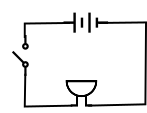
- 51How should the buzzer be connected to the cells? Hint: (+)(-)The (+) terminal of the buzzer should be connected to the (-) terminal of the cell.
- 52How do we make sure the buzzer is correctly connected to the cells?We check the buzzer to see which side is the (+) terminal and which side is the (-) terminal. Then we connect it to the cells correctly.
- 53Will the buzzer in this circuit make a sound, why?Yes, because it is in a complete circuit.
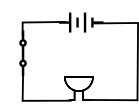
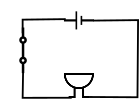
- 54What would happen if you took one cell out of the circuit, why?The buzzer would be softer. One cell provides less energy than two cells.
- 55What do most homes need to run lights and electrical appliances?Mains electricity.

- 56What is mains electricity?It is the main source of electricity that comes from power stations.

- 57Is mains electricity less or more powerful than cells? What voltage does it use?It is much more powerful than cells.
It uses 100V and more.
The exact voltage of mains electricity differs between countries. - 58Give 3 examples of items that only use mains electricity.dishwashers, fridges, electric ovens
- 59Give 3 examples of items that use cells and mains electricity.cell phones, tablets, laptop computers
- 60What do we need to do with electrical appliances in order to run them off mains electricity?We need to plug them into a wall socket.
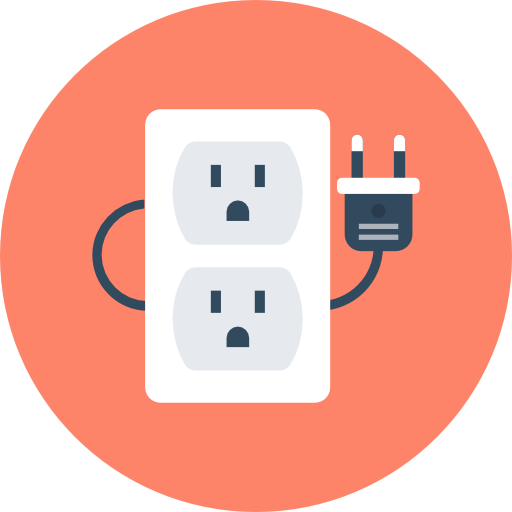
- 61Why is it important to use mains electricity carefully and properly?Mains electricity can be very dangerous because of the high voltage.
- 62What can happen if we do not use mains electricity carefully?It can give us an electrical shock, or it can cause a fire.
- 63Safety rule 1: What can I safely stick into a wall socket?The plug of an electrical appliance.
- 64Safety rule 1: What could happen if I stick my fingers or metal objects into a wall socket?You could get an electrical shock.

- 65Safety rule 2: Can I use water and electricity next to each other?NO! Water conducts electricity and you can get an electric shock through the water.

- 66Safety rule 2: Can I use electrical appliences with wet hands?NO! Water conducts electricity and you can get an electric shock through the water.

- 67Safety rule 3: Can I plug all my appliances into one wall socket?NO! Plugging too many appliances into the same socket can overload it.
- 68Safety rule 3: What can happen if I overload a wall socket?The wires can become hot, melting the plastic around them. The wires will make contact and spark, which can cause a fire.

- 69Do you think we will still use petrol in our cars in the future?At some point, there will be no more petrol to use. We will have to find other ways to power cars. One solution is to use electric cars that charge off mains electricity.

Información
- Descripción
- Icons made by Freepik from www.flaticon.com Icons made by Vectors Market from www.flaticon.com Icons made by Smashicons from www.flaticon.com
- Creado por
- Liesl Marais
- Visitas
- 77
- Etiquetas
- Valoración