Fichas
IPM_V
Fichas del conjunto (37)
- 1How are Conceptual Models formed?- Causality
- Familiarity with similar devices
- Experience and training
- Instructions
- Interaction - 2Good Conceptual model allows...?- understand the relationship between the controls of a device and the outcome
- predict the effects of our actions - 3A poor Conceptual model makes it difficult to?- figure out what to do in new situations
- understand cause/effect
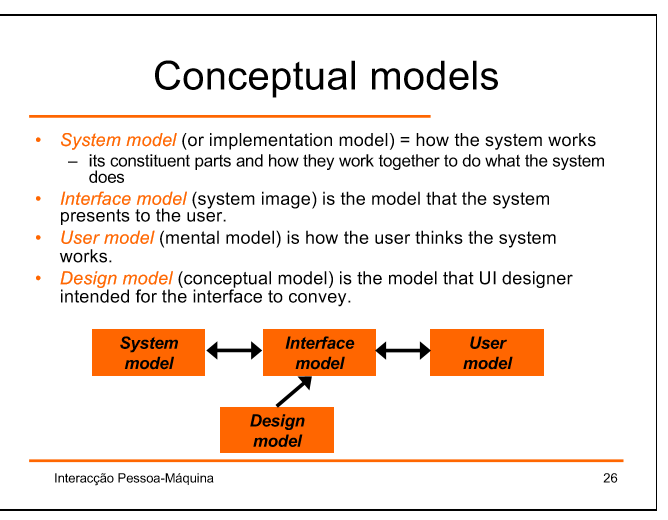
- predict the effects of our actions - 4Conceptual Models
- 5Define the system Model (Implementation Model)- how the system works. its constituent parts and how they work together to do what the system does
- 6Define the interface Model (system image)- is the model that the system presents to the user
- 7Define The user Model (mental model)- is how the user thinks the system works
- 8Define the Design Model (conceptual Model)- is the model that UI designer intended for the interface to convey.
System - 9Designer Expectation?- User Model to be similar to the design Model
- But Designer and user don't communicate directly
- Communication is done through the Interface Model - 10Designer's tasks- Choose the appropriate conceptual model
- Correctly communicate it to the user - 11How to communicate the conceptual model to the user?- Affordances
- Mapping
- Visibility
- Feedback
- Constrains - 12Define "Affordances" in the conceptual model- perceived and actual properties of an object that determine how the object could be used
- 13Enunciate some necessary characteristics about "Affordances"- Appearance should be used to tell the user what to do
- The parts of a user interface should agree in perceived and actual affordances
- When simple things need instruction, the design has failed - 14Define Mappingrelationship between the controls and their effects on the system
- 15Define Natural mappingMapping using uses physical analogies and cultural conventions.
ex: Move control up to move object up; a louder sound to represent a bigger quantity - 16Define Visibilityhow clearly the user sees the state of the interface and all the possible actions
- 17Define Feedback and its importanceCausality exists when something that happens after an action appears to be caused by that action;
- When an action has no visible effect, we may conclude that it was ignored and we repeat it -> Need for feedback - 18Define Constraints+ Possibilities -> bigger difficulty to handle new situations
- restrict the number of possibilities - 19Enumerate some types of Constraints- Physical
- Semantic
- Cultural
- Logical - 20Give some examples of Cultural Constraints- light switch (down is off in the US and on in the UK)
-Taps (left are open in the US and closed in the UK) - 21Define Metaphor in relation to the Conceptual ModelRelating computing to other real-world activity is an effective teaching technique :
-Desktop
-Trashcan - 22Enumerate some of the advantages of using "Metaphors"- Help users to perceive the conceptual model
- Help to understand the “unfamiliar” - 23Enumerate some of the problems of using "Metaphors"- Constraining
- Cultural differences
- Some tasks do not fit into a given metaphor - 24What is consistency in relation to conceptual Modelling?- When people lack the knowledge about how to operate a certain system, they tend to derive the operation by analogy with other similar system
- Similar things should look and act in similar ways - 25What are the types of Consistency?-Internal: within itself
-External: With other applications on the same platform
- Metaphorical:... - 26Define Interaction- Communication between the user and the system
- The interface must effectively translate between them - 27Norman's Model for interaction
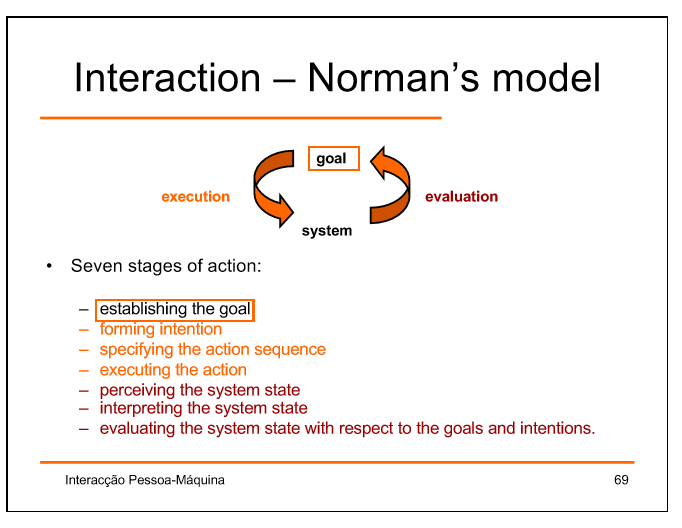
- 28In Norman's model what is the "Gulf of execution"?- the difference between the intentions and the allowable actions
- user’s formulation of actions ≠ actions allowed by the system - 29In Norman's model what is the "Gulf of evaluation"?- reflects the amount of effort the user must exert to interpret the physical state of the system and to determine how well the expectations and intentions have been met
- user’s expectation of changed system state ≠ actual presentation of this state - 30What are the principles of good design by Norman's standards?- Visibility: By looking, the user can tell the state of the device and the alternatives for action
- Affordances: Objects’ appearance determine how the object could be used
- Feedback: The user receives full and continuous feedback about the results of actions
- Good mappings: It is possible to determine the relationship between actions and results, between the controls and their effects, and between the system state and what is visible
- A good conceptual model: The designer provides a good conceptual model for the user, with consistency in the presentation of operations and results and a coherent, consistent system image - 31Tell a way to mitigate the Gulf of execution and the Gulf of evaluation- Affordances, constraints, mappings are helpful (execution)
- Feedback is essential here (evaluation) - 32What should be designers approach to error?- assume all possible errors will occur
- minimize the chance of errors
- minimize the effects of errors when they do occur
- make it easy for users to detect errors
- make it possible to reverse the effects of an error - 33What are the types of errors?- Mistake (form the wrong intention; error in conceptual model)
- Slip (error in carrying out intention)
- Description error (Intended action is replaced by another action with much in common)
- Capture error ( A sequence of actions is replaced by another sequence that starts the same way)
- Mode error (Occurs when devices have different modes of operation and the same action has different meanings depending on the selected mode)
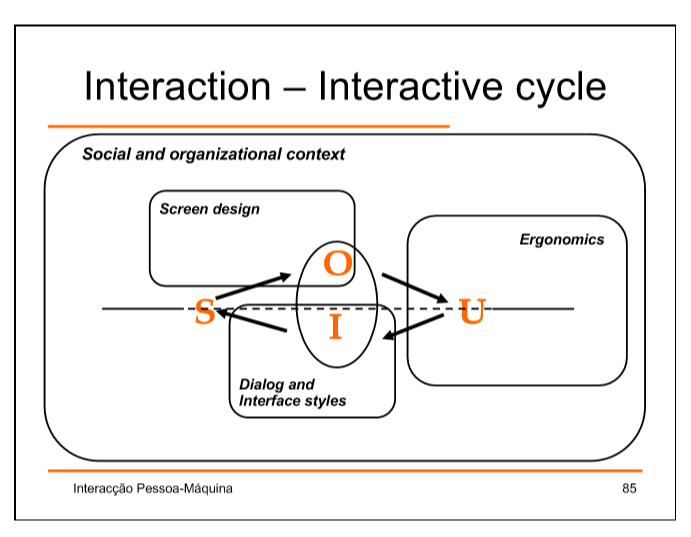
- Lack of consistency - 34Interaction Framework from Abowd and Beale I
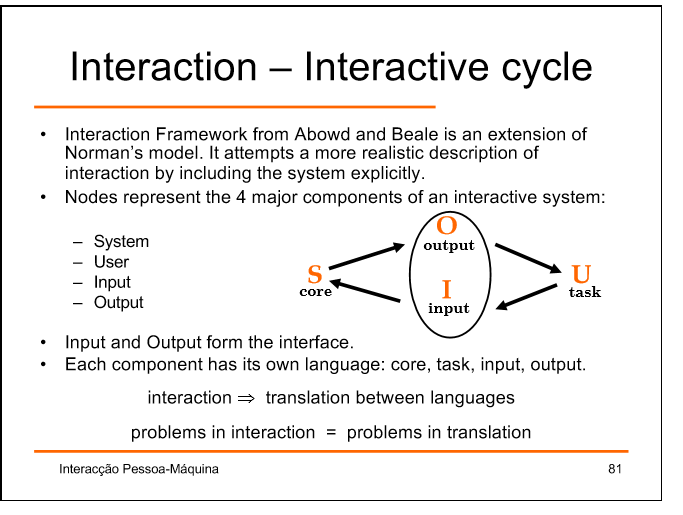
- 35Interaction Framework from Abowd and Beale II
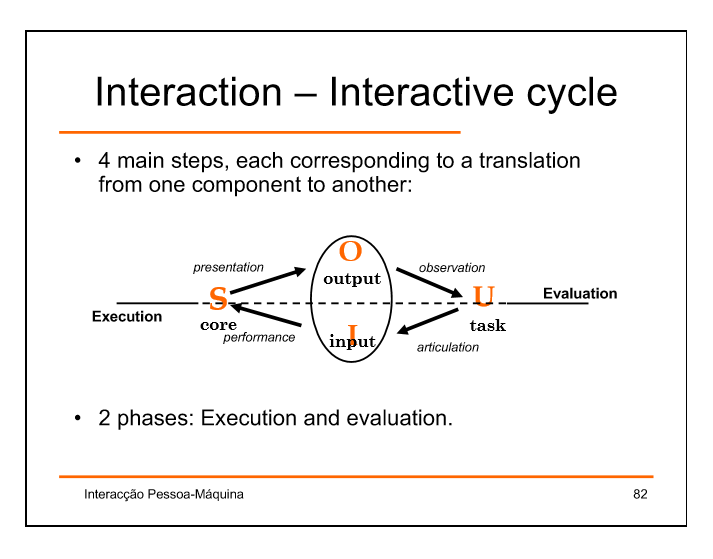
- 36Interaction Framework from Abowd and Beale III
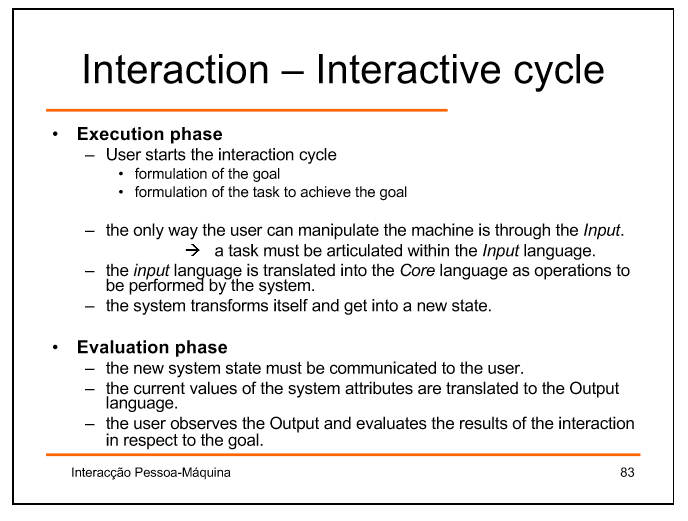
- 37Interaction Framework from Abowd and Beale IV