
Fichas
Level 3 Organics Revision
Fichas del conjunto (64)
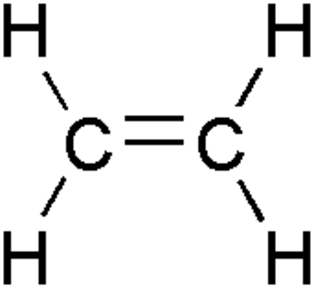
- 1—Double Bond
Alkene
- ene - 2—Hydroxyl Group
Alcohol
- anol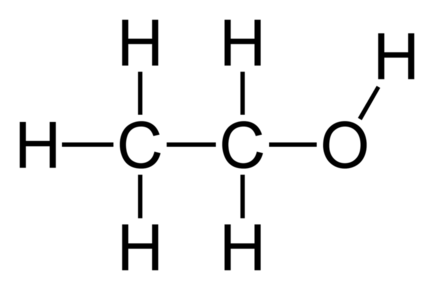
- 3—Carboxyl Group
Carboxylic Acid
- anoic acid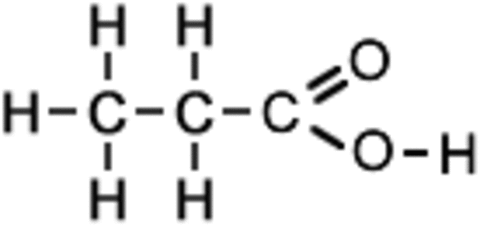
- 4—Ester
Esters
- oate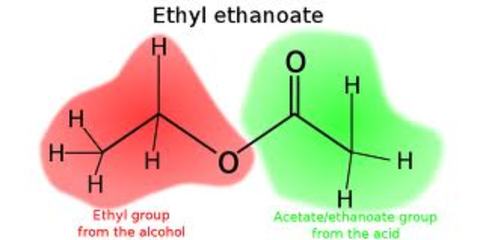
- 5—Chloroalkane group
Haloalkane
- chloroalkane or - bromoalkane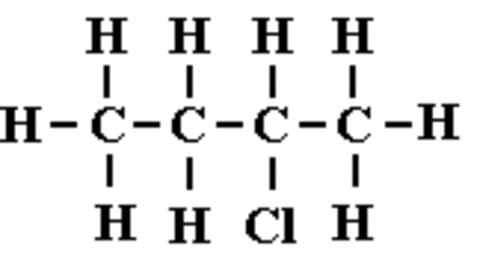
- 6—Carbonyl group
Ketone
- anone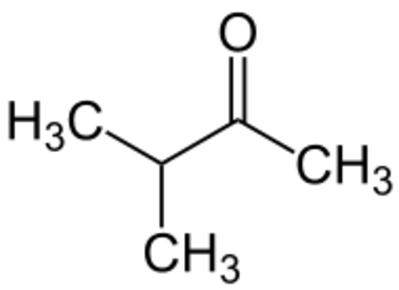
- 7—Aldehyde Group
Aldehyde
- anal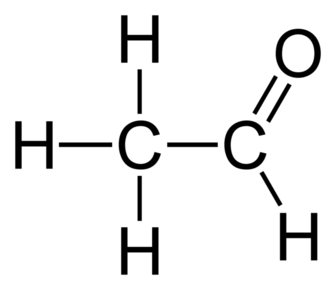
- 8—Amino group
Amide
- amide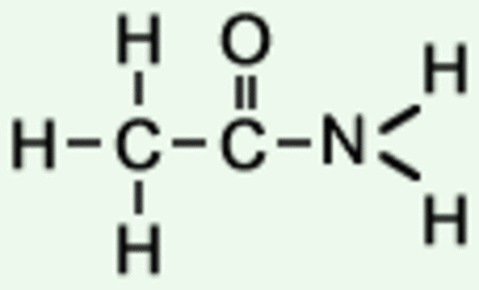
- 9—Acyl chloride group
Acyl chloride
- oyl chloride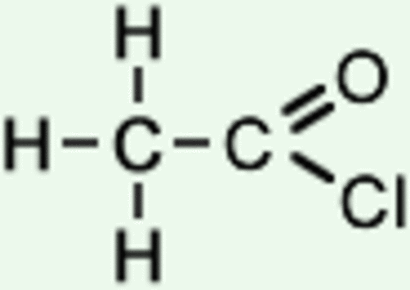
- 10—Amino group
Amine
- amine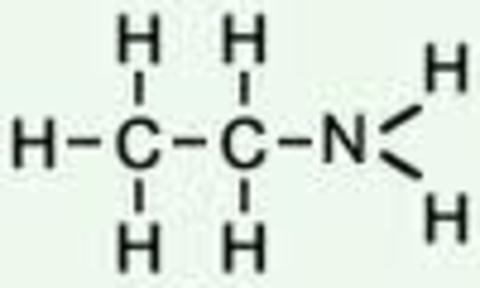
- 11Alkenes: + MnO4- --> + H2O/H2SO4 --> + H2 Ni Catalyst --> + HBr --> + Br2Forms:
Diol
Alcohol (Markovnikov's addition)
Alkane
Haloalkane (Markovnikov's addition)
Di-haloalkane (Makrovnikov's addition) - 12Haloalkanes: + Alcoholic KOHForms:
Alkene (Saytzeff's elimination) - 13Alkanes: + steam cracking + Br2 U.V. lightForms:
Alkene
Haloalkane (forms Br" radical) - 14Haloalkanes: + Alcoholic NH3Forms:
Amine (Nucleophilic Substitution) - 15Amines: + di-amine + di-acid + acyl chlorideForms:
Artificial Polyamide (Nylon)
Natural Polyamide (Protein)
Secondary Amide - 16Alcohols: + Conc. H2SO4 + diols/carboxyllic acids and condensationForms:
Alkenes (Sayteff's elimination)
Polyesters - 17Secondary Alcohol: + H+/Cr2O72- and heatForms:
Ketone (oxidation) - 18Ketones: + Na BH4 + OH-Forms:
Secondary Alcohols (reduction) - 19Sugars: Undergo fermentation to form...Alcohols
- 20Primary Alcohols: + H+/Cr2O72- and HeatForms:
Aldehydes (oxidation) - 21Aldehydes: + Na BH4 + H+/Cr2O72- and Heat refluxForms:
Primary alcohols (reduction)
Carboxylic acids (oxidation) - 22Carboxylic acids: + Metals/carbonates/bases + Alcoholic H2SO4 +SOCl2 or PCl3Forms:
Salts
Esters (condensation)
Acyl Chlorides (substitution) - 23Acyl Chlorides: + H20 (vigorous reaction) + Alcohol + Alcoholic NH3 + AmineForms:
Carboxylis acids (substitution)
Esters (condensation)
Primary Amides (substitution)
Secondary Amides - 24Geometrical isomers occur in _____ and are different in terms of ______. They form ____ and ____ isomers.Occur in alkenes
Different in terms of 3D shape
Form cis and trans isomers - 25Structural isomers: They are the rearrangement of ___________________________________________________________________.They are a rearrangement of the physical atoms in different places.
- 26Optical isomers (enantiomers): The molecule needs a ________________ and it reflects _____________________________________________________________.The molecule needs a chiral carbon and it reflects plane polarised light in opposite directions.
- 27Markovnikov's rule: What is it? What type of reactions does it work for? What type of compounds does it not occur for?-'The rich get richer'
-Addition rections - addition of various things to the double bonds in an assymetric compound
- Does not occur in symmetric compounds - 28ElectrophileSomething that 'likes' electrons = is attracter to a - change
- 29NucleophileSomething that 'likes' the nucleus and is attracted to the + change
- 30Saytzeff's rule:'The poor get poorer'
Works in the opposite direction to Markovnikov's rule - 31Alkanes: Preparation Combustion Substitution Melting/boiling points- readily ungergo both depending on )2 availability
- Hydrogenation of alkenes H2/Ni catalyst + heat
- Cracking to split a long chain into smaller
- C1-C4 Gases
- C5-C16 Liquids
C17+ Solids - 32Alkenes: Combustion Preparation Melting/Boiling points- Incomplete is more common
- Cracking of alkanes (smaller ones as they don't occur naturally)
- Dehydration of alcohols (Conc. H2SO4)
- Elimination of halogens from haloalkanes (Aloholic OH-)
- Similar to alkanes - 33Alkynes: Combustion Preparation (Acetylene = ehtyne)- Simple ones are too reactive to be found in nature
- Calcium carbride + Water
- Burns with luminous/smokey flame
- Burns with very hot flame (excess O2 present) - 34Alcohols: Classification and how each class reactsPrimary - oxidised to form an aldehyde then again to form carboxylic acid
Secondary - Oxidised to form ketone
Tertiary - no reaction - 35Alcohols: Melting/boiling points- Higher than other hydrocarbons because of H bonding between -OH groups strengthens intermolecular forces between molecules
- C1-C4 - Soluable in water (can establish H bond with neighbouring water molecule)
- C1-C8 - liquids at room temp - 36Alcohols: Isomerism - what type of isomers can sometimes occur? Why?- Optical isomers (enantiomers) can sometimes occur
- The central assymetric carbon is bonded to four different groups (chiral carbon) - 37Alcohols: Preparation- Addition of H2O using H+/H2SO4 as a catalyst (Markovnikov)
- Nucleophilic substitution of haloalkanes using aqueous OH-
- More reactive tertiary haloalkanes + water form tertiary alcohols
- Reduction of aldehydes of ketones - 38Alcohols: CombustionBurns readily with non-smokey flame to form Co2 + H2O
- 39Why can't you smell Ethanol gas?- Strong forces (Hydrogen bonds / Intermolecular forces)
- Turns into gas --> looking at boiling point
- When the water is boiling, ethanol boils at 20 degrees and boils off --> vapourises and can't smell it
- Such low boiling point you must seperate it (reflux) - 40Primary Alcohols undergo ___________ reactions with just about any _____________________.Undergo oxidation reactions with just about any oxidising agents.
- 41Ethanol -(H+/MnO4-)->Ethanal -(H+/MnO4- reflux)-> Ethanoic acid
Aldehyde to carboxylic acid is easily oxidised - 42What has happened if a reaction of ethanol with permanganate does not produce a carboxylic acid?The boiling point of the aldehyde may be too high and therefore the aldehyde vapourised
OR
reflux is used to avoid the second reaction. - 43Secondary alcohol reaction: Propan-2-ol -(H+/MnO4-)->Propanone
- 44Tertiary alcohols only oxidise if you ______________________ however the molecule falls apart => cannot be oxidised.boil the heck out of them
- 45Markovnikov and Saytzeff's rules produce _______ products ___% of the time and _________ products __% of the time.Major products 70%
Minor products 30% - 46Saytzeff's rule can only occur from the ___________ products of Markovnikov's rule.Major product
- 47Acyl Chlorides: Preparation What type of reactions do acyl chlorides undergo compared to carboxylic acids?- Formed by nucleophilic substitution of carboxylic acids by PCL3, PCL5 + SOCl2.
- Same reactions as carboxylic acids but because they are more reactive, they react faster and further without a catalyst. - 48Acyl chlorides: Reactions -with water - with ammonia - with amines - with alcohols- very vigorous to form carboxylic acid and hydrogen chloride gas
- readily reacts to form amide and ammonium salt
- readily reacts with primary amines to form secondary amides and ammonium chloride salt
- readily react to form an ester and hydrogen chloride - 49Esters: - Why are they not formed via elimination? - Preparation- Because a double bond is not formed.
- Esterfication/condensation - 50Carboxylic acid and alcohol react in equilibrium to form ___________ when ____________ is used as a catalyst and a reflux is used?Ester
H2SO4 - 51What type of smell foes an ester have and what is it commonly used in?Fruity
Artificial scents and industrial solvents - 52How are polymers formed?Addition reaction --> double bond breaks and forms unpaired electrons
- 53Hydrogen Bonding: It is the strength of _______ and ___________________ interactions between molecules.Temporary and permanent dipole interactions
- 54Hydrogen Bonding: Some compounds have ______________ forces that are much stronger than ordinary ______________ forces.Intermolecular forces
- 55How do you identify an alkene?- K+/MnO4- will form a diol (purple to colourless)
- Br2 water decolourises rapidly proving a double bond - 56How do you identify an alkyne?Baeyer's reagent - K+/MnO4- changes from purple to brown
- 57How do you identify an alcohol?- Add a few drops of acetyl chloride to the unknown and an alcohol will produce heat/HCl gas OR a ppt.
- 58How do you identify an aldehyde?-Add benedict's solution = a red/yellow/yellow-green solution should form if aldehyde present.
- Add a few drops of tollens reagent = a silver/blck ppt. should form - 59How do you identify an amine?Add a few drops NaOH and an oily layer of the amine on top should form if present.
- 60How do you identify a carboxylic acid?Add a few drops of Ethanolic silver nitrate to produce solid silver carboxylate salt which should then redissolve in dilute nitric acid.
- 61—Cis-pent-e-ene
Trans-pent-2-ene
- 62—Propanol
Propan-2-ol
Propan-2-ether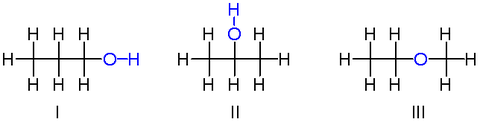
- 63—Optical Isomerism
(Enantiomers)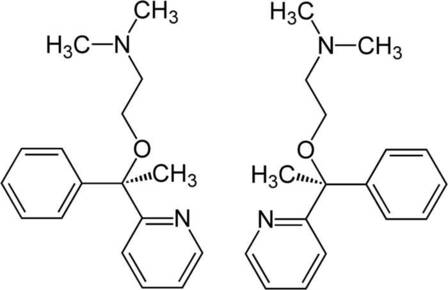
- 64Nucleophilic SubstitutionA nucleophile replaces another one on an atom.
Información
- Descripción
- Entire Organics Paper revision flashcards
- Creado por
- Millie Aitken
- Visitas
- 308
- Etiquetas
- Valoración