
Fichas
Earth and Space
Fichas del conjunto (54)
- 1AsteroidUsually LARGE chunks of rock and metal in space, found in the asteroid belt between Mars and Jupiter. Have no atmosphere and orbit the sun
- 2Meteoritea meteor that makes it all the way through Earth's atmosphere without burning up and actually hits Earth's surface creating a crater
- 3CometSmall bodies of mostly ice with some rock and iron that orbit the sun in elliptical orbits Ex. Halley's Comet
- 4NucleusWater vapor and gas around the nucleus and ice melts near the sun in a COMET
- 5Comet HeadThe nucleus and coma of a COMET
- 6Dust TailTrail of gases, dust, and debris left behind as a COMET gets close to the sun
- 7MeteorMeteoroid that enters Earth's atmosphere and burns up because of friction with the air of the atmosphere rubbing against rock creating enormous amount of heat (thermal energy)
- 8MeteorAlso known as a shooting star; found in Earth's atmosphere
- 9lunar eclipseoccurs when earth's shadow falls on the moon; when the earth is in between the sun and moon
- 10solar eclipseoccurs when the moon's shadow falls on the Earth; when the moon is in between the sun and moon (happens when the sun's light is blocked by the moon)
- 11AccelerationChange in speed and/or direction.
- 12Binary star systemTwo stars in orbit around each other held together by mutual gravitational attraction.
- 13Black holeA very dense object from which nothing, not even light, can escape the strong gravitational pull. A black hole warps space and, possibly, time dramatically.
- 14Electromagnetic spectrumThe entire range of wavelengths or frequencies of electromagnetic radiation (radiant energy from electrically charged particles and the resulting magnetism) extending from gamma rays to the longest radio waves and including visible light.
- 15Escape velocityThe speed necessary to escape the gravitational influences of a massive body. This depends on the distance you are from the center of the body and mass of the body. The closer you are to the center of mass, and the more massive the body, the harder it is to escape and the faster you will have to travel.
- 16Event horizonThe boundary that defines the point-of-no-return for a black hole. The escape velocity at the event horizon is the speed of light, 3x10⁸ m/s. Once this boundary is crossed, no escape or communication with the world, outside the region of the black hole, is possible.
- 17ForceAnything that can cause a change in speed of an object that has mass.
- 18FusionThe process in which nuclei of lighter elements combine to make heavier elements. For example, in the center of main sequence stars, hydrogen nuclei combine to make helium, resulting in a large energy release. This is the way stars are fueled.
- 19GravityThe force of attraction between two bodies that results from their masses. See "Universal Law of Gravitation".
- 20InertiaThe tendency of a body at rest to stay at rest until met by an opposite equal or greater force, and a body in motion to keep moving until met by an opposite equal or greater force.
- 21MassThe quantity of matter in an object. A measure of how much matter an object contains.
- 22SingularityA region of zero volume and infinite density where the warping of space-time is infinite and the laws of physics break down, believed to be at the center of black holes.
- 23Space-timeThe combination of three spatial dimensions, length, width, and height, with time. The four together form the four-dimensional nature of our Universe. The effects of gravity can be regarded, as a result of the curving of space-time due to the presence of massive objects.
- 24Speed of LightThe ultimate speed limit in the Universe. Nothing can go faster than the speed of light (as far as we currently know) and indeed it requires infinite energy to even reach this speed for any particle with mass.
- 25StarA tightly packed ball of mostly hydrogen gas and some helium gas with a nuclear fusion furnace that produces a huge amount of light and heat.
- 26SupernovaDramatic explosions marking the death of stars much more massive than our Sun (Giant and Supergiant stars). Neutron stars or stellar black holes are the objects that can be left behind.
- 27Universal Law of GravitationEvery mass exerts a force of attraction on every other mass.
- 28WeightThe force on an object due to the gravitation influences of a massive object. I have weight because Earth tries to pull me to its center. In space I would have less weight because the force of gravity is less, however my mass would remain the same.
- 29Reflecting telescopeOptical telescope that uses mirrors to enlarge objects
- 30Refracting telescopeOptical telescope that uses glass lenses that CURVE to magnify (make it bigger) objects in space
- 31TelescopeTool used to see distances into space
- 32Space ProbeUNMANNED; goes to a destination or out into space
- 33SpacecraftMANNED; might be in orbit or go to a destination
- 34SatelliteUNMANNED; revolves around a planet or a moon in orbit
- 35Space StationMANNED; revolves around a planet or moon in orbit
Ex. The International Space Station - 36MannedThere are people on it
- 37UnmannedThere are no people on it
- 38Revolution1 year
- 39Rotation1 day
- 40OrbitThe actual PATH the object takes on its revolution
- 41The Milky WayThe galaxy our solar system is located (a spiral galaxy)
- 42Elliptical GalaxyVery little gas or dust, Oval Shaped Galaxy, Mostly made up of older stars
- 43Irregular Galaxythey can be any shape (except oval or spiral), Contain lots of gas and dust, New stars form all the time
- 44Spiral GalaxyMade up of both new and old stars; new stars form at ends of spiral arms, Contain lots of gas and dust in outer edges, not much near the center. Gas and dust pull together to form stars
- 45What causes earth not to fly off into space?The sun's gravitational pull, pulls the earth toward the sun.
- 46What causes Earth not to crash in the sun?Inertia causes the Earth to travel in a straight line.
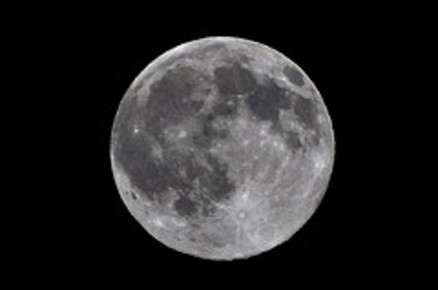
- 47Full Moon
- 48New Moon
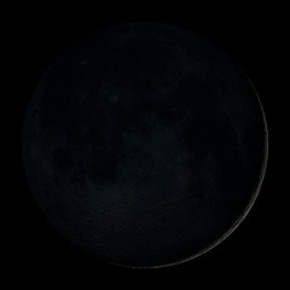
- 49Waning Crescent Moon
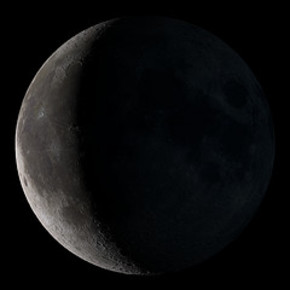
- 50Waxing Crescent Moon
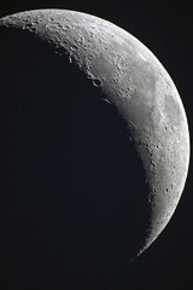
- 51Waning Gibbous Moon
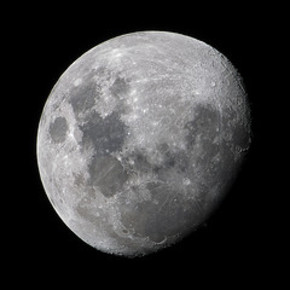
- 52Waxing Gibbous Moon
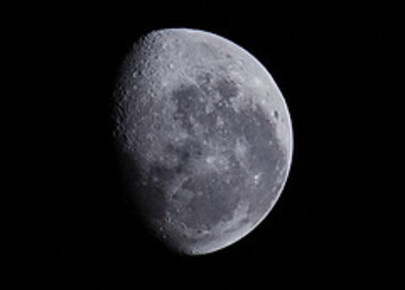
- 53First Quarter Moon
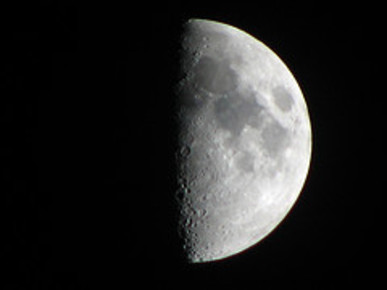
- 54Third Quarter Moon
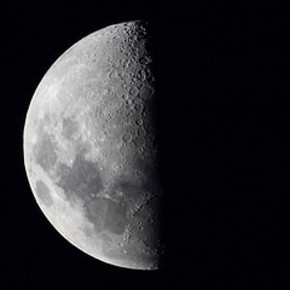
Información
- Descripción
- High School Diploma (8th Grade Science) Science Fichas sobre Earth and Space, creado por Niat L el 12/10/2013.
- Creado por
- Niat L
- Visitas
- 497
- Etiquetas
- Valoración