
Fichas
Instrumental Analysis
Fichas del conjunto (26)
- 1Analytical ChemistryThe Science
of Chemical Measurements. - 2ANALYTE:The compound or chemical
species to be measured, separated or
studied - 3TYPES of ANALYTICAL METHODS: Classical Methods (Earliest Techniques)Separations: precipitation, extraction,
distillation
• Qualitative: boiling points, melting points, refractive index, colour, odour, solubilities
• Quantitative: titrations, gravimetric analysis - 4TYPES of ANALYTICAL METHODS: Instrumental Methods (~post-1930’s)Separations: chromatography,
electrophoresis, etc.
▪ Qualitative or Quantitative: spectroscopy, electrochemical methods, mass spectrometry, NMR, radiochemical methods, etc. - 5CHOOSING AN ANALYTICAL METHODWhat type of information does the method provide?
What are the advantages or disadvantages of the technique versus other methods?
How reproducible and accurate is the technique?
How much or how little sample is required?
How much or how little analyte can be detected?
What types of samples can the method be used with?
Will other components of the sample cause interference? (for example when testing saliva)
before we start our experiments we need to discuss all these questions
Other factors: speed, convenience, cost, availability, skill required. - 6CHARACTERISTICS OF AN ANALYTICAL METHODS Accuracy:The degree to which an experimental result
approaches the true or accepted answer
so whether or not the values are coming to the true value or an accepted answer/value - 7CHARACTERISTICS OF AN ANALYTICAL METHODS Precision:The reproducibility of results. The degree to which an experimental result varies from one determination to the next.
- 8CHARACTERISTICS OF AN ANALYTICAL METHODS Response:The way in which the result or signal of a method varies with the amount of compound or property being
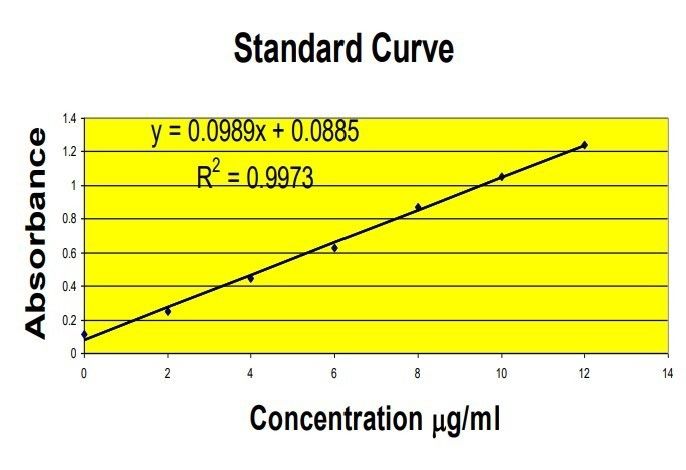
measured. - 9CHARACTERISTICS OF AN ANALYTICAL METHODS Ways to Describe Response:Calibration Curve: A plot of the result or signal vs. the known amount of a known
compound or property (standard) being measured.
whenever you have a straight line graph you need to have a straight line equation and the R^2 value and explain the meaning of it. A value closest to 1 is good. the bare minimum should be 0.9 - 10CHARACTERISTICS OF AN ANALYTICAL METHODS Sensitivity:ability to discriminate between small differences in analyte concentration.
Slope and reproducibility of the calibration curve.
how you analyse your method and choose your method because method A is more sensitive it should be used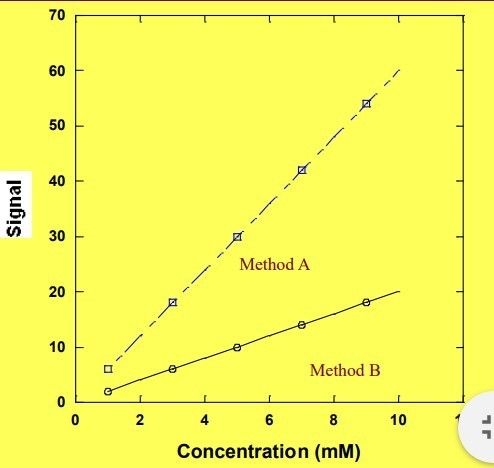
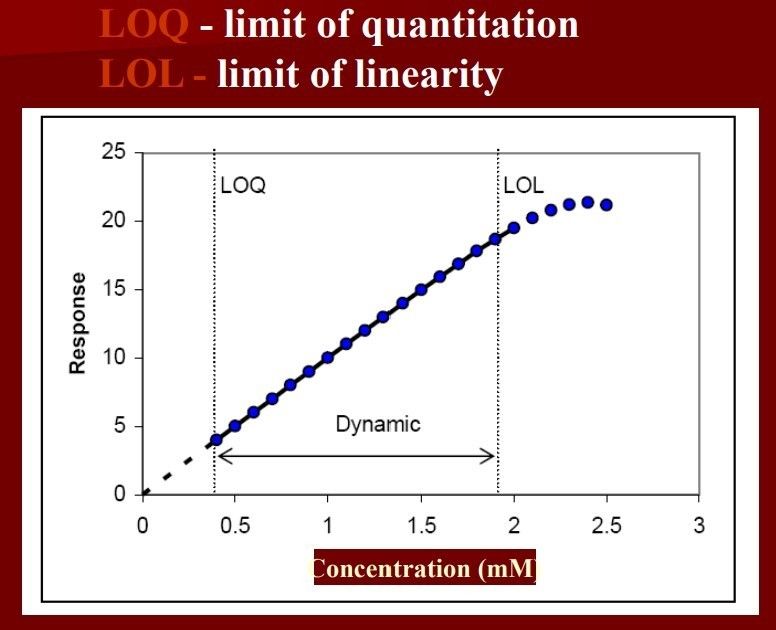
- 11Limits of Detection:Minimum concentration or
mass of analyte that can be detected at a known confidence level.
Limits of Quantification: Minimum concentration or mass of analyte that can be quantified with CERTAINITY! - 12Signal-to-noise Ratio (S/N):its a kind of measurement when thinking about the lines of detection
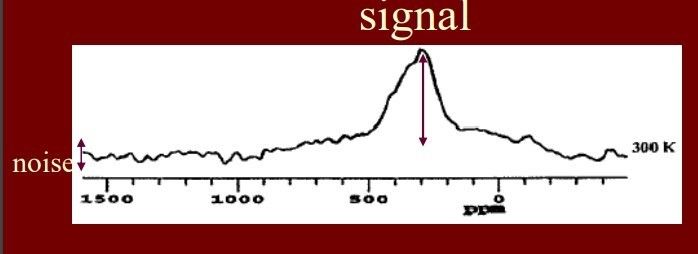
- 13Dynamic Range:linear region of calibration curve
where the lower limit is ten times the standard deviation
of the blank. - 14Dynamic Range: the first area isn't accurate. The dynamic region represents the straight line in the graph. This is coming from the signal to noise ratio. You come to the stage where a straight line doesn't continue and that is not the dynamic range and when you get to this point you can dilute your r sample
- 15THE PROCESS OF ANALYTICAL METHOD DEVELOPMENT 1. Define The Question -– What information is needed?
– How accurately must the answer be
known?
– What legal constraints apply to the
results? - 16THE PROCESS OF ANALYTICAL METHOD DEVELOPMENT 2. Select the best available method for the analysis– This is the most difficult step and requires the most background.
– What “Differentiating Characteristic” does the analyte have? - Get a Handle on the Molecule
– What tools are available to exploit that
characteristic? - 17THE PROCESS OF ANALYTICAL METHOD DEVELOPMENT 3. How will the method be validated– Are Standard Reference Materials
Available
– QA/QC of your method - 18THE PROCESS OF ANALYTICAL METHOD DEVELOPMENT 4. Sampling -The sample to be analysed must be representative of the bulk of material of interest.• It must not be contaminated or altered prior to analysis.
• How much sample, what particle size, how many replicates.
• You must measure the sample
accurately. - 19THE PROCESS OF ANALYTICAL METHOD DEVELOPMENT 5. Sample Preparation.– Most samples do not come ready for
analysis.
– The process of getting them ready for a
measurement is, in many respects, more
important than the measurement itself.
• Without accurate preparation, the
measurement is useless. - 20THE PROCESS OF ANALYTICAL METHOD DEVELOPMENT 6. Separation - remove interferences– Not always be required
– Most separations involve an equilibration between
phases.
• Solid-Liquid (precipitation, SPE), Gas-Liquid (distillation, GC), Liquid-Liquid (extraction, HPLC).
• Modern chromatographic methods often allow the separation of as many as 1000 components in a
mixture. - 21THE PROCESS OF ANALYTICAL METHOD DEVELOPMENT 7. Measurement-Analysis.– Step most often associated with
Analytical Techniques.
– Often done by specialists when the
specific measurement involves complex
instrumentation.
• Robotic systems are also becoming
important here. - 22THE PROCESS OF ANALYTICAL METHOD DEVELOPMENT• Chemical Measurements
– Cheap and accurate
– Require no calibration.
• However
– Often slow, insensitive to trace
amounts, and difficult to automate.
• Titrations.
• Gravimetric Analysis - 23THE PROCESS OF ANALYTICAL METHOD DEVELOPMENT• Physical Measurements.
– High sensitivity, continuous or automated
operation, speed (low cost).
– However- require careful calibration and
offer lower precision than the chemical
methods.
• Spectroscopy
• Electrochemistry
• Physical property measurement - 24THE PROCESS OF ANALYTICAL METHOD DEVELOPMENT 9. Evaluation Of Data.– Calculating the result
– Evaluating the significance of the result.
– QA/QC - how well the experiment was done
and how much confidence can be placed in the
answer. (decisions affecting lives and money
are at stake)
– Chemometrics is a growing field within
chemistry which deals entirely with data and
experimental optimization. - 25HOW TO DO WELL IN THIS COURSE!!• LEARN TO DISCRIMINATE WHAT IS IMPORTANT
FROM WHAT IS NOT.
• You cannot get by with just memorizing everything.
• Appropriate problem solving is the name of the
game here!
•Attend the lecture – the lecturer will tell you
where to focus!
• In the lab - balance being too careful and never
getting finished with being too sloppy and getting
terrible results. You can not afford not to attend
the labs. - 26—
Información
- Descripción
- Fichas sobre Instrumental Analysis, creado por megan trent el 19/01/2021.
- Creado por
- megan trent
- Visitas
- 1
- Valoración