
Fichas
population (uneven economic development)
Fichas del conjunto (23)
- 1Population densityThe average number of people per square kilometre
=total population ÷ total land area in km² - 2Factors that attract settlement1.temperate climate
2.flat fertile land
3.good supplies of natural resources - 3factors that discourage settlement1. extreme climates
2. highland areas,
3.dense vegetation - 4socioeconomic factorsability of providing jobs and high wages that can contribute to high migration population density
- 5Political factorsfor example health, education, roads, power generation and clean water and wars that contribute to low population density because people leave the area
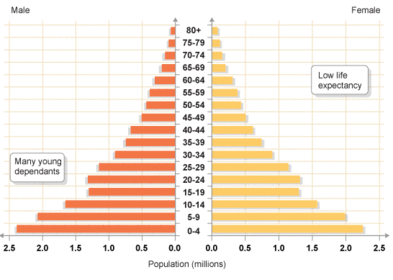
- 6What do population pyramids show?the population of a place comparing numbers of people in different age groups and their life expectancy between men and women
- 7What do demographic transition models show?They show the difference in population between
LEDCs and MEDCs in terms of birth and death rates and total population.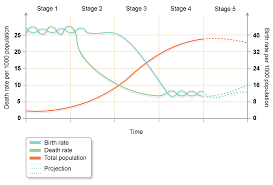
- 8three main causes of population change-births
-deaths
-migration - 9how to calculate the natural increase of a population changeNatural increase = birth rate - death rate
e.g, if the birth rate is 14 per 1,000 population, and the death rate is 8 per 1000 population, then the natural increase is = 14 - 8 = 6
6/1000=0.6% - 10declining populationwhen the death rate is higher than the birth rate
- 11Increasing populationwhen the death rate is lower than the birth rate
- 12Causes of population growth in LEDCs-contraception knowledge
-child labour provides income, can also take care of elders or younger children
-High rates of infant mortality
-its traditional/cultural to have large families - 13problems that are caused by a high rate of young population in a LEDC-need of more health care
-eduaction resources
-etc - 14The one-child policy-stablished in 1979
-meant that each couple were only allowed to have one child - 15advantages of the one-child policyAD-access of education
-childcare
-health care - 16Problems with disobeying the one-child policyno benefits for any child
-fined for enforcing the policy
-rural areas resisted whereas urban areas enforced because it was the tradition.
-many were forced to abort or forced to be sterilised.
- - 17long-term implications with the one-child policy-falling birth rate=rise of the ederly population
-working age population have to support the growing elderly dependants
-china will have an aging population - 18reasons why average life expectancy in MEDCs is rising1.improvements=of medicine, health care, knowledge of the importance of balanced diet and regular exercise; living standards and quality of life.
2.increased leisure and recreation time - 19the effects of an ageing population in a MEDCs-chage of population structure
- increase of elderly people as a proportion of the population
-number of young dependants fall=elderly dependants rises
-fewer economically active people to support the elderly population
country forced to adopt a pro-natalist policy - 20the cause of low fertility rate-contraception aware and ability
- Women choose to follow their career
-later marriages
-state benefits - 21pro-natalist policy in France- £675 monthly for a mothers to stay off work for 1year
-given carte famille nombreuse (vouchers/reductions)
-more income tax
-3 years parental leave - 22how UK is coping with the aging populationEncouraging: -putting off money for retirement
-increasing the retirement age
- building facility for elders in preference for school
-Economically active skilled and unskilled migrants to live in UK - 23—