
Fichas
Tools and Processes
Fichas del conjunto (36)
- 1Name 3 types of sawTenon saw (rectangle)
Hacksaw
Coping saw
Ripsaw (angled rectangle) - 2What is a bench planeAn angled blade that shaves thin layers of material. Use on wood
- 3What are files and why are they usedFiles have small teeth to cut away materials. Some are for fine cuts or finishing
They come in different shapes like round
Cabinet rasps files used on wood - 4Types of drills and their shapesBradawl is used to make a pilot hole
• twist bits drill small holes
•high speed steel (HSS) used on metal and plastic
•flat bits used on wood or plastic to drill large flat holes - 5Types of chiselsWood chisels are hit with mallets
Gougers are used for sculpting
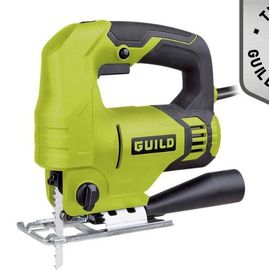
Cold chisels are hit with hammer, used with metals - 6features of jigsawJigsaw- interchangeable blades and speeds
Slow, straight or curved cuts - 7Features of circular sawWood held stationary and saw is moved along it using adjustable fences for guidance
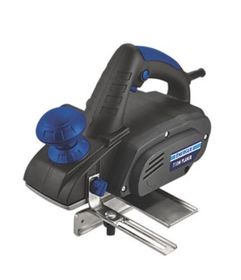
Good for quick straight cuts - 8Features of planerused to flatten surface of wood and reduce thickness to a certain measurement
- 9Features of lathewood lathes and engineer's lathes (metals)
-piece of material is held and rotated by the lathe, while turning tool or cutting bit is pressed onto material to cut it. Makes round objects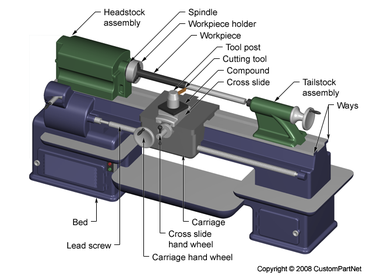
- 10What is a sanding diskspins a disk of abrasive paper that material is pushed against.
-used to trim to an accurate line
-diff paper available for metals, wood, plastic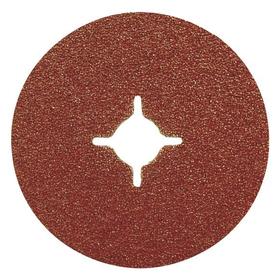
- 11what is a bench grinder?contains abrasive wheels of different grades
used to remove material for shaping or finishing purposes as well as for sharpening edged tools like chisels - 12what's a milling machine?used to remove material one thin layer at a time to produce required shape or size
make surface absolutely flat
accurate finish - 13process of folding sheet metal:-use a sheet metal folder to shape metals like aluminium and tin plate
-feed metal in flat, and make one fold after the other - 14uses of jigs or formerscan bend cold and thin pieces of metal
- 15what is forging? ANVILa forge is a fire with air blown into the middle, to produce a very hot flame
when metal is hot enough and soft, it is placed on an anvil to be hammered into shape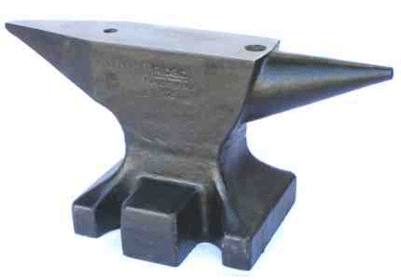
- 16process of laminating-laminating is gluing thin strips of wood together
-strips 2-6mm thick are glued and held in a jig to keep them in shape
-rocking chair runners, roof beams - 17Line bending on plastics:-ideal for acrylic sheets (pencil holder)
-manually, with line bender or strip heater
-rest sheet on 2 bars with heater in between. Line to be bend is directly above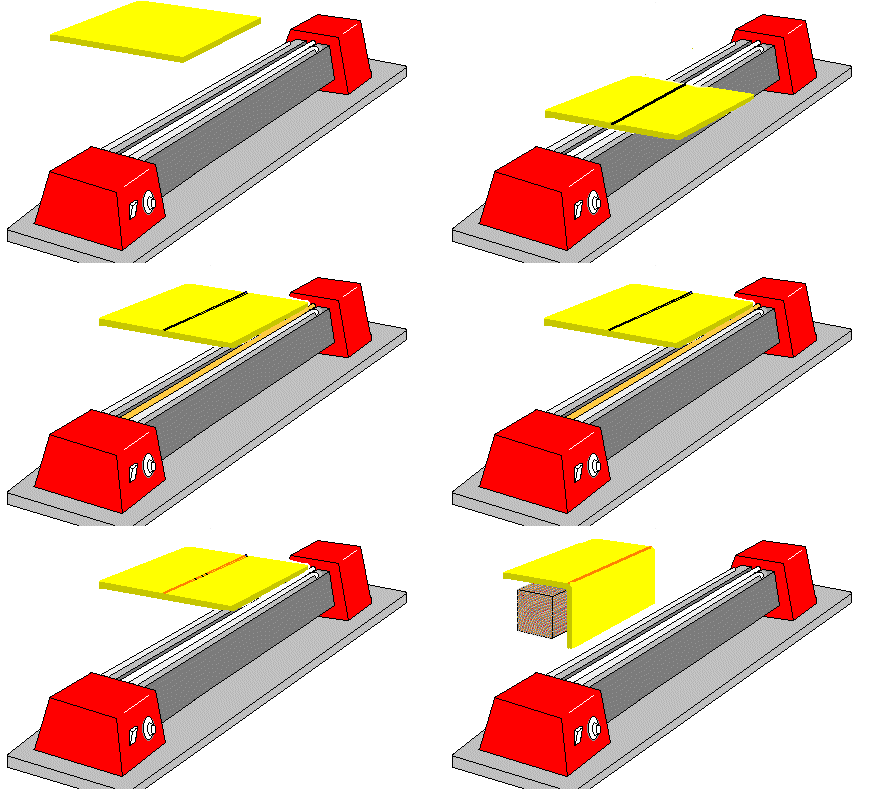
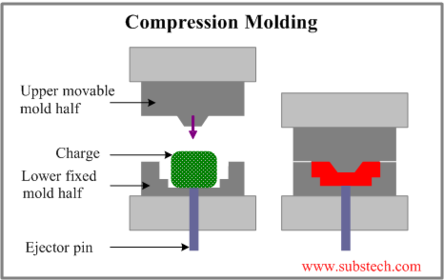
- 18describe press moulding:Thermosetting plastic powder like melamine formaldehyde is put into female mould. A former or male mould is pressed on top, pushing plastic into mould. High temp and pressure liquefy the powder and plastic into permanent shape.
- 19process of vacuum forming:-sheet of thermoplastic like HIPS is heated until soft.
-mould put onto vacuum bed, bed lifted close to heated plastic
-air sucked out from under plastic, making a vacuum. Air pressure from outside then forces plastic onto the mould. - 20process of blow moulding:tube of softened plastic is inserted into solid mould. air is then injected so it takes the shape of the mould
method used for bottles and containers - 21process of die casting:used to mould metals and plastics
material is melted and poured into mould which is the shape of the product - 22process of injection moulding:-uses pressure to mould plastics
-molten material is forced into mould by
pressure
-moulds often made from tool steel-££
-plastic melted in built in heater
- industrial, usually automatic and continuous - 23process of extrusion:produces long continuous strips
-used for metals and thermoplastics
-material melted and forced under pressure through a die
-exact same shape as exit hole
-plastic covered wire.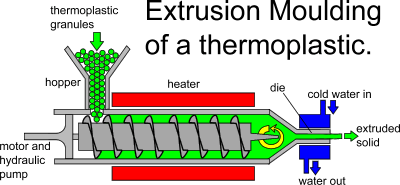
- 24Things to consider before assembly:-dry run
-order of assembly (if permanent espesh)
-clean; grease stops joints
-sometimes apply finish before assembly
-clamping time - 25Things to consider before finish:-remove tool marks and blemishes with emery cloth, files, glasspaper
-if painting, clean surface w white spirit
-select correct type of paint
-cellulose paint on metals, spaying not efficient - 26woodscrewsrequire pilot holes to be drilled before screw inserted. When screwed by screwdriver the thread pulls into the wood.
-different heads; round and slotted, cross, countersunk and slotted - 27self-tapping screwshave hardened threads and are designed to cut their own threaded hole in materials like metals and hard plastics
- 28machine screws:straight shank and used with washers and nuts. Some tightened with screw-drivers, others with Allen keys
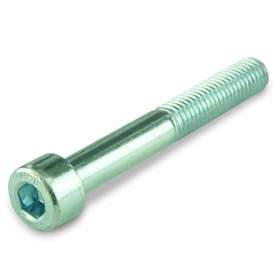
- 29screws and boltsboth usually made from steel, brass or plated with zinc
bolts are similar to machine screws but have square or hexagonal head and are tightened with sanner - 30nails-straight shank no thread
-only used in wood, quicker than screw
-weak joint
-mostly steel, different heads - 31threaded jointsxxx
- 32jointsuse paper flashcards
- 33process solderingrelatively low temp process. Solder, made from tin is melted onto components to be joined; sticks tg when cool and solid
- 34process brazinghigher temp, using brass spelter as joining material. stronger.
-blow torch, gas brazing torch, elec-arc welder - 35process welding:strongest method, uses v high temp
-oxyacetylene torch, electric-ace welder, laser
-melts edges of joins so they flow together
-wear welding mask to protect eyes from bright light and UV radiation. Protection from heat and sparks too - 36preparing the joint-well fitted with minimal gaps
-very clean, and grease free; use solvents like white spirit
-flux is a cleaning agent used when soldering, brazing and sometimes welding. Stops air from oxidising the metal surface when heating it as this would stop the joint from taking
Información
- Descripción
- GCSE Resistant Materials Fichas sobre Tools and Processes, creado por Liv Young el 25/04/2016.
- Creado por
- Liv Young
- Visitas
- 0
- Valoración