
Fichas
Targeting DNA with Anti-Tumour Drugs
Fichas del conjunto (13)
- 1STRATEGY 1 (3 points to be made)BINDING BETWEEN DNA BASES
- intercalating drugs contain planar aromatic/heteroaromatic ring systems
- small enough to fit between holes
- once bound inhibits enzyme involved in replication + transcription - 2STRATEGY 1 EXAMPLE 1Doxorubicin
- naturally occurring antibiotic, anthracydines
- intercalates into DNA, is a poison to topoisomerase II, stabilizes complexes, APOPTOSIS
- can chelate iron from hydroxyquinone to form iron-DNA complex causing a single strand break
- causes cardio toxicity side effect
-inhibits DNA helicase - 3STRATEGY 1 EXAMPLE 2Ditercalinium
-tetracation therefore has ionic interactions with DNA phosphate ester
- adds stability to adduct, too many stablised complexes leads to APOPTOSIS - 4STRATEGY 2 (4 points to be made)BINDING TO THE GROOVES OF DNA
- small molecules will react with DNA by binding to the grooves
-major groove: when DNA backbone are far apart
- minor groove: when DNA backbone are close together
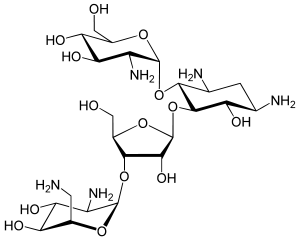
- DNA binding occurs mostly at major groove as to avoid backbone - 5STRATEGY 1 EXAMPLE 1NEOMYCICN
-binding affinity (7.1-8.5 k.cal.mol-1)
- groove binding characteristics: cyclohexane rings attached by oxygen atoms - 6STRATEGY 1 EXAMPLE 2 - PARMOMOYCIN (structure)
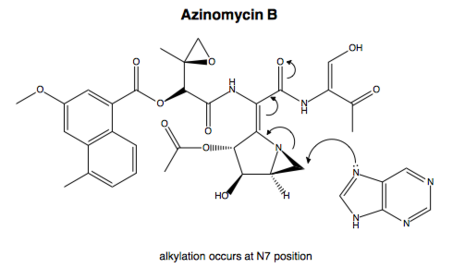
- 7STRATEGY 3 (4 points ot be made)ALKYLATING DNA
- most potent way to target cancer with natural products
- strained three-membered ring "chemical warhead" heterocycles
- drugs interact with DNA by forming interstrand crosslinks
-highly electrophilic compounds with poor selectivity - 8STRATEGY 3 EXAMPLE 1
- 9STRATEGY 3 EXAMPLE 2DUOCARMYCIN
- protonation at heteroatom, activates electrophile so can react with a weak nucleophile
- dienone ir protonated reduced electron density in pi system by activating heat
- alkylated by N-adenine - 10STRATEGY 4 (1 points to be made)CLEAVING OF DNA
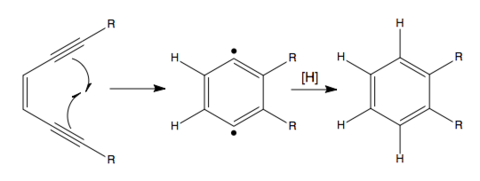
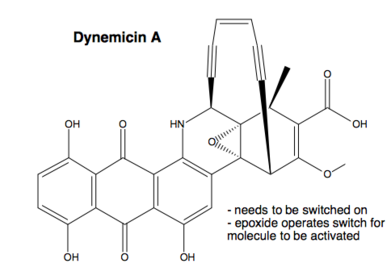
-DNA cutters cleave strands of DNA and prevent enzymes to fix it
- DNA radicals appear on the structure + react with oxygen to form peroxy species which irreversibly change the DNA
- "enedyiene" systems undergo Bergmann rearrangement to form a diradical - 11STRATEGY 4 (general)
- 12STRATEGY EXAMPLE 1
- 13STRATEGY EXAMPLE 2CALICHEAMICINS
- a series of Michael additions followed by the Bergmann rearrangement resulting in a diradical and thus cleaving DNA
Información
- Descripción
- Masters Degree Medicinal Chemistry Fichas sobre Targeting DNA with Anti-Tumour Drugs, creado por Valentina Valenz el 17/05/2016.
- Creado por
- Valentina Valenz
- Visitas
- 46
- Etiquetas
- Valoración