
Diagrama de flujo
Sin título
Contenido del diagrama
Mollusks - Mollusca
- A mollusc is an animal with a soft body covered by a shell usually made of calcium carbonate.
- Examples: chitons, snails, clams, octopods, and squid.
Molluscan Body
Two-part body plan:
1) The head-foot region contains the head, mouth, sensory organs and foot
2) The dorsal visceral mass contains the circulatory, digestive, respiratory, excretory, and reproductive systems
- The mantle forms the shell in animals that have one, and is used in locomotion in cephalopods
- A structure that is unique to molluscs are radula, which is a ribbon tissue that contains teeth, present in all molluscs except bivalves; used for cutting into pieces of food. New teeth are produced as the old ones wear out
Molluscan Body
Comprised of three layers:
1) The periostracum is composed of conchiolin and protects the shell from dissolution and boring organisms
2) The prismatic layer is composed of calcium carbonate and protein and makes up most of the shell
3) The nacreous layer is composed of calcium carbonate and its crystal structure forms in thin sheets
- The nacreous layer is constantly secreted, resulting in thicker layers in the shells of older animals
- The nacreous layer is also known as the mother-of-pearl layer in oysters. When the nacreous material is layered over an irritating particle beneath the mantle, a pearl is formed
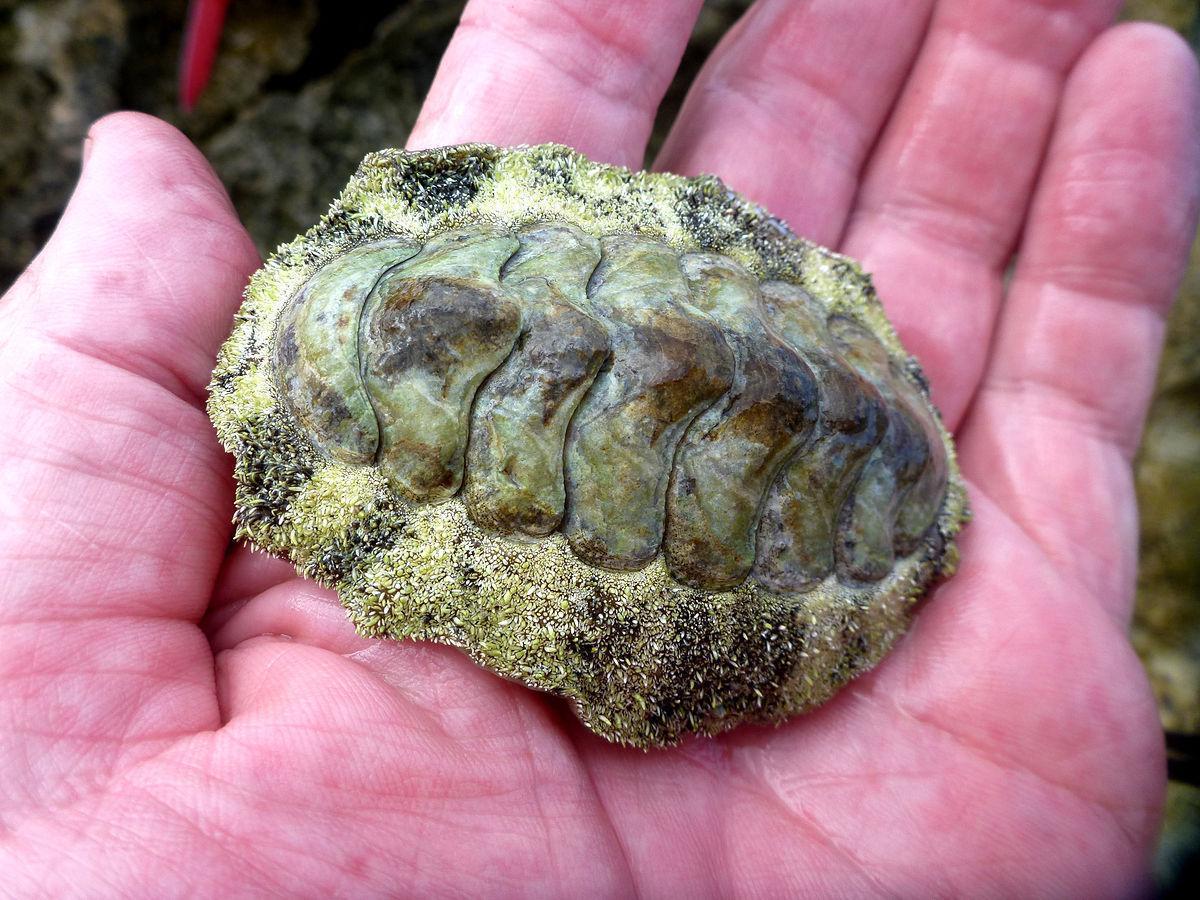
Chitons (Class Polyplacophora)
- Has flattened bodies that are covered in shells composed of eight separate plates held together by a leathery girdle
- Use their large flat foot to attach to rocks
- When removed from a rock they roll up into a ball for protection
- Feed on algae and other organisms by scraping them off the surface of rocks with their radulae
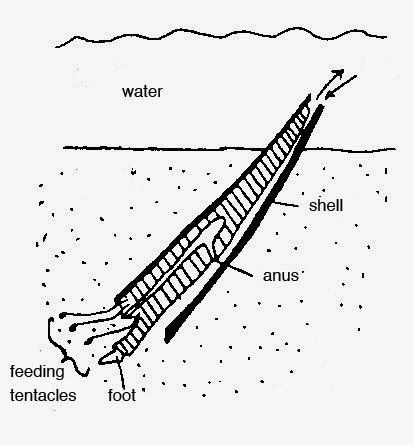
Scaphopods (Class Scaphopods)
- Also called tusk shells
- Its tube-like shell is open at both ends. Water enters and exits through the smaller end, bringing in oxygen and removing wastes
- They bury in sediments from the intertidal zone to thousands of meters deep, where they’ll feed mostly on forminiferans
- Use their foot or special tentacles emerging from the head to capture prey
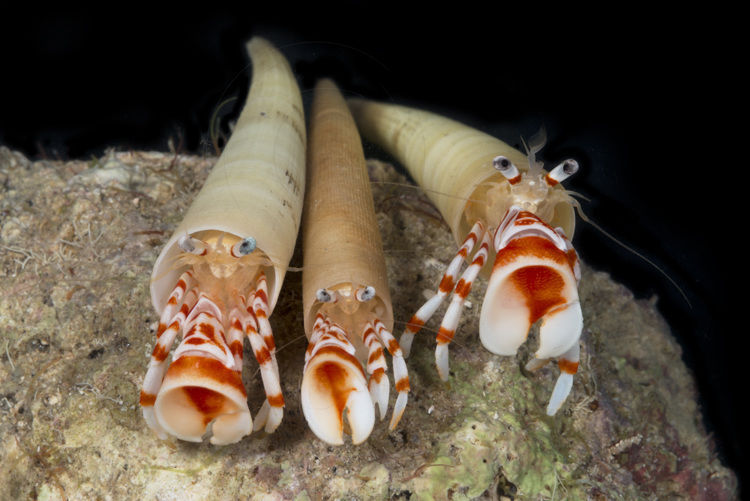
Gastropods (Class Gastropods)
- Some have shells
- Size varies from microscopic to over 3 feet in length
- Can live on the shore, ocean bottom, or open ocean
- When they posses a shell it’s always in one piece (univalve)
- Many can withdraw into the safety of their shells and close the opening, or aperture, with a cover called the operculum which itself can either be horny or calcareous
- Some can cling to solid surfaces
Naked Gastropods
- Nudibranchs are gastropods that lack a shell
- Contain cerata; projections found on the body of nudibranchs that increase the surface area available for gas exchange
- Some feed on cnidarians. Insteadof digesting the stinging cells, they leave them intact and use them for their own defense
- Brightly colored which ward off predators
Gastropods - Reproduction
- Internal fertilization
- Males use a tentacle-like penis to deposit sperm in or near the female’s genital opening
- The eggs of the females are covered by a jelly-like substance or a protective egg case
- Some species release sperm into the water column
Gastropods - Development
- In primitive gastropods that shed their eggs directly into the water, a free swimming larval stage the trochophore larva hatches from its egg
- Most marine gastropods develop a stage called veliger larva
- Some gastropods don’t have larva stages at all, but a juvenile resembling the adult hatches from the egg
Bivalves (Class Bivalvia
- Have two hinged shells covering their body
- Example: clams, oysters, mussels, scallops, and shipworms
Nutrition
- Herbivores; feed on fine algae scraped off of surfaces with their radulae. Some feed on kelps
- Carnivores; locate prey by following chemical trails in water. Extend their proboscis to search for the food source
- Deposit feeders; feed on organic material that mixes with mineral deposits on the sea bottom
- Filter feeders; use their gills to trap food particles that are then formed into a mucous ball and carried to the mouth for digestion. Some form a mucous net to catch small organisms
Información
- Descripción
- Diagrama sobre Sin título, creado por Israel Paredes el 05/04/2020.
- Creado por
- Israel Paredes
- Visitas
- 0
- Valoración