
Diagrama de flujo
learning styles 2
Contenido del diagrama
Main characteristics of learning style
Enviromental
Emotional
Sociological
Physical
Psychological
Learning Styles
Visual
Auditory
Kinesthetic
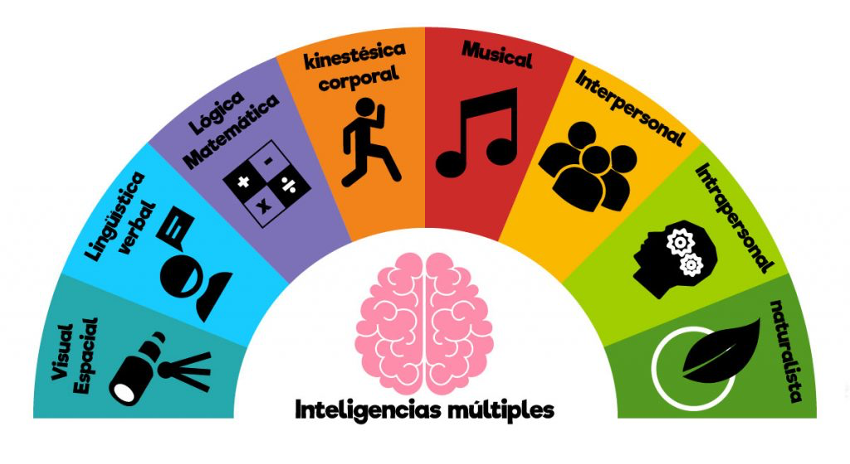
Multiple Intelligence Theory
Mathematical-logical
Verbal-linguistic
Musical-rhythmic
Bodily-kinesthetic
Interpersonal.
Intrapersonal
Visual Spatial
Naturalist-environmental
Existential
Emotional
The enthusiast
The ocular
The participator
The rebel
The way in which each learner begins to concentrate, process and retain new and difficult information.
Light, sound, temperature and design.
Motivation, persistence, responsibility
Some students prefer to study alone, while others do better when they learn with a partner.
Some people prefer to move around while learning while others can sit down.
Personal characteristics such as ability, motivation, temperament and thinking.
Learning through sight, flow charts, pictures, symbols.
Learning by listening, attending lectures, tutorials and group discussions
Learning by doing, incorporating the senses into the experience.
A better understanding of how individual cognitive differences can be addressed and developed in the classroom
Inclination for mathematics, solving mathematical problems
Read, write, tell stories, memorise places, dates, names and trivia very easily.
Better perception of details, tones and rhythms that escape the normal listener.
Constant movement, use of touch, use of the body.
Adaptability to any kind of social situation, ease of interaction, leaders.
Individual and independent work
Awareness of the environment and physical space, drawing, doing puzzles, reading maps, daydreaming.
Light, sound, temperature and design.
knowledge is power and would not allow a change in lived experience.
These include motivation, persistence, responsibility and organizational skills.
The approach from a point of reference and is concerned with the objectives of the learning group.
Focus on group goals and group solidarity.
Focuses on the teacher, but is more oriented towards the satisfaction of personal goals.
Concern for the satisfaction of one's own objectives
Defined in five categories

Información
- Descripción
- Diagrama sobre learning styles 2, creado por Javier Bahamontes el 04/08/2021.
- Creado por
- Javier Bahamontes
- Visitas
- 0
- Valoración