
Mapa mental
DO and MAKE
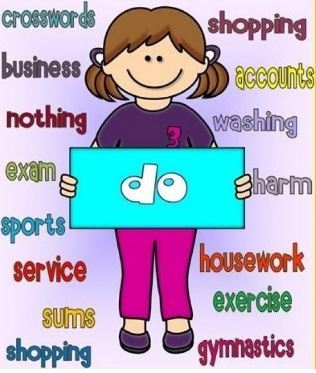
Contenido del mapa
DO and MAKE
Doing and doing are two verbs that often confuse us.
- When do you use DO?
- DO is used as follows:
- DO is used when talking about work, jobs or tasks.
- Have you done your homework?
- I wouldn't like to do that job.
- DO is used when we refer to activities in general without being specific. In these cases, we normally use words like thing, something, nothing, anything, everything etc.
- Hurry up! I've got things to do!
- Don't just stand there – do something!!
- Is there anything I can do to help you?
- We sometimes use DO to replace a verb when the meaning is clear or obvious. This is more common in informal spoken English:
- Do I need to do my hair? (do = brush or comb)
- Have you done the dishes yet? (done = washed)
- I'll do the kitchen if you do the lawns (do = clean, do = mow)
- DO is used when talking about work, jobs or tasks.
- DO is used as follows:
- When do you use MAKE?
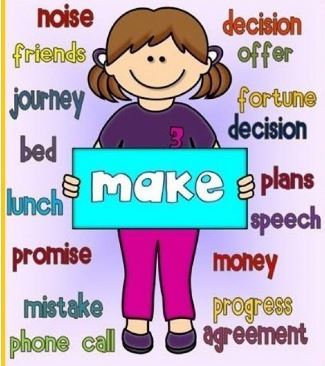
- Make is for producing, constructing, creating or building something new.
- It is also used to indicate the origin of a product or the materials that are used to make something.
- His wedding ring is made of gold.
- The house was made of adobe.
- MADE IN CHINA
- We also use Make for producing an action or reaction:
- Onions make your eyes water.
- You make me happy.
- It’s not my fault. My brother made me do it!
- You make before certain nouns about plans and decisions:
- He has made arrangements to finish work early.
- They're making plans for the weekend.
- You need to make a decision right now.
- We use Make with nouns about speaking and certain sounds:
- She made a nice comment about my dress.
- The baby is asleep so don't make any noise.
- Can I use your phone to make a call?
- Don't make a promise that you cannot keep.
- We use Make with Food, Drink and Meals:
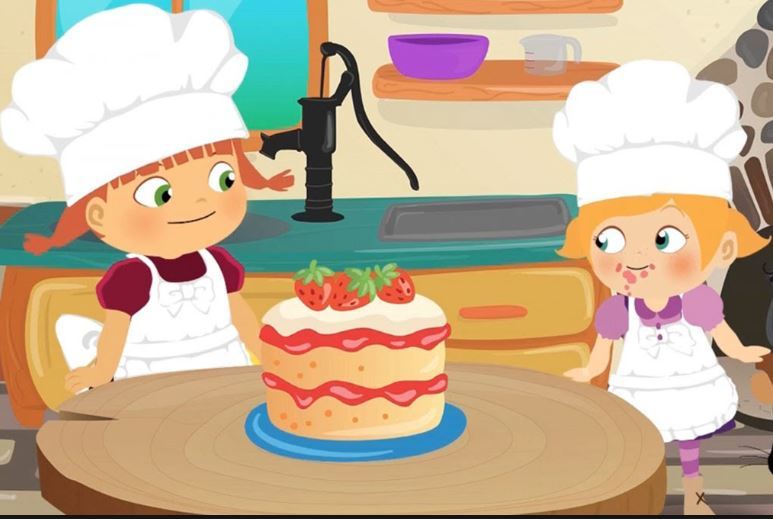
- I made a cake for her birthday.
- She made a cup of tea.
- I must go now. I have to make dinner.
- Compare Do and Make
- 1. You have to make a cake for Simon.
- 2. I’ll do it later.
- Notice how in the response the verb DO is used. This is because the meaning is clear and to avoid saying “I’ll make it later.” which could sound repetitive.
- When do you use DO?
Remember Do can also be as an auxiliary verb (for making questions in the present tense - Do you like chocolate?)
Imágenes y archivos del mapa
Información
- Descripción
- Mapa Mental sobre DO and MAKE, creado por Yessica Salazar el 02/10/2017.
- Creado por
- Yessica Salazar
- Visitas
- 4
- Valoración