
Grammar Overview
1,317 resources created by 1,073 users
This Grammar Overview page on GoConqr gathers community-made quizzes, mind maps, flashcards and notes on words and sentences, from relative clauses and reported speech to quantifiers, the passive voice and TOEFL word order. It's built for school students revising a topic and teachers after ready-made material. There are over 11,000 resources here, including more than 1,700 quizzes, over 7,700 mind maps and more than 1,000 flashcards, mostly at secondary level. Pick a topic and try a quiz to spot your gaps.
Top Grammar Overview resources
-
52 questionsB2 (CEFR) TEST From question 1 to 20 choose the best option to complete the short conversations. She speaks Thai...
-
25 questionsPassive voice Reading to practice passive voice.
-
146 cardsGrammar of English Flashcards
-
60 questionsPreparacion TOEFL page 423 Find the wrong part based in English grammar: The prime rate is the rate of interest that a bank will charg...
-
50 questionsRepaso Examen Ingles I Unnatec con Jose Miguel Soriano Seleccionen la letra que contiene la respuesta correcta
-
55 questionsHESI Grammar Exam THIS STUDY SET HAS A TOTAL OF 55 QUESTIONS. ON THE EXAM, HAS A TOTAL OF 55. GET AS MANY QUESTIONS AS YOU CA...
-
100 questionsEnglish test#1 del 1 al 100
-
32 questionsPlacement grammar test_A2_2025
Quizzes
See all 564 quizzes-
52 questionsB2 (CEFR) TEST From question 1 to 20 choose the best option to complete the short conversations. She speaks Thai...
-
25 questionsPassive voice Reading to practice passive voice.
-
60 questionsPreparacion TOEFL page 423 Find the wrong part based in English grammar: The prime rate is the rate of interest that a bank will charg...
-
50 questionsRepaso Examen Ingles I Unnatec con Jose Miguel Soriano Seleccionen la letra que contiene la respuesta correcta
-
55 questionsHESI Grammar Exam THIS STUDY SET HAS A TOTAL OF 55 QUESTIONS. ON THE EXAM, HAS A TOTAL OF 55. GET AS MANY QUESTIONS AS YOU CA...
-
100 questionsEnglish test#1 del 1 al 100
-
32 questionsPlacement grammar test_A2_2025
-
100 questionsEnglish proficiency test this is used to classify students in levels according to the common european reference framework
Mind maps
See all 420 mind maps-
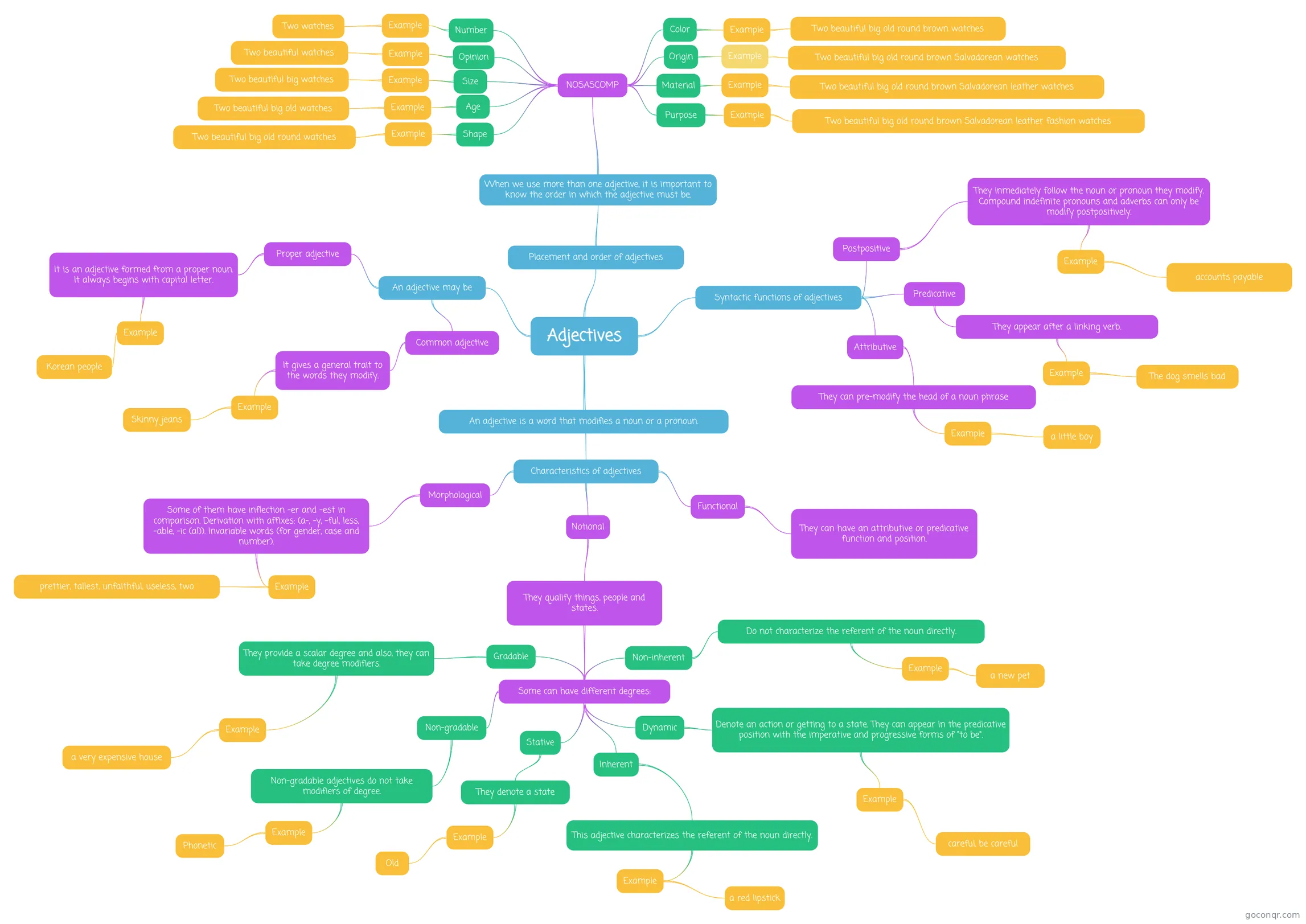 Adjectives mind map about adjectives
-
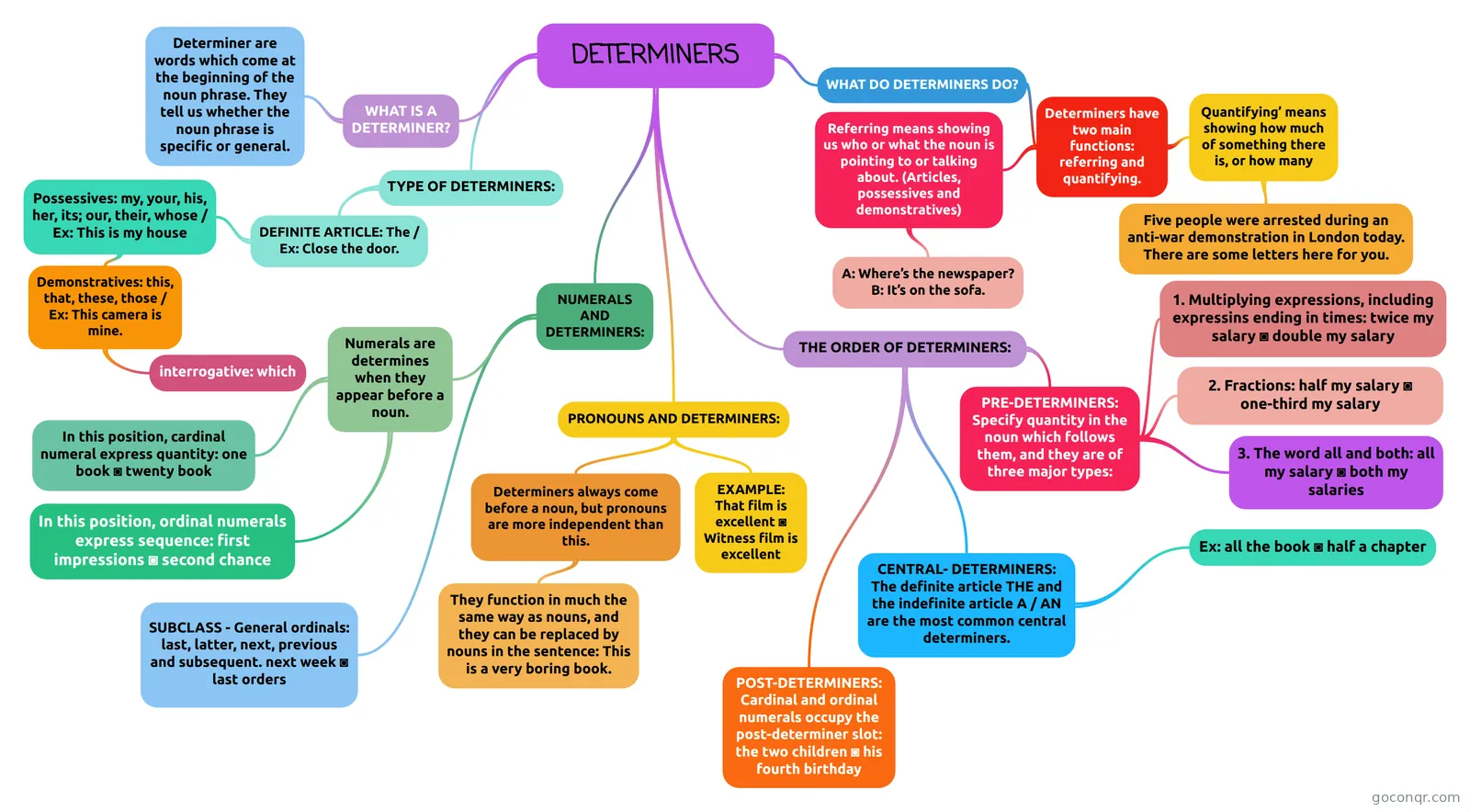 DETERMINERS determines
-
Passive Voice
-
QUANTIFIERS QUANTIFIERS
-
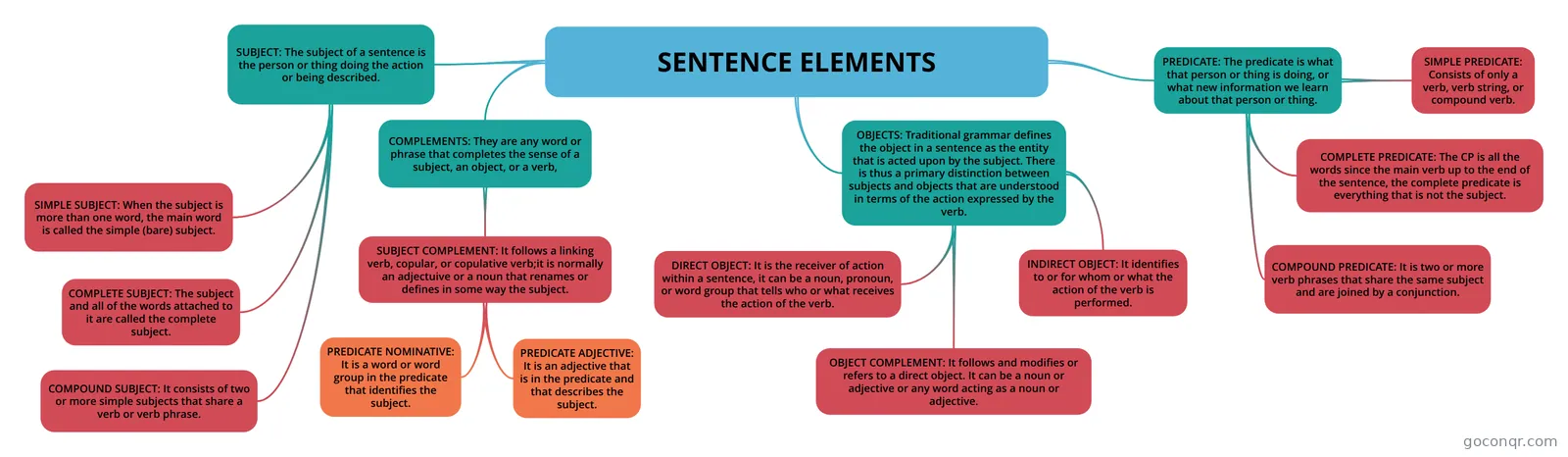 SENTENCE ELEMENTS Characters, symbols, and themes about grammar.
-
Relative Clauses Relative clauses mind map
-
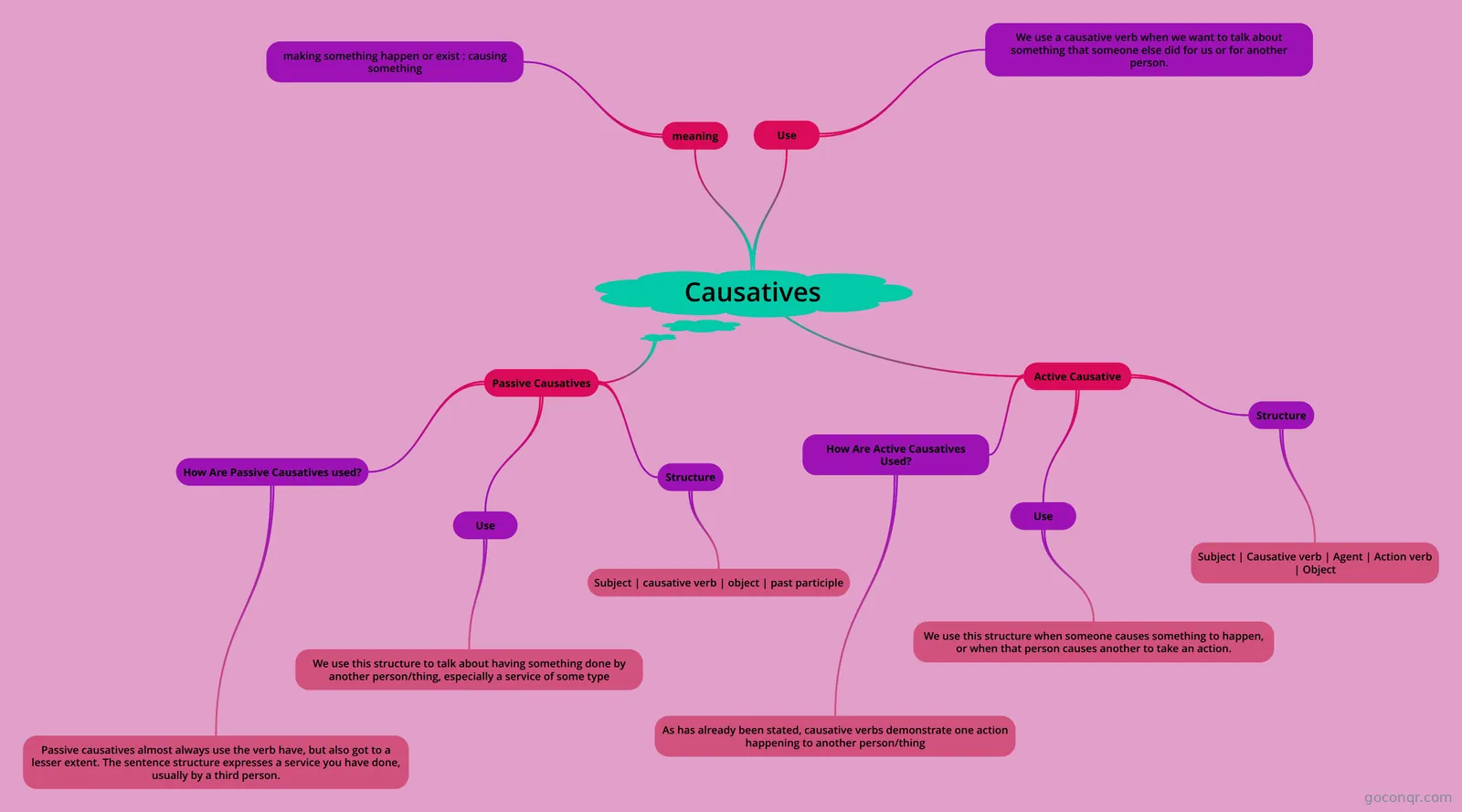 Causatives Information: Causatives
-
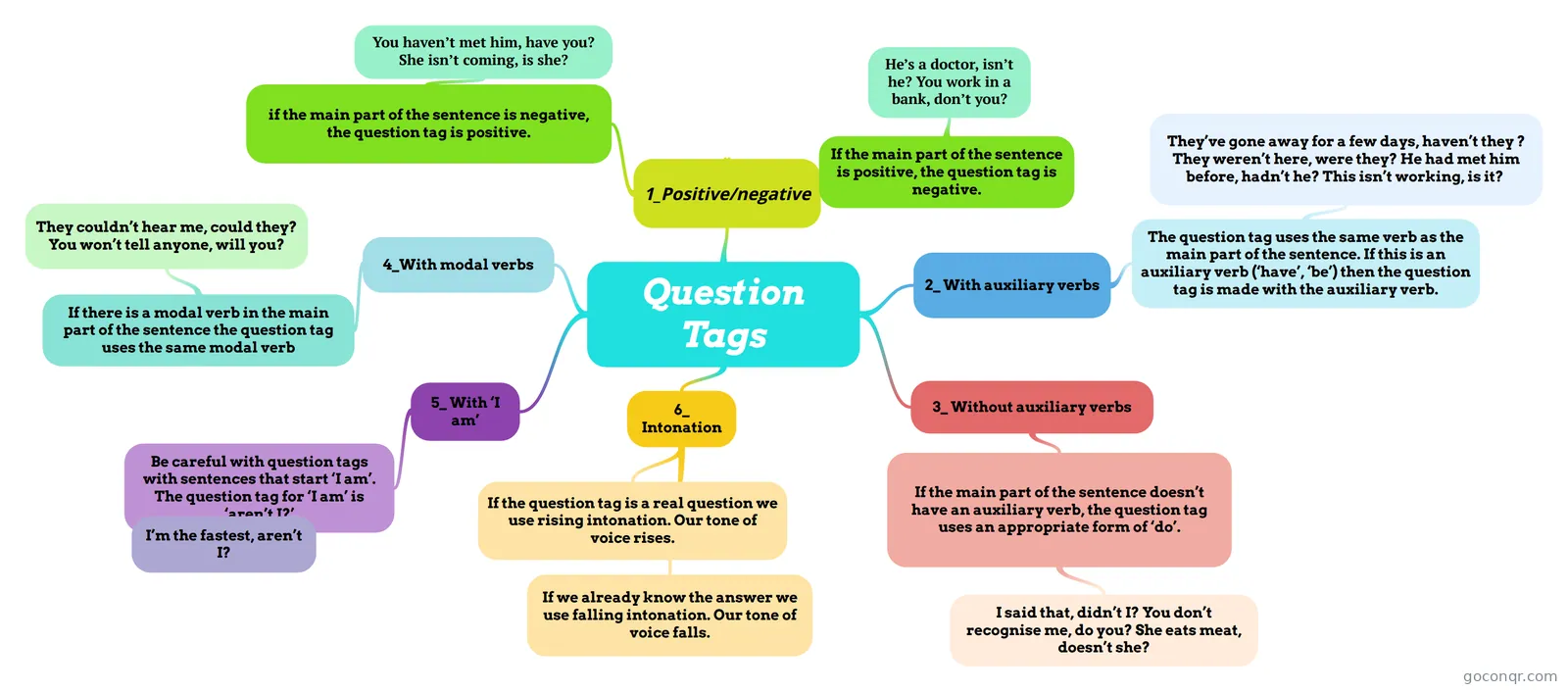 Question Tags Question tags are short questions at the end of statements. They are mainly used in speech when we want to:...
Flashcards
See all 240 flashcards-
146 cardsGrammar of English Flashcards
-
15 cards15 Most Common Grammar Mistakes 1) Subject-Verb Agreement The subject and verb of a sentence must agree with one another in number whether ...
-
23 cardsUSE OF ENGLISH - PART 4 (examples) I You must show your student card as you enter the library. - REQUIRED - You are .......... student card as y...
-
21 cardsTEMA 12: Essential morphosyntactic elements of the English language. Essential communicative structures. Progressive usage of grammatical categories in oral and written productions to improve communication. TEMA 12 Definition of morphosyntax
-
18 cardsQUASM and ASM questions How do we form questions?
-
20 cardsRelative Clauses A bartender is a person. He serves drinks in a bar or pub.
-
10 cardsFrequency Adverbs What are some things people in your country always / usually / often / sometimes / seldom / rarely / never ...
-
25 cardsTOEFL Practice Fill In The Blanks Fill in the blanks with this TOEFL practice flashcard deck.
Flowcharts
See all 16 flowcharts-
ADJECTIVES AND ADVERBS This is a concept map about all adjectives and adverbs
-
Types of Conjuctions By: José David Escobar R. 08/1/2022
-
Conjunctions Por: José David Escobar R. 08/16/2022
-
Parallel structrures Exercise to pratice the grammar topic listed above
-
PRONOMBRES Y SUS FUNCIONES Como herramienta de estudio y práctica aquí encontrarás una tabla con todos los tipos de pronombres en ingl...
-
review FIRST PARTIAL REVIEW/SYNTHESIS
-
mapa de información grande con muchas cosas
-
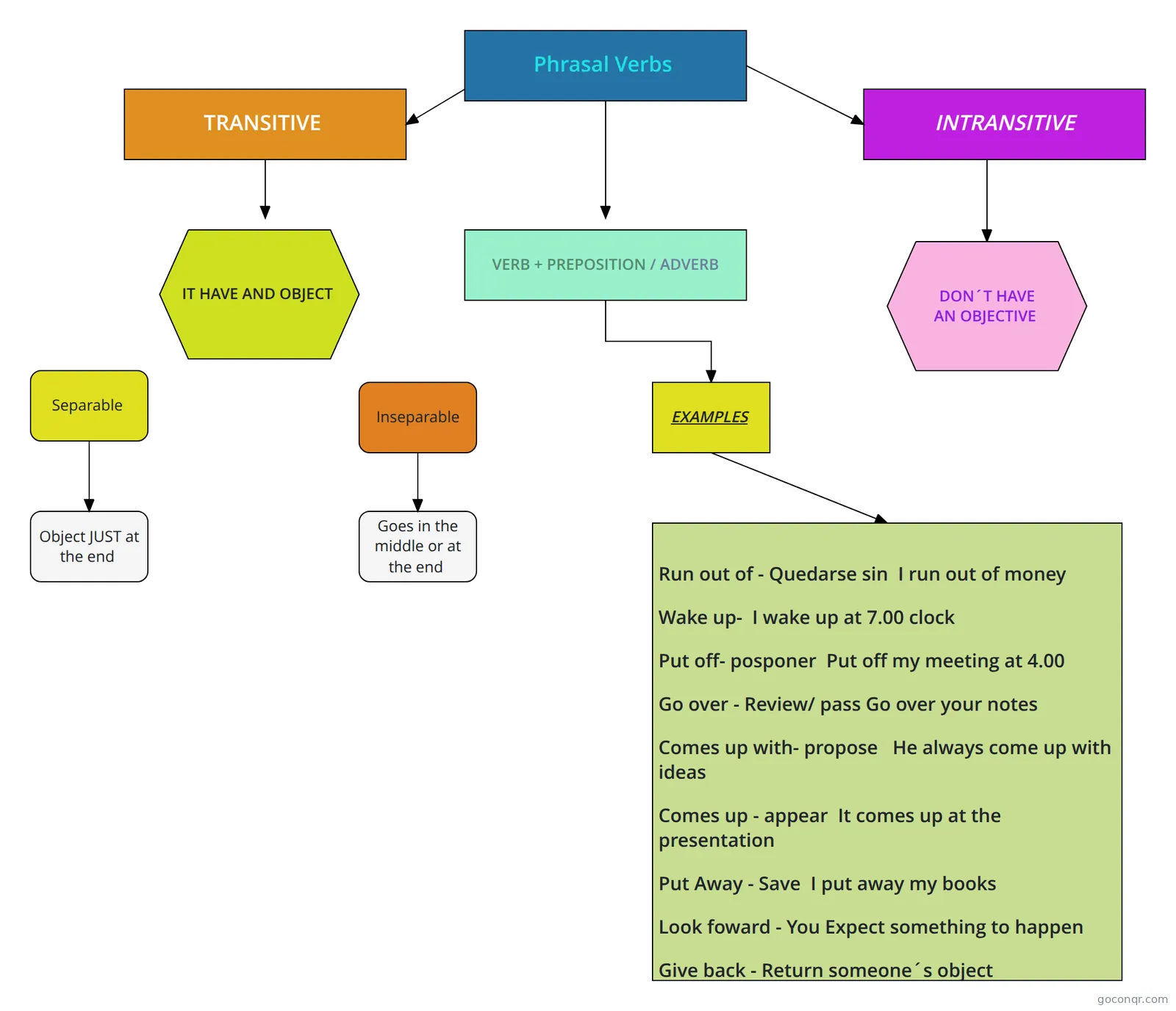 Phrasal Verbs Phrasal verbs Diagram
Notes
See all 39 notes-
Inversion 1: After Negative or Limiting Adverbs Inversion 1: After Negative or Limiting Adverbs Inversion happens in English for emphasis, dramatic purpose or formality. This type of inversion uses negative and limiting adverbs these are a group of adverb...
-
REPORTED SPEECH THERE ARE THREE STRUCTURES OF SENTENCES IN ENGLISH: the three structures are also different in reported speech. 1) STATEMENTS (affirmatives and negatives): SB + VB2) QUESTIONS: a) YES/NO Questions: AUX+ SB+ VB....? b)...
-
Spanish Demonstrative Adjective Notes Demonstrative Adjectives Demonstrative adjectives are those adjectives whose function is to point at something. In English, the singular demonstrative adjectives are "this" and "that," while their plurals are "these" ...
-
Untitled_5 17 Present Tense - Short Answers English Grammar Rules Short Answers with Do and Does In questions that use do/does it is possible to give short answers, to direct questions as follows: Sample Questions Short Answer(A...
-
Possessive Adjectives Possessive Adjectives © Copyright: All Rights Reserved by the author. Check original source for more information. ? Nueva Página
-
Relative pronouns Relative Clauses Relative pronouns from English Grammar Today Relative pronouns introduce relative clauses. The most common relative pronouns are who, whom, whose, which, that. The relative pronoun we use depends on what we ...
-
adjectives and adverbs INTERMEDIATE LEVELADJECTIVES give more information about NOUNS. examples:a white lamb (ADJECTIVE GOES FIRST)a little white lamb a white and black lamb ( WE USE AND BETWEEN ADJECTIVES ONLY IF THEY BOTH DESCRIBE THE SAM...
-
English Basic Grammar_1 Prepositions "On", "At", and "In" A preposition is a word that links a noun, pronoun, or noun phrase to some other part of the sentence.Prepositions can be tricky for English learners. There is no definite rule or for...
Slides
See all 38 slidesMore English language topics
About Grammar Overview
GoConqr OriginalWhat this unit covers
This page sits in the strand Grammar: Words and Sentences within English language. It brings together over 11,000 resources made by GoConqr users, and they range across the main building blocks of English grammar.
- Verb forms and voice: the mind map on active and passive voice, the Passive Voice flashcards and the quiz Passives.
- Reported speech: the Reported Speech mind map covers tense changes, questions, commands and statements, plus time shifts such as today becoming that day.
- Clauses: the Relative Clauses mind map separates defining clauses from the rest, and the page also has Cleft Sentences and Future Time Clauses.
- Word classes: Parts of Speech, Adverbs, Determiners, Conjunctions and Quantifiers.
Where to start
If you are not sure where your gaps are, begin with a broad quiz such as Structure diagnostic test or Quicktest - Grammar. Note which questions you missed, then go to the matching topic.
If you already know your topic, open its mind map first. A map gives you the whole rule on one screen, so the quiz that follows makes more sense.
Using maps, quizzes and flashcards together
- Read the mind map, for example Relative Clauses.
- Take a quiz on the same topic, such as the Relative Clauses quiz.
- Go back to the map for anything you got wrong.
- Finish with a flashcard deck to fix the forms in your memory.
Exam practice
Several resources are aimed at exams named in their titles or content. The TOEFL Word Order Practice deck asks you to choose the correct order of words in a sentence. The FCE Practice Quiz - B2 tests tenses and reported forms in gap-fill questions. Other resources mention IELTS, GCSE English Language and A-level English Language.
Teachers can use the quizzes as ready-made starters or revision tasks, and students can work through them alone. Choose one topic today and open its mind map to begin.
Frequently asked questions
Where should I start on this page?
Start with a general quiz such as Structure diagnostic test or Quicktest - Grammar to see which topics trip you up. Then open the mind map for that topic, for example Reported Speech or Relative Clauses, and return to a quiz to check what you have learned.
What do the mind maps cover?
They cover a wide range of grammar topics: Reported Speech with its tense changes, Relative Clauses, Active and Passive Voice, Conditionals, Determiners, Quantifiers, Question Tags, Cleft Sentences and Parts of Speech. There are over 7,700 mind maps on the page, so you can usually find more than one version of a topic.
Are the resources free to use?
Yes. Every resource listed here is free to open, study and take, with no account needed. They were made by GoConqr users, not by GoConqr itself. If you create a free account, your quiz scores are saved and you can build your own quizzes, mind maps, flashcards and notes.
Which exams do these resources suit?
Resources on the page mention exams including TOEFL, FCE, IELTS, GCSE English Language, A-level English Language, SAT, ACT and IB. Most of the material is at secondary level, so it suits school students. Check each title and excerpt to see which exam a resource is aimed at.
Can teachers use this material in class?
Yes. Teachers can use the quizzes as ready-made warm-ups or revision checks, and share mind maps or slide sets such as Quantifiers - Grammar explanation to introduce a topic. Since the resources were made by other users, it is worth reading through them before setting them for a class.
What if I cannot find my topic?
Try a nearby title first. Causative forms, for instance, appear as Causatives, The Causative form and Causative have/get something done. If nothing fits, make your own mind map, quiz or flashcards on the topic with a free account.