
Mapa mental
Migration, identity and Sovereignty
Contenido del mapa
Migration, identity and Sovereignty
What are the impacts of globalisation on international migration
- 'the growing interdependence of countries worldwide through increasing volumes of cross-border transactions, freer international capital flows and more rapid and widespread diffusion of technology'
- Migration between countries
- The global migration rate has been consistent since 2005; countries with emerging economies have higher numbers of emigrants
- Singapore is the fifth most globalised country in the world according to the KOF 2015 Index of globalisation
- CS: Singapore, international migration and the global shift
- By contrast, Japan is the 54th most globalised country due to its stricter laws on immigration. 65% of respondents in a survey on immigration opposed the idea
- Causes of migration
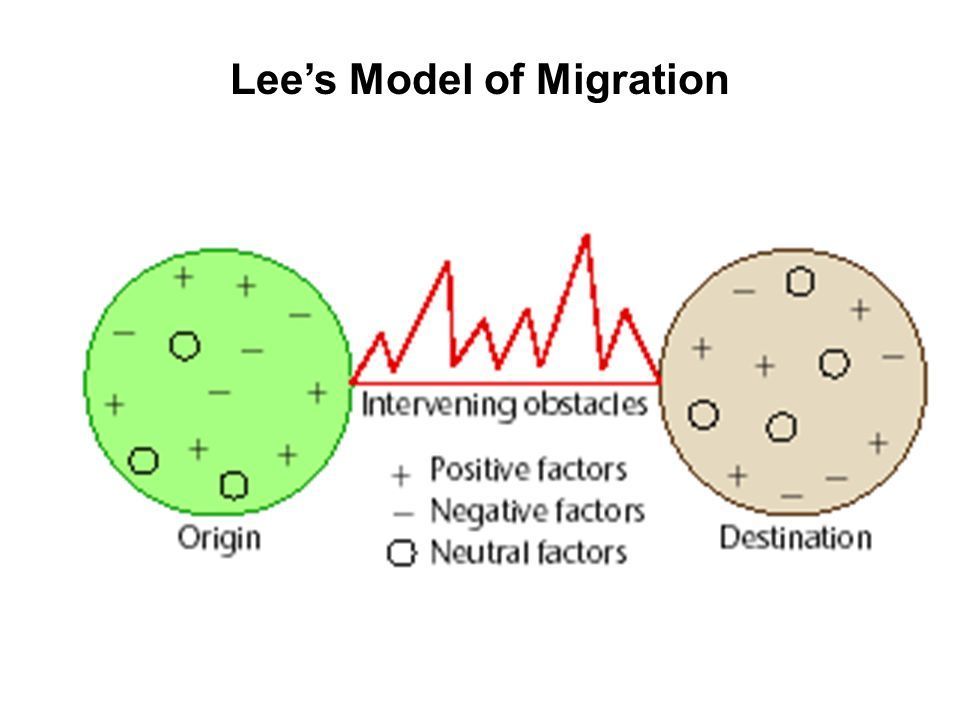
- Globalisation has created many push and pull factors of migration
- Lee model
- Push: persecution due to race, gender, sexuality, political opinion or otherwise, lack of job opportunities, national security, war or other military factors and natural hazards
- Economical factors are always likely to be the most prominent for voluntary migration
- CS: MENA region displaced persons
- Pull: improved financial position, job opportunities, family, better living standards, climate, seeking asylum, better education, improved healthcare system
- Push: persecution due to race, gender, sexuality, political opinion or otherwise, lack of job opportunities, national security, war or other military factors and natural hazards
- Lee model
- Neoclassical economic theory
- Dual labour market theory
- Relative deprivation theory
- World systems theory
- Economics of labour migration
- Labour shortages as the world's population growth rate slows and average ages increase
- Consequences of international migration
- Influx of young migrant workers could potentially challenge national identity and sovereignty
- Immigration leads to: traffic congestion, increased spending on public services and health, higher taxes, increased population density and stagnating wages if there's excess labour
- CS: Schengen Area
- Political tensions
- CS: Labour flows across the US-Mexico border
- Border control
- People trafficking
- Physical characteristics: Greece 13,000km of coastline
- Influx of young migrant workers could potentially challenge national identity and sovereignty
- Consequences of international migration
- Globalisation has created many push and pull factors of migration
- Singapore is the fifth most globalised country in the world according to the KOF 2015 Index of globalisation
- The global migration rate has been consistent since 2005; countries with emerging economies have higher numbers of emigrants
- Migration within countries
- CS: Rural-urban migration in China
- Movement of labour within countries is usually unrestricted - two thirds of UK internal migrants had not moved out of their local constituency (2011 census)
- Migration between countries
- 'the growing interdependence of countries worldwide through increasing volumes of cross-border transactions, freer international capital flows and more rapid and widespread diffusion of technology'
How are nation states defined and how have they evolved in a globalising world?
- Nation states are political entities with sovereignty over their territory and recognition by other nations
- CS: Iceland vs Singapore
- Japan is the worlds largest nation state, with 127 million people
- Origins of national borders
- Often linked with physical geography e.g. rivers, coastlines, mountains (such as the UK-France border)
- Historical events e.g. ROI and Northern Ireland
- Some borders ignored social and physical geography and were simply straight lines drawn on a map e.g. USA-Canada and Mali
- Often leads to tension
- CS: Iraq's borders and Sunni vs Shiite muslims
- Often leads to tension
- Contested borders and conflict
- Possible reasons
- Valuable resources (Artic ocean seabed), cultural unity, ethnic unity (Taiwan and China) (North and South Korea), absorption of territory
- CS: Republic of China vs People's Republic of China
- Possible reasons
- Nationalism and the modern world
- Nationalism is the shared feeling for a special, significant geographical area; this may be expressed by political identification with and a sense of belonging to a nation
- Friedrich Hegel said that nationalism holds modern societies together as religious and dynastical allegiance are declining
- Independence movements since 1945
- Colonies were driven by self-determination, especially after the imperial powers had fought two world wars
- Non-violent protests
- CS: India's road to independence
- Violent protests
- Post-colonial conflict
- South Sudan is the world's newest country as an agreement to end the 2005 civil war. However, there were still conflicts between the country's 60 ethnic groups and there was another civil war in 2013
- 2017 Zimbabwean coup d'état
- Post-colonial migration: conflicts in former British colonies led to refugee immigration e.g. about 20,000 Hong kong boat people settled in British cities
- Other pull factors include job opportunties (e.g. 1960 British textile industry attracted 1,000,000 Indians
- Post-colonial conflict
- Non-violent protests
- 'Wind of change' swept through Africa - 17 countries received indpendence in 1960
- The extent of decolonisation was quite large; the UN had 51 member states in 1945 but over 120 in 1960
- Colonies were driven by self-determination, especially after the imperial powers had fought two world wars
- The emergence of new state forms
- Tax havens
- 'Paradise Papers'
- Growing inequality - reduces the amount of money that governments have to spend and this is particularly severe in many poorer African countries, according to Christian Aid
- Tax havens
- Nation states are political entities with sovereignty over their territory and recognition by other nations
What are the impacts of global organisations on managing global issues and conflicts?
- IGO's play a significant role in managing global conflicts
- The United Nations (Created in 1945) was the first post-war IGO and the most influential
- Some important UN bodies:
- World Health Organisation (WHO)
- United Nations Children's Fund (UNICEF)
- World Food Programme (WFP)
- United Nations Environmental Programme (UNEP)
- United Nations Development Programme (UNDP)
- "Aims to achieve international cooperation in solving international problems of an economic, social, cultural or humanitarian character"
- Doesn't always engage with solely political issues, however these are likely to affect one or more of the other characteristics e.g. the economy
- CS: UN sanctions against Iran
- Example of successful UN intervention
- "war on terror" - G.W. Bush
- Despite much more solid threats from the UN and a stronger military than its predecessor (LoN), there are still sometimes 'failures'
- The UN is an IGO, however it could be argued that actually although it plays a significant role in global affairs, it isn't itself global, due to the power of veto
- CS: The UN security council
- Some countries, e.g. UK, USA, Russia decide to act independently of the UN on occassion
- Can backfire - e.g. Russia annexing Crimea in Ukraine led to sanctions on Russian officials, banning them from entering the US and EU
- The UN is an IGO, however it could be argued that actually although it plays a significant role in global affairs, it isn't itself global, due to the power of veto
- Some important UN bodies:
- The United Nations (Created in 1945) was the first post-war IGO and the most influential
- IGO control of world trade and financial flows
- The purpose of the IMF is to look after the stability of the world economically by helping governments balance their payments in times of economic difficulty
- Countries are given a financial 'rating' and pay a certain sum towards the IMF dependent on this score
- The USA contributes about 18% of the IMF so has the most influence on it - members within IGO's don't have equal influence
- Countries are given a financial 'rating' and pay a certain sum towards the IMF dependent on this score
- International Bank for Reconstruction and Development (IBRD)
- Provides loans for rebuilding economies and to alleviate poverty
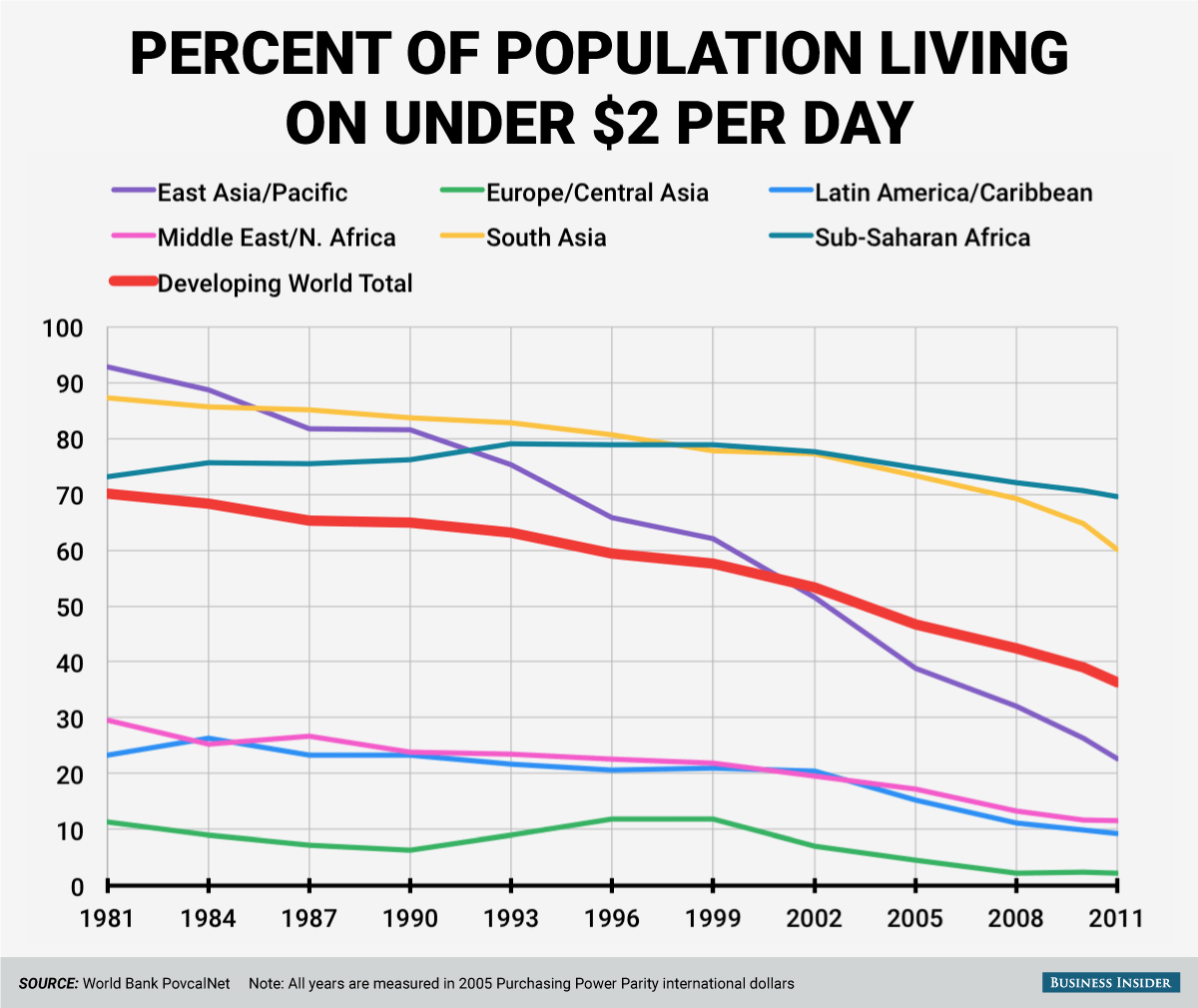
- Aims to decrease global poverty to only 3% living on under $1.25 a day by 2030
- Provides loans for rebuilding economies and to alleviate poverty
- CS: Jamaica's structural adjustment programme
- The purpose of the IMF is to look after the stability of the world economically by helping governments balance their payments in times of economic difficulty
- IGO management of environmental problems
- The atmosphere, hydrosphere and certain parts of the cryosphere are all transboundary so require cooperation between all countries
- Examples of environmental problems managed by IGO's
- Successes
- Montreal Protocol
- Ratified by 197 countries making it the first universally signed treaty from the UN, governments acted quickly (only 14 years), reversing damage done to the environment by CFC's
- Antarctic Treaty
- All parties meet annually to discuss the treaty, 53 signatory countries, freedom from military activity and mining, conservation of flora and fauna
- Montreal Protocol
- Failures
- Helsinki Rules
- No mechanism in place to enforce the rules, often international water treaties do not achieve 'equitable use' or' equitable share' because one or more parties in the negotiations has disproportionate political or socio-economical power and can strongly influence other countries
- Helsinki Rules
- Successes
- Examples of environmental problems managed by IGO's
- The atmosphere, hydrosphere and certain parts of the cryosphere are all transboundary so require cooperation between all countries
- IGO's play a significant role in managing global conflicts
What are the threats to national sovereignty in a more globalised world?
- National identity and nationalism are powerful forces and have been the causes of many major conflicts in history.
- Nationalism is reinforced through education, sport, culture and politics in a nation, where loyalty to a favourite team, party or otherwise is emphasised
- Sir Andrew Motion, "of all the things that are sacred to us in England, the countryside is one of the most precious of them all"
- As a result of globalisation, most developed countries and many developing countries are interconnected
- The consequences of national disunity
- CS: Catalonia in the EU
- Failed states
- A failed state means a government has broken down and is characterised by:
- Loss of control over its borders
- Erosion of legitimate authority in the decision-making process
- Inability to have a solid democracy and elect new governments
- Lack of recognition and inability to act with other states in the international community
- CS: Somalia
- A failed state means a government has broken down and is characterised by:
- Nationalism is reinforced through education, sport, culture and politics in a nation, where loyalty to a favourite team, party or otherwise is emphasised
- Challenges to national identity
- Migration of workers and refugees has led to questions of loyalty and national identity has become a complex issue
- 2011 UK census: only 13% of people aged over 75 described their identity as British and about half of all people with black or Asian ethnicity defined themselves as British
- Terrorism
- Led to tensions between Muslim communities in religiously neutral countries. The Islamic Association of Britain says that when there are tensions between the UK and a Muslim country, British Muslims should support the UK, since they are citizens of the country
- 'Made in Britain' is an increasingly complex idea because so many UK-based companies are foreign owned
- CS: Foreign ownership of UK utilities
- Foreign investors own around 40% of Britain's assets in the water, energy, transportation and communication sectors
- CS: Indian TNC's
- CS: Foreign ownership of UK utilities
- Capitalist theory
- Capitalism's greatest strength is dynamism, the ability to change regardless of economic conditions and replace older markets
- This is also it's greatest weakness - the dividing line between success and failure is often thin and growth and economic decline can occur at the same time. Instability in one region can cause a chain reaction
- Capitalism's greatest strength is dynamism, the ability to change regardless of economic conditions and replace older markets
- Migration of workers and refugees has led to questions of loyalty and national identity has become a complex issue
- National identity and nationalism are powerful forces and have been the causes of many major conflicts in history.
Imágenes y archivos del mapa
Información
- Descripción
- AS level (A2 Human Geography) Geography Mapa Mental sobre Migration, identity and Sovereignty, creado por Oliver Downes el 20/01/2018.
- Creado por
- Oliver Downes · ene 2018
- Actualizado
- 28 may 2018
- Visitas
- 330
- Etiquetas
- Valoración