
Mapa mental
Calcium carbonate
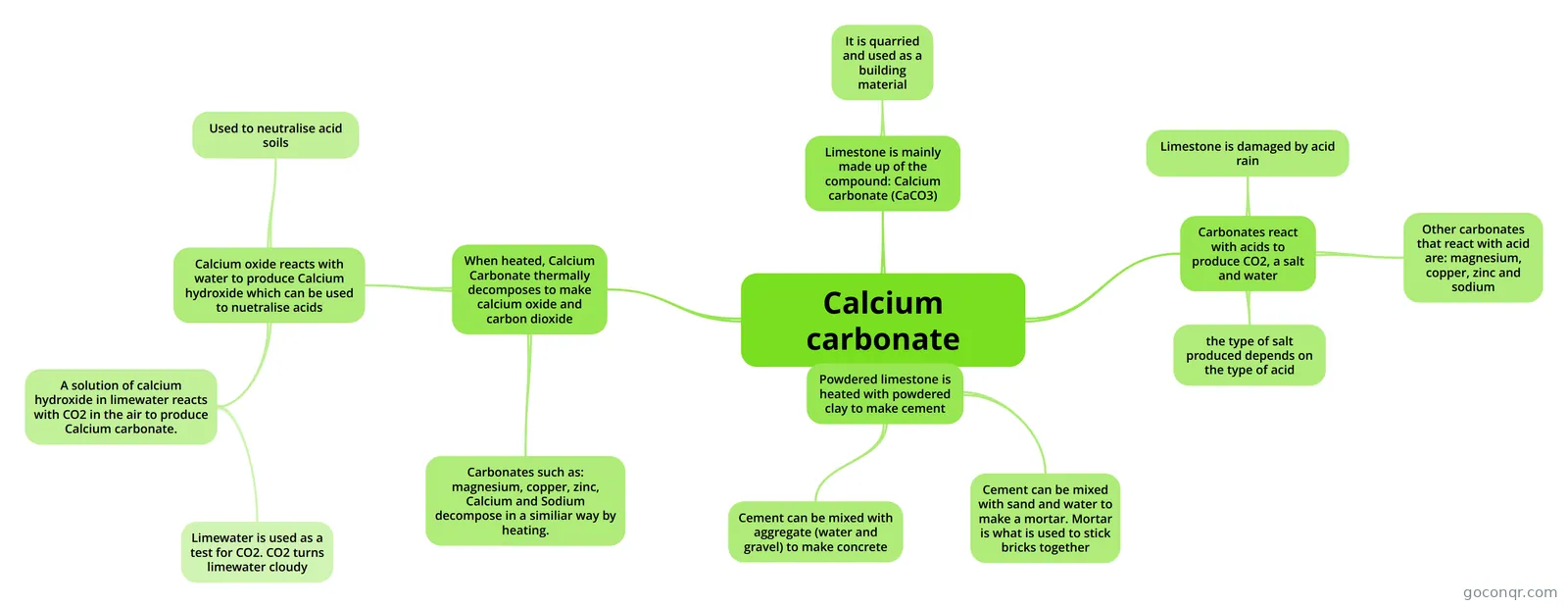
Mind map: Calcium carbonate
Contenido del mapa
Calcium carbonate
Limestone is mainly made up of the compound: Calcium carbonate (CaCO3)
- It is quarried and used as a building material
When heated, Calcium Carbonate thermally decomposes to make calcium oxide and carbon dioxide
- Carbonates such as: magnesium, copper, zinc, Calcium and Sodium decompose in a similiar way by heating.
- Calcium oxide reacts with water to produce Calcium hydroxide which can be used to nuetralise acids
- Used to neutralise acid soils
- A solution of calcium hydroxide in limewater reacts with CO2 in the air to produce Calcium carbonate.
- Limewater is used as a test for CO2. CO2 turns limewater cloudy
Carbonates react with acids to produce CO2, a salt and water
- Limestone is damaged by acid rain
- Other carbonates that react with acid are: magnesium, copper, zinc and sodium
- the type of salt produced depends on the type of acid
Powdered limestone is heated with powdered clay to make cement
- Cement can be mixed with sand and water to make a mortar. Mortar is what is used to stick bricks together
- Cement can be mixed with aggregate (water and gravel) to make concrete
Información
- Descripción
- GCSE (C1) Chemistry Mapa Mental sobre Calcium carbonate, creado por toby_brown el 05/07/2013.
- Creado por
- toby_brown
- Visitas
- 265
- Etiquetas
- Valoración