
Mapa mental
P1: Radiation and Waves
Contenido del mapa
P1: Radiation and Waves
Waves
- A wave is a pattern of movement that transfers energy. E.G. if you drop a twig into a pool, ripples of the water form on the surface.
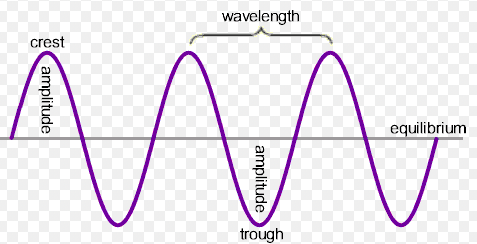
- Transverse
- E.G. waves in water and waves on a rope
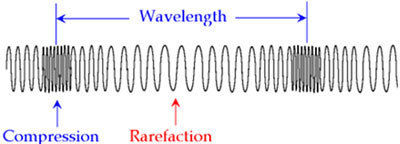
- Longitudinal
- They squash up and stretch out the arrangement of particles, making compressions ((high pressure, lots of particles) and rarefactions (low pressure, fewer particles)
- Wave Speed Equation
- Wave speed (m/s) = Frequency (Hz) x Wavelength (m)
Reflection & Refraction
- Waves are Absorbed
- By the second material - its energy is transferred to the material, causing heating.
- Waves are Transmitted
- Through the second material - wave carries on travelling through the new material, leading to refraction
- Waves are Reflected
- It is sent away from the second material.
- Changing Direction at a Boundary
- Waves travel at different speeds in different materials, so when one crosses a boundary between materials it changes speeds. The frequency of it stays the same as it crosses a boundary. If the speed changes, the wavelength must change too. The greater the change in speed, the more a wave bends.
- Waves are Absorbed
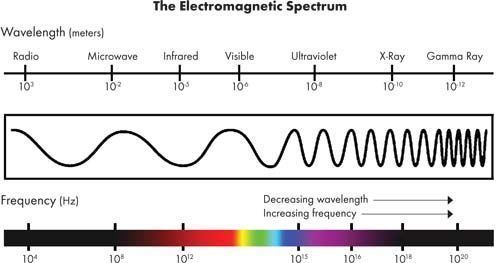
Electromagnetic Spectrum
- How the EM Waves are Emitted
- Changes in nuclei can cause gamma rays to emit.
- Visible, UV and X-rays are emitted when electron drop down energy levels
- Uses of EM Radiation
- Radio waves are used for communication and transmit information like radio shows from one place to another.
- Microwaves are used for cooking and communication
- Infrared is used to increase/monitor temperatures
- UV lamps are used in tanning bed.
- X-rays are used in hospitals to see inside the body.
- Gamma radiation is used in cancer treatments (to kill the cancer cells)
- How the EM Waves are Emitted
Energy Levels and Ionisation
- An atom is ionised if it loses an electron
- Ionising radiation harms living cells
Absorbing & Emitting Radiation
- Radiation Affects the Earth's Temperature
- During the day, lot of EM radiation is transferred to the Earth from the Sun and the atmosphere allows some of it to pass through to be absorbed by the Earth's Surface, which warms it and causes an increase in the temperature. At night, less EM radiation is being absorbed than is being emitted, causing a decrease in the temperature. So, the temperature of the Earth stays constant.
- Radiation Affects the Earth's Temperature
Imágenes y archivos del mapa
Información
- Descripción
- GCSE Core Science Mapa Mental sobre P1: Radiation and Waves, creado por Blerta Morina el 21/04/2019.
- Creado por
- Blerta Morina
- Visitas
- 40
- Etiquetas
- Valoración