
Mapa mental
Data representation, types and structures
Contenido del mapa
Data representation, types and structures
Logical Operators
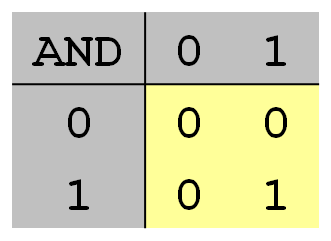
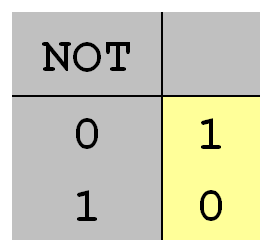
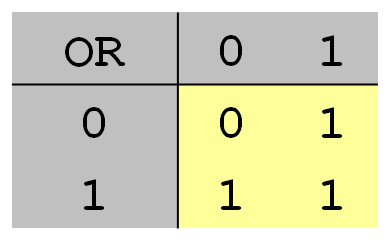
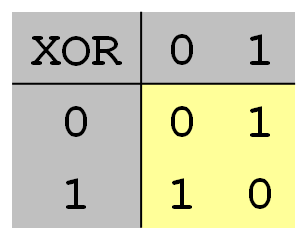
- Truth Tables
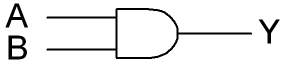
- AND
- Either they are both are on, otherwise it is off
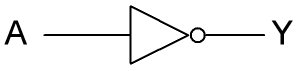
- NOT
- It will be the inverse to itself if it isn't
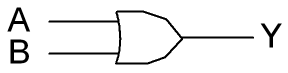
- OR
- One or the other is on, not mattering if it is both on
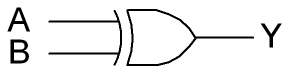
- XOR
- One or the other is on, however if both are one then it equals off
- AND
- Shifts
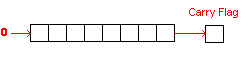
- Logical
- One bit 'falls off' (possibly into the Carry flag), and a 0 is shifted in.
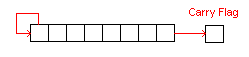
- Arithmetic
- Similar to a Logical shift, but the sign bit remains unchanged.
- To the left is multiplying by 2
- To the right is dividing by 2
- Logical
- Encryption
- Uses the XOR commamd
- X + Key = Encryption
- Encryption + Key = X
- Truth Tables
Hexadecimal
- A shorthand method for representing binary numbers.
- More convenient alternative coding method.
- Used because they are more readily converted to or from binary.
- More convenient alternative coding method.
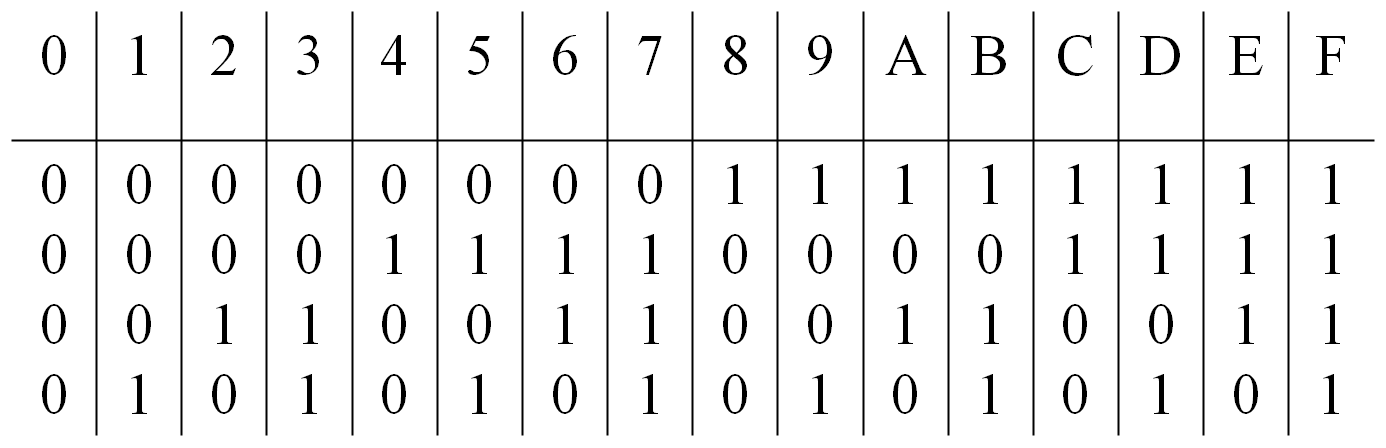
- The hexadecimal number system has a base of 16, and uses the following symbols:
- Converting
- To Decimal
- Give place values of 16 to the power of the place of the hexadecimal from left to right starting from 0
- Multiply the 16 value with the number place in the hexadecimal table
- Adding them together will give you the decimal value
- Multiply the 16 value with the number place in the hexadecimal table
- Give place values of 16 to the power of the place of the hexadecimal from left to right starting from 0
- From Decimal
- Divide the decimal by 16
- Get the answer in whole number/remainder form
- Convert the first number into hexadecimal via its place on the table then the remainder
- Get the answer in whole number/remainder form
- Divide the decimal by 16
- To Binary
- Find each character from the hexadecimal, convert it to its number place
- Convert the number place into binary and put back together
- Find each character from the hexadecimal, convert it to its number place
- From Binary
- Convert the binary into a decimal
- Change the decimal into hex, dependant on its place in the table
- Convert the binary into a decimal
- To Decimal
- A shorthand method for representing binary numbers.
Two's Compliment and S&M
- Sign And Magnitude
- The binary is split into 2 pieces, the sign and the magnitude
- The first digit (Normally 128) is the sign, and if it is 0 then it is positive and if it is 1 then it is negative
- +95 = 01011111
- -95 = 11011111
- The first digit (Normally 128) is the sign, and if it is 0 then it is positive and if it is 1 then it is negative
- Restricted to 8 bit words and only between -127 and 127
- The binary is split into 2 pieces, the sign and the magnitude
- Two's Compliment
- The amount of bits that can be stored depends on the word size
- Characteristics
- Allows a number to be shown as a negative
- Makes subtraction easy by replacing addition
- Efficient in the process of adding
- Requires no separate provision for inclusion of the sign
- The values are stored precisley
- Subtraction
- Subtraction in two’s complement is performed by negating the 2nd number and adding it to the 1st
- To negate a number change all 0s to 1s and all 1s to 0s, then add 1. This is complementation
- Subtraction in two’s complement is performed by negating the 2nd number and adding it to the 1st
- Integer Addition
- 0 + 0 (no carry) = 0
- 0 + 0 (carry) = 1
- 0 + 1 (no carry) = 1
- 0 + 1 (carry) = 0
- 1 + 1 (no carry) = 0
- 1 + 1 (carry) = 1 (carry)
- Sign And Magnitude
Imágenes y archivos del mapa
Información
- Descripción
- A-Level (CG3) Computing Mapa Mental sobre Data representation, types and structures, creado por bubblesthelabrad el 23/02/2015.
- Creado por
- bubblesthelabrad
- Visitas
- 93
- Etiquetas
- Valoración