
Mapa mental
UNIT 1
Contenido del mapa
UNIT 1
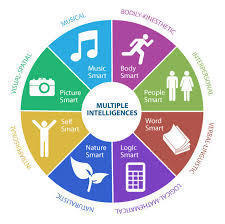
MULTIPLE INTELLIGENCES
- When you hear the word intelligence, the concept of IQ testing may immediately come to mind. Intelligence is often defined as our intellectual potential; something we are born with, something that can be measured, and a capacity that is difficult to change.
- https://www.edutopia.org/video/howard-gardner-multiple-intelligences
- https://www.youtube.com/watch?v=s2EdujrM0vA
ORDER OF ADJECTIVES
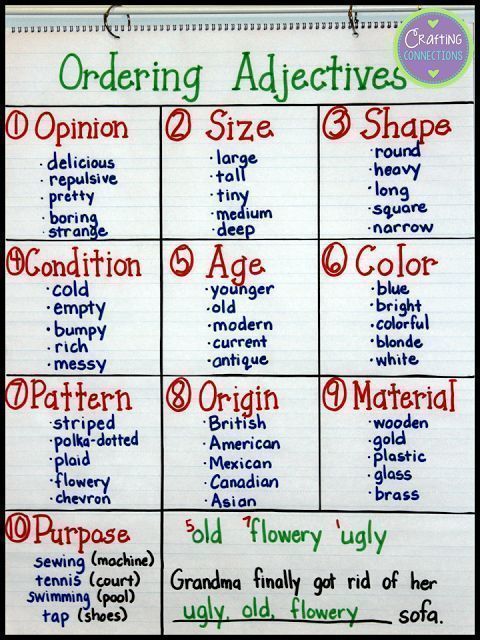
- The Order of Adjectives in English When two or more adjectives are required to describe something, there is an established order for the adjectives. The order is generally as follows: opinion size age shape colour origin material purpose
- The order of adjectives in English is opinion, size, age, shape, colour, origin, material, and purpose. For example: A lovely, large, antique, round, black, Spanish, wooden, mixing bowl.
- https://www.youtube.com/watch?v=8PT-6nGoVRo
- https://www.youtube.com/watch?v=UctYGQS2E4s
- EXAMPLES
- It was made of a strange, green, metallic material.
- A lovely, large, antique, round, black, Spanish, wooden, mixing bowl
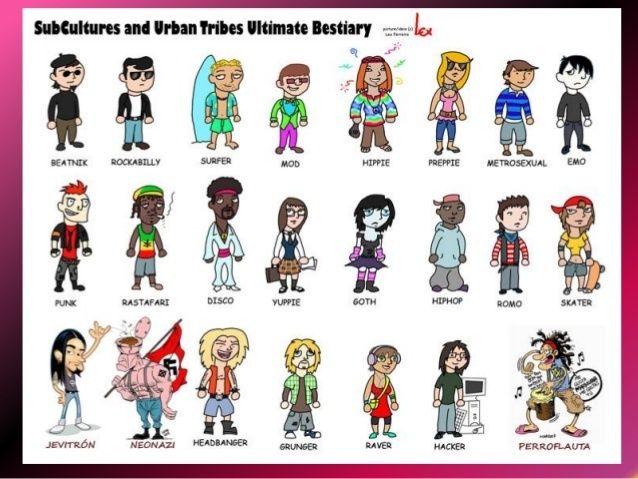
URBAN TRIBES
- The term was originally coined by French sociologist Michel Maffesoli back in the ’80s to describe the new phenomenon of a subculture, and since then has become a part of everyday life. Some people claim they’re dead, while others think they’re striving and will never go away. Whichever the case, Urban Tribes are still part of popular culture – it only takes one look at the media to realise this.
- Bears Twinks, leather daddies and even drag queens could all be considered sub-cultures underneath the rainbow umbrella, but arguably the most famous of them would be Bears.
- https://www.kickstarter.com/projects/982431134/urban-tribes?lang=es
- Chaps Unlike the other urban tribes on this list, which are universal or foreign, this one is exclusive to the UK. People who enjoy this trend like to revive the clothes and mannerisms of the ’40s. In terms of clothes, this means fedoras, high-waisted trousers, trench coats and lots and LOTS of tweed.
- Furries They get a bad rep but like the tattoo-covered artist that enjoys doing yoga, furries are not what they appear. It’s not about sex — well, it’s not all got to do with sex, at least. Furries are fans of anthropomorphic animals, which is basically animals with human characteristics. Think of Disney’s version of Robin Hood.
- Ganguro Girls Ganguro is an alternative fashion style that was born as a form of rebellion against the beauty standard that was expected of women in 90’s Japan. Ads on TV and magazines depicted girls with fair skin, natural makeup and black hair which is why ganguro girls do the exact opposite. Instead, they paint the faces and bodies to look very tanned, put on exaggerated makeup and dye their hair white.
- Mermaids These people love to spend their time underwater thinking they’re Ariel or Daryl Hannah in Splash. This tribe organises retreats and workshops for anyone looking to develop their mermaid skills like swimming and holding their breath underwater.
- Otakus In Japanese, it is a name given to people with obsessive interests and it is mostly used to refer to anime and manga fans (Japanese comics and cartoons). While it became popular in Japan in the late ’80s, it didn’t make its way to the rest of the world until the Anime invasion of the ’00s.
- Rockabillies Somewhere between hipsters and punk rockers are the rockabillies. These are people who celebrate classic rock played by the likes of Elvis Presley, Carl Perkins, and Bill Haley.
- Otakus In Japanese, it is a name given to people with obsessive interests and it is mostly used to refer to anime and manga fans (Japanese comics and cartoons). While it became popular in Japan in the late ’80s, it didn’t make its way to the rest of the world until the Anime invasion of the ’00s.
- Mermaids These people love to spend their time underwater thinking they’re Ariel or Daryl Hannah in Splash. This tribe organises retreats and workshops for anyone looking to develop their mermaid skills like swimming and holding their breath underwater.
- Ganguro Girls Ganguro is an alternative fashion style that was born as a form of rebellion against the beauty standard that was expected of women in 90’s Japan. Ads on TV and magazines depicted girls with fair skin, natural makeup and black hair which is why ganguro girls do the exact opposite. Instead, they paint the faces and bodies to look very tanned, put on exaggerated makeup and dye their hair white.
- Furries They get a bad rep but like the tattoo-covered artist that enjoys doing yoga, furries are not what they appear. It’s not about sex — well, it’s not all got to do with sex, at least. Furries are fans of anthropomorphic animals, which is basically animals with human characteristics. Think of Disney’s version of Robin Hood.
TAG QUESTIONS
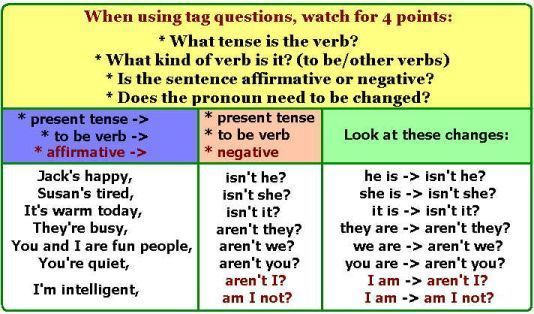
- Tag questions (or question tags) turn a statement into a question. They are often used for checking information that we think we know is true. Usually if the main clause is positive, the question tag is negative, and if the main clause is negative, it's positive. For example: It's cold (positive), isn't it (negative)?
- https://www.youtube.com/watch?v=PhB0t3jqxuI
- https://www.youtube.com/watch?v=v4nkhlyX01A
- EXAMPLES
- Your brother is older than you, isn’t he?
- You’re not from here, are you?
- They’ve got a dog, haven’t they?
ADJETCTIVES
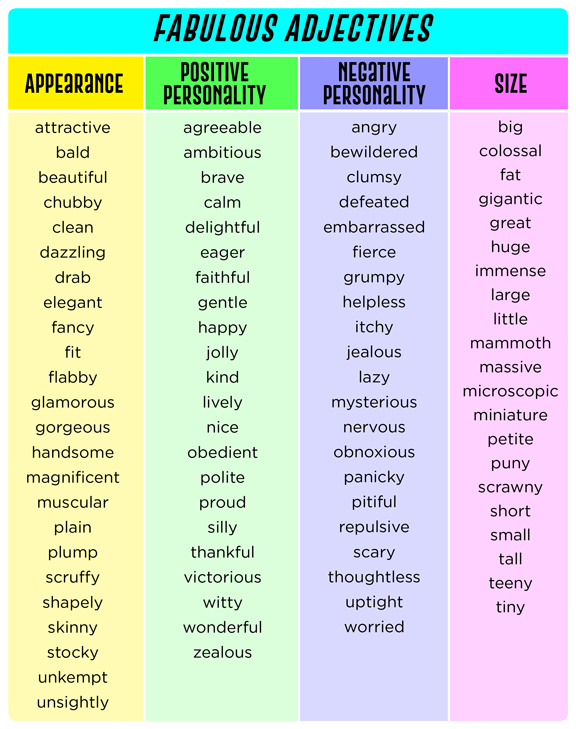
- is a word that modifies a noun or noun phrase or describes its referent. Its semantic role is to change information given by the noun.
- https://youtu.be/pt-cjNaErxI
- https://www.youtube.com/watch?v=d2RuO_fseyM
- EXAMPLES
- I don't think I'd call it a beautiful picture - 'interesting' might be a better adjective to use!
- In 'a sudden movement', 'sudden' is an adjective in the attributive position.
- In the sentence 'She is happy', 'happy' is a predicative adjective
- is a word that modifies a noun or noun phrase or describes its referent. Its semantic role is to change information given by the noun.
Imágenes y archivos del mapa
Información
- Descripción
- Mapa Mental sobre UNIT 1, creado por Andres Dario Betancour Penaranda el 27/03/2020.
- Creado por
- Andres Dario Betancour Penaranda
- Visitas
- 0
- Valoración