
Mapa mental
DATA STRUCTURE
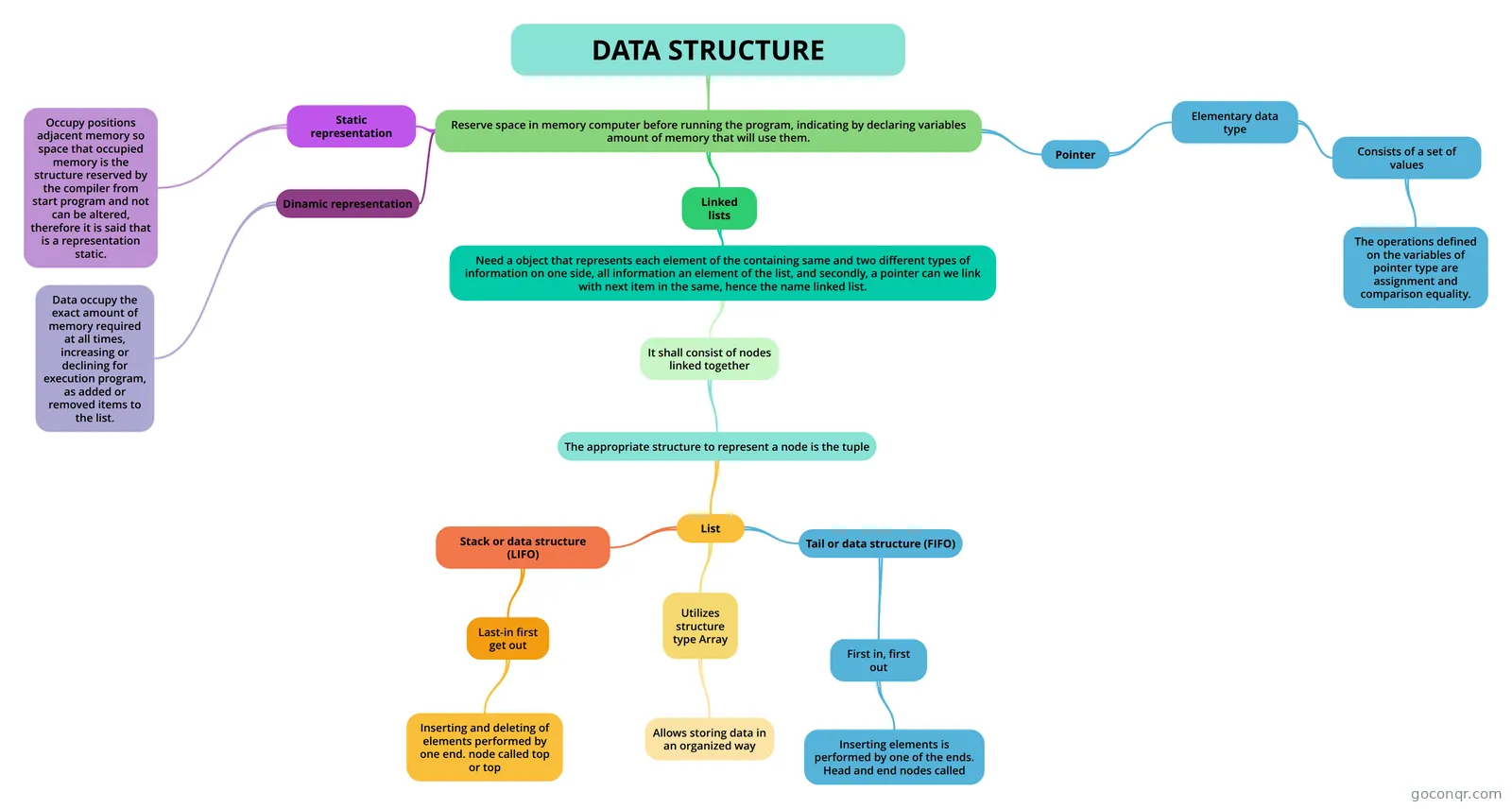
Mind map: data structure
Contenido del mapa
DATA STRUCTURE
Reserve space in memory computer before running the program, indicating by declaring variables amount of memory that will use them.
- Linked lists
- Need a object that represents each element of the containing same and two different types of information on one side, all information an element of the list, and secondly, a pointer can we link with next item in the same, hence the name linked list.
- It shall consist of nodes linked together
- The appropriate structure to represent a node is the tuple
- List
- Utilizes structure type Array
- Allows storing data in an organized way
- Stack or data structure (LIFO)
- Last-in first get out
- Inserting and deleting of elements performed by one end. node called top or top
- Last-in first get out
- Tail or data structure (FIFO)
- First in, first out
- Inserting elements is performed by one of the ends. Head and end nodes called
- First in, first out
- Utilizes structure type Array
- List
- The appropriate structure to represent a node is the tuple
- It shall consist of nodes linked together
- Need a object that represents each element of the containing same and two different types of information on one side, all information an element of the list, and secondly, a pointer can we link with next item in the same, hence the name linked list.
- Static representation
- Occupy positions adjacent memory so space that occupied memory is the structure reserved by the compiler from start program and not can be altered, therefore it is said that is a representation static.
- Pointer
- Elementary data type
- Consists of a set of values
- The operations defined on the variables of pointer type are assignment and comparison equality.
- Consists of a set of values
- Elementary data type
- Dinamic representation
- Data occupy the exact amount of memory required at all times, increasing or declining for execution program, as added or removed items to the list.
- Linked lists