
Mapa mental
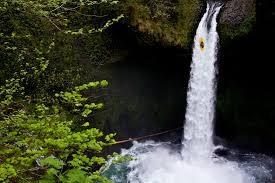
waterfalls
Contenido del mapa
waterfalls
The formation of a waterfall
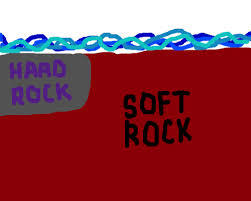
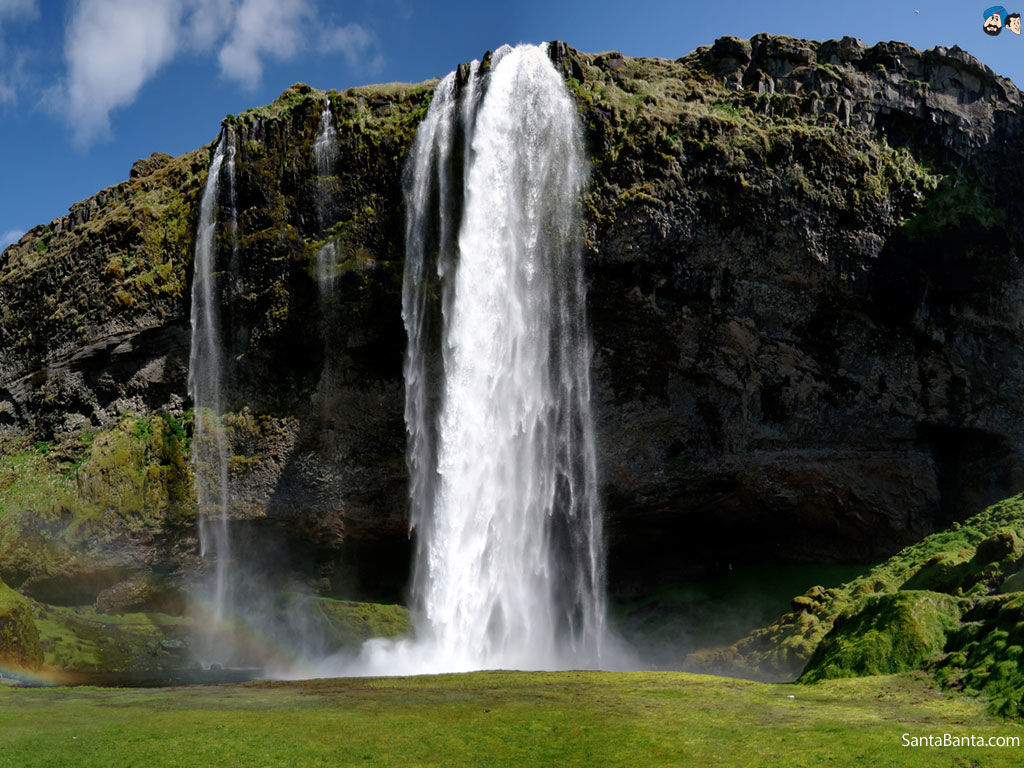
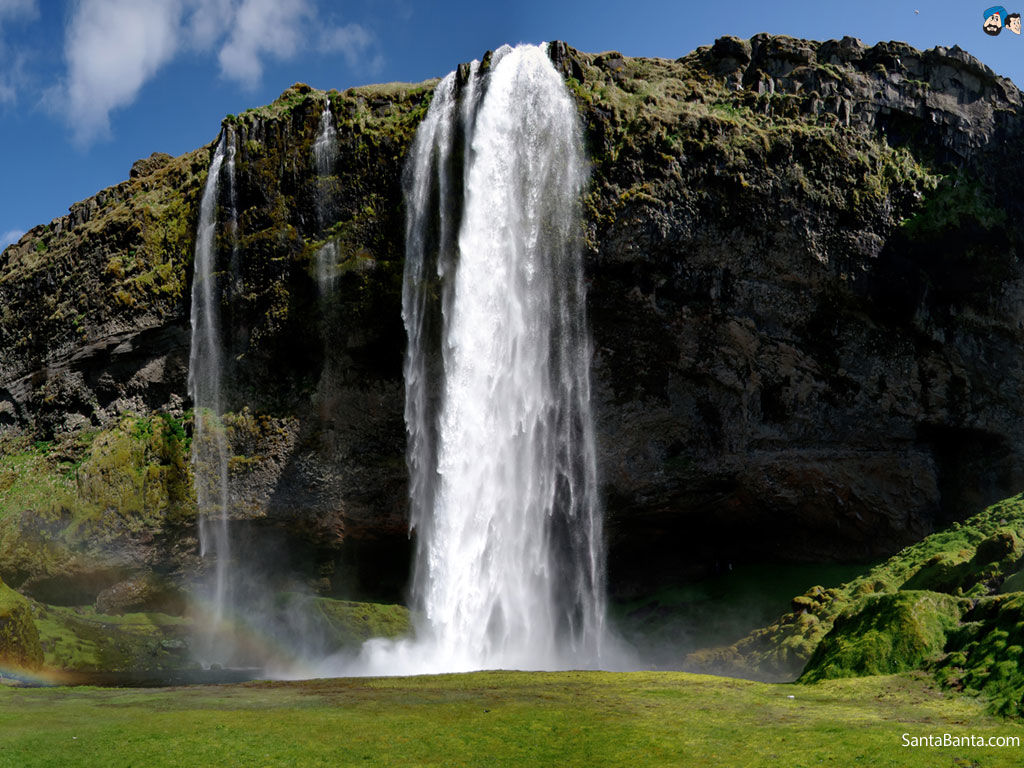
- 1)its starts on a suface which has the the properties of this picture: soft rock next to hard rock.
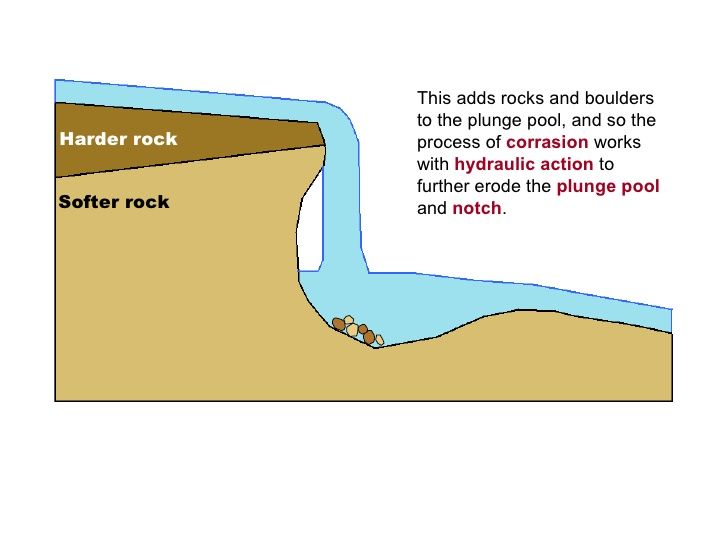
- 2) Due to erosion, the soft rock then erode away untill it dips downwards.
- 3) The water will continue to erode the given material unless the hard rock stops and there is soft rock underneath it
The cycle of a waterfall
- Therefore, if there is no more hard rock and soft rock underneath the Hard rock, then erosion would take place under the hard rocand it will loop back round meaning that it creates a plung pool
- So after that, the plung pool gets bigger and bigger untill it leave a ledge of hard rock over the end of the plunge pool, then the ledge will eventually break off meaning that the cycle is restarted
Examples
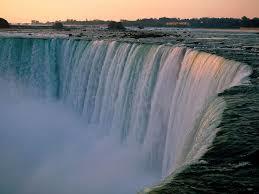
- Niagara Falls were formed when glaciers receded at the end of the Wisconsin glaciation (the last ice age), and water from the newly formed Great Lakes carved a path through the Niagara Escarpment en route to the Atlantic Ocean. While not exceptionally high, the Niagara Falls are very wide. More than six million cubic feet (168,000 m3) of water falls over the crest line every minute in high flow,[4] and almost four million cubic feet (110,000 m3) on average.
- Niagra falls
- The waterfall has been known as the "Angel Falls" since the mid-20th century; they are named after Jimmie Angel, a US aviator, who was the first person to fly over the falls.[2] Angel's ashes were scattered over the falls on 2 July 1960.[3] The common Spanish name Salto Ángel derives from his surname. In 2009, President Hugo Chávez announced his intention to change the name to the purported original indigenous Pemon term ("Kerepakupai Vená", meaning "waterfall of the deepest place"), on the grounds that the nation's most famous landmark should bear an indigenous name.[4] Explaining the name change, Chávez was reported to have said, "This is ours, long before Angel ever arrived there ... this is indigenous property."[5] However, he later said that he would not decree the change of name, but only was defending the use of Kerepakupai Vená.[6]
- ngle falls
- Niagara Falls were formed when glaciers receded at the end of the Wisconsin glaciation (the last ice age), and water from the newly formed Great Lakes carved a path through the Niagara Escarpment en route to the Atlantic Ocean. While not exceptionally high, the Niagara Falls are very wide. More than six million cubic feet (168,000 m3) of water falls over the crest line every minute in high flow,[4] and almost four million cubic feet (110,000 m3) on average.
Imágenes y archivos del mapa

Información
- Descripción
- its something about waterfalls?
- Creado por
- Usman Malik
- Visitas
- 47
- Etiquetas
- Valoración