
Mapa mental
Formalism
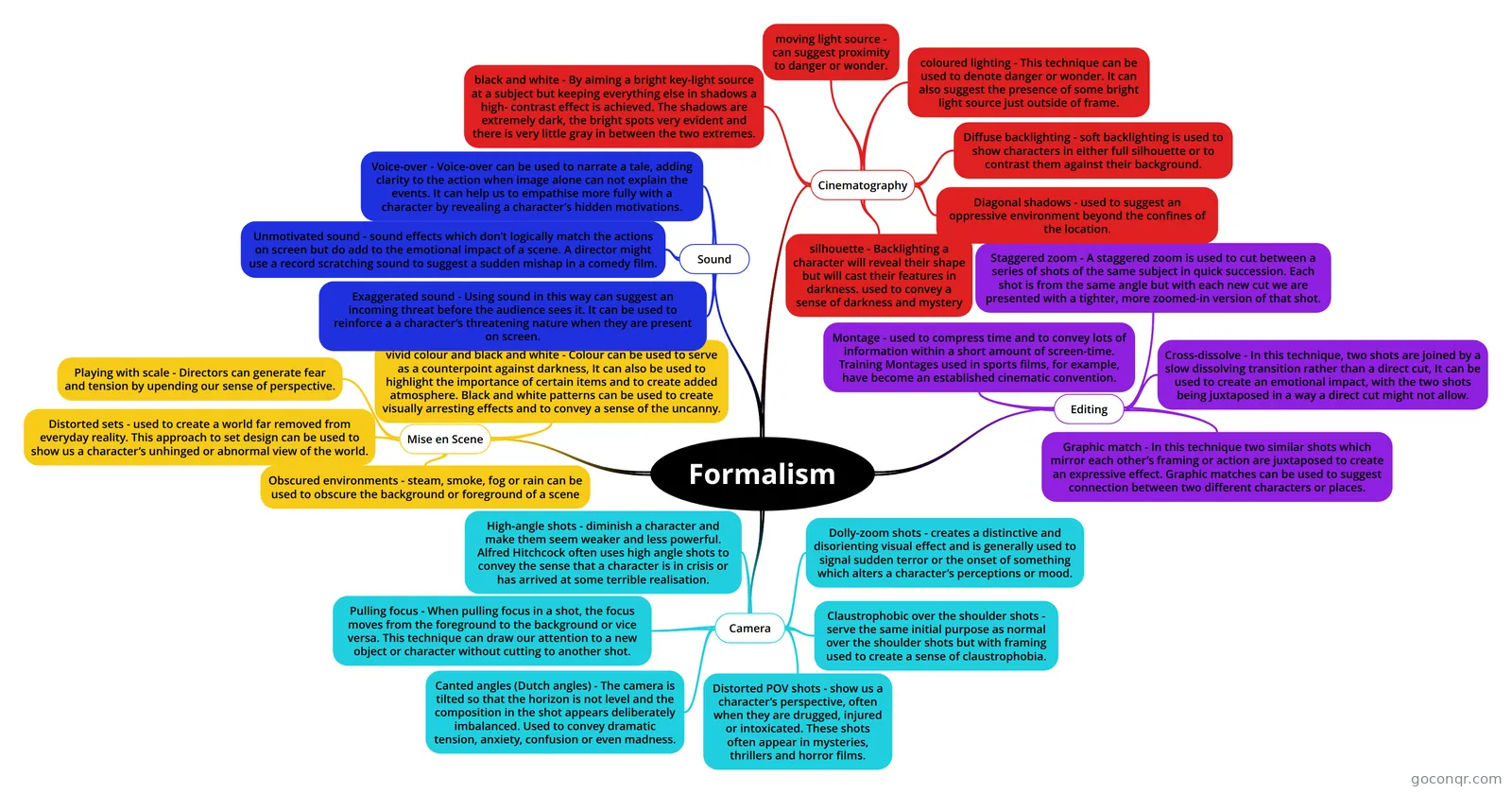
Mind map: Formalism
Contenido del mapa
Formalism
Editing
- Graphic match - In this technique two similar shots which mirror each other’s framing or action are juxtaposed to create an expressive effect. Graphic matches can be used to suggest connection between two different characters or places.
- Cross-dissolve - In this technique, two shots are joined by a slow dissolving transition rather than a direct cut, It can be used to create an emotional impact, with the two shots being juxtaposed in a way a direct cut might not allow.
- Staggered zoom - A staggered zoom is used to cut between a series of shots of the same subject in quick succession. Each shot is from the same angle but with each new cut we are presented with a tighter, more zoomed-in version of that shot.
- Montage - used to compress time and to convey lots of information within a short amount of screen-time. Training Montages used in sports films, for example, have become an established cinematic convention.
Mise en Scene
- Obscured environments - steam, smoke, fog or rain can be used to obscure the background or foreground of a scene
- Distorted sets - used to create a world far removed from everyday reality. This approach to set design can be used to show us a character’s unhinged or abnormal view of the world.
- Playing with scale - Directors can generate fear and tension by upending our sense of perspective.
- vivid colour and black and white - Colour can be used to serve as a counterpoint against darkness, It can also be used to highlight the importance of certain items and to create added atmosphere. Black and white patterns can be used to create visually arresting effects and to convey a sense of the uncanny.
Sound
- Exaggerated sound - Using sound in this way can suggest an incoming threat before the audience sees it. It can be used to reinforce a a character’s threatening nature when they are present on screen.
- Unmotivated sound - sound effects which don’t logically match the actions on screen but do add to the emotional impact of a scene. A director might use a record scratching sound to suggest a sudden mishap in a comedy film.
- Voice-over - Voice-over can be used to narrate a tale, adding clarity to the action when image alone can not explain the events. It can help us to empathise more fully with a character by revealing a character’s hidden motivations.
Cinematography
- silhouette - Backlighting a character will reveal their shape but will cast their features in darkness. used to convey a sense of darkness and mystery
- Diagonal shadows - used to suggest an oppressive environment beyond the confines of the location.
- Diffuse backlighting - soft backlighting is used to show characters in either full silhouette or to contrast them against their background.
- coloured lighting - This technique can be used to denote danger or wonder. It can also suggest the presence of some bright light source just outside of frame.
- moving light source - can suggest proximity to danger or wonder.
- black and white - By aiming a bright key-light source at a subject but keeping everything else in shadows a high- contrast effect is achieved. The shadows are extremely dark, the bright spots very evident and there is very little gray in between the two extremes.
Camera
- High-angle shots - diminish a character and make them seem weaker and less powerful. Alfred Hitchcock often uses high angle shots to convey the sense that a character is in crisis or has arrived at some terrible realisation.
- Pulling focus - When pulling focus in a shot, the focus moves from the foreground to the background or vice versa. This technique can draw our attention to a new object or character without cutting to another shot.
- Canted angles (Dutch angles) - The camera is tilted so that the horizon is not level and the composition in the shot appears deliberately imbalanced. Used to convey dramatic tension, anxiety, confusion or even madness.
- Claustrophobic over the shoulder shots - serve the same initial purpose as normal over the shoulder shots but with framing used to create a sense of claustrophobia.
- Distorted POV shots - show us a character’s perspective, often when they are drugged, injured or intoxicated. These shots often appear in mysteries, thrillers and horror films.
- Dolly-zoom shots - creates a distinctive and disorienting visual effect and is generally used to signal sudden terror or the onset of something which alters a character’s perceptions or mood.
Información
- Descripción
- Mapa Mental sobre Formalism, creado por Daniel Smith el 28/11/2022.
- Creado por
- Daniel Smith
- Visitas
- 0
- Valoración
Más sobre Film Styles and Directors