
Mapa mental
Module 3
Contenido del mapa
Module 3
3.1- Population and sampling
- Descriptive statistic: to describe the basic features of the data in a study. Inferential statistic: to reach conclusions that extend beyond the immediate data alone.
- Types of sampling
- Probability
- Simple random sampling
- A number is assigned to each element of the population.
- Systematic random sampling
- A constant "K" is determined by dividing the number of elements of the population (N) over the number of elements required (n). K = N/n
- Stratified random sampling
- Divides the population into different subgroups according to their characteristics.
- Cluster random sampling
- The population is grouped by proximity to existing subgroups, which will be called conglomerates.
- Simple random sampling
- Nonprobability
- Quota sampling
- Made up of people who are easy to reach.
- Convinience sampling
- In the assembled sample has the same proportions of individuals as the entire population with respect to know characteristics, traits, etc.
- Quota sampling
- Probability
3.2- Hypothesis tests
- Null hypothesis
- Is a type of hypothesis used in statistics that proposes that no statistical significance exists in a set of given observations.
- Elements of null hypothesis
- Unit of analysis, logical element and variable.
- Null hypothesis
3.3- One-tailed and two-tailed tests
- Significance level
- Is the criterion used for rejecting the null hypothesis, it s commonly used in hypothesis testing.
- Acceptance region
- It's the interval within the sampling distribution of the tet statistic that is consistent with the H0.
- Rejection region
- Is the set of values for the test statistic that lead to rejection of H0.
- Two-tailed test
- Statistical test which the critical area of distribution is two-sided and tests which sample is greater.
- One-tailed test
- Statistical test with one-sided distribution, greater or less than a certain value but not both.
- Steps for Hypothesis testing
- 1.- State null hypothesis and alternative
- 2.- Determine significance level to be used
- 3.- Select the test statistic
- 4.- Determine critical value for test statistic
- 5.- Calculate the value of the test
- 6.- Conclude
- Significance level
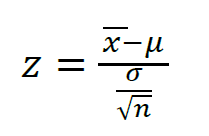
3.4- Z-test
- Formula
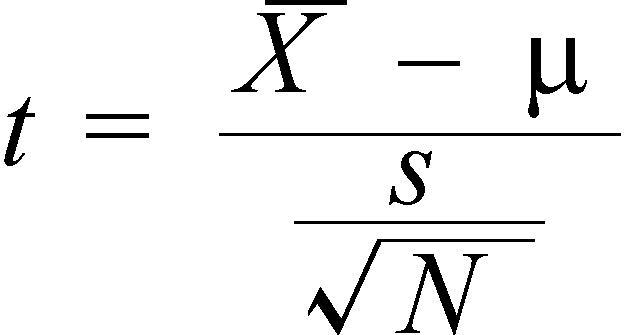
3.5- t-test
- Formula
Imágenes y archivos del mapa
Información
- Descripción
- Mapa Mental sobre Module 3, creado por Santiago Lugo el 26/03/2017.
- Creado por
- Santiago Lugo
- Visitas
- 0
- Valoración