
Statistical Inference
349 resources created by 290 users
This Statistical Inference page on GoConqr gathers community-made quizzes, mind maps, flashcards, notes and flowcharts, from hypothesis tests and confidence intervals to ANOVA, chi-square and the sign test. It's built for university students and professional candidates practising tests and interpreting results, and for teachers after ready-made material. There are over 340 resources here, including more than 40 quizzes, 130 mind maps and 130 flashcard decks, made by over 280 contributors. Try a quiz to find your gaps, then build your own revision set.
Top Statistical Inference resources
-
40 questionsMC Quiz 1 In a US Today/Gallup poll taken shortly after the game, 64% of respondents who described themselves as base...
-
52 questionsSTA2023 Exam 3 What are the alternative titles for a correlated T test
-
Mind map P-values e.g
-
Mind map Statistical measures Bivariate regression mapa mental
-
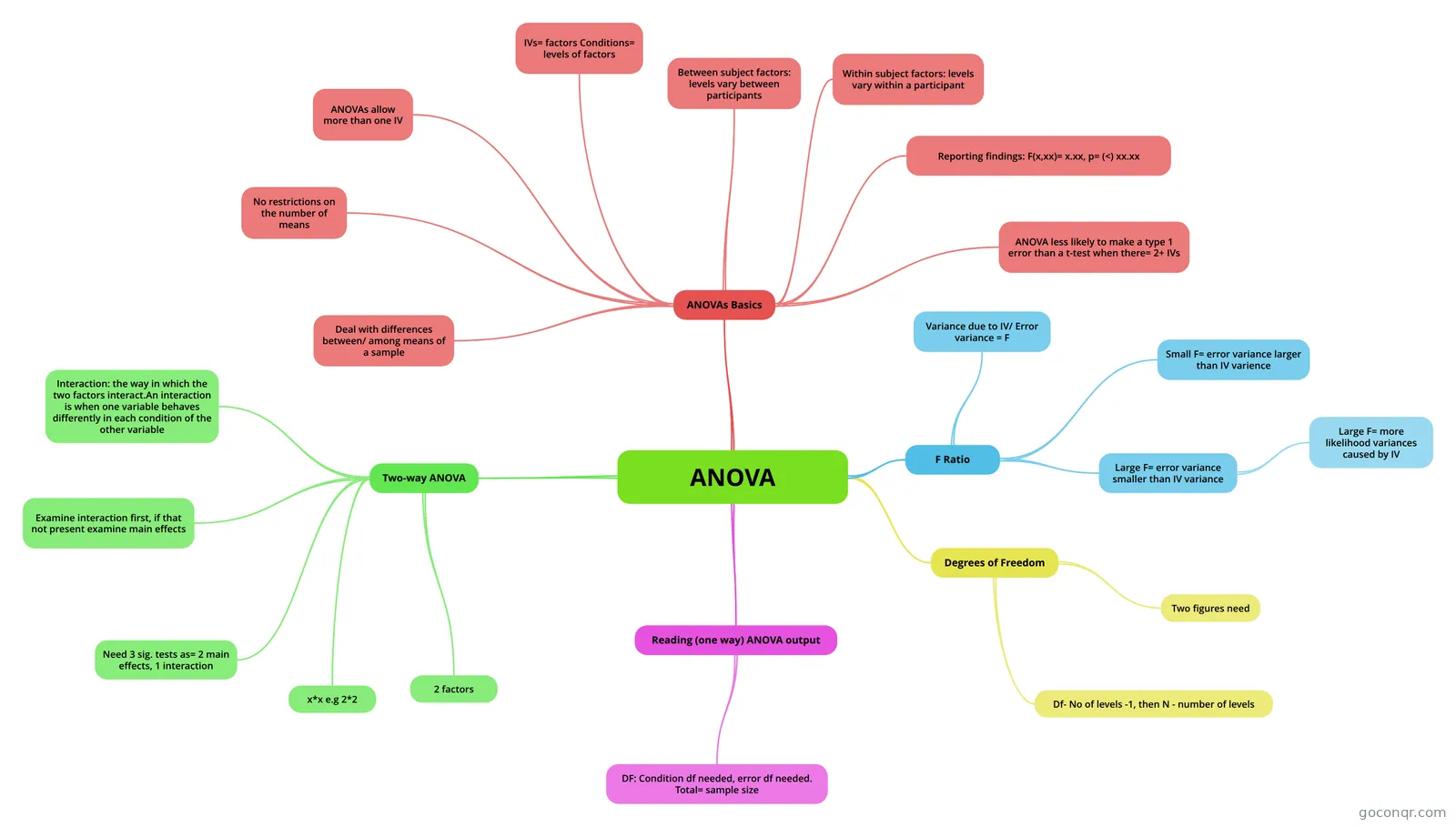 Mind map ANOVA
-
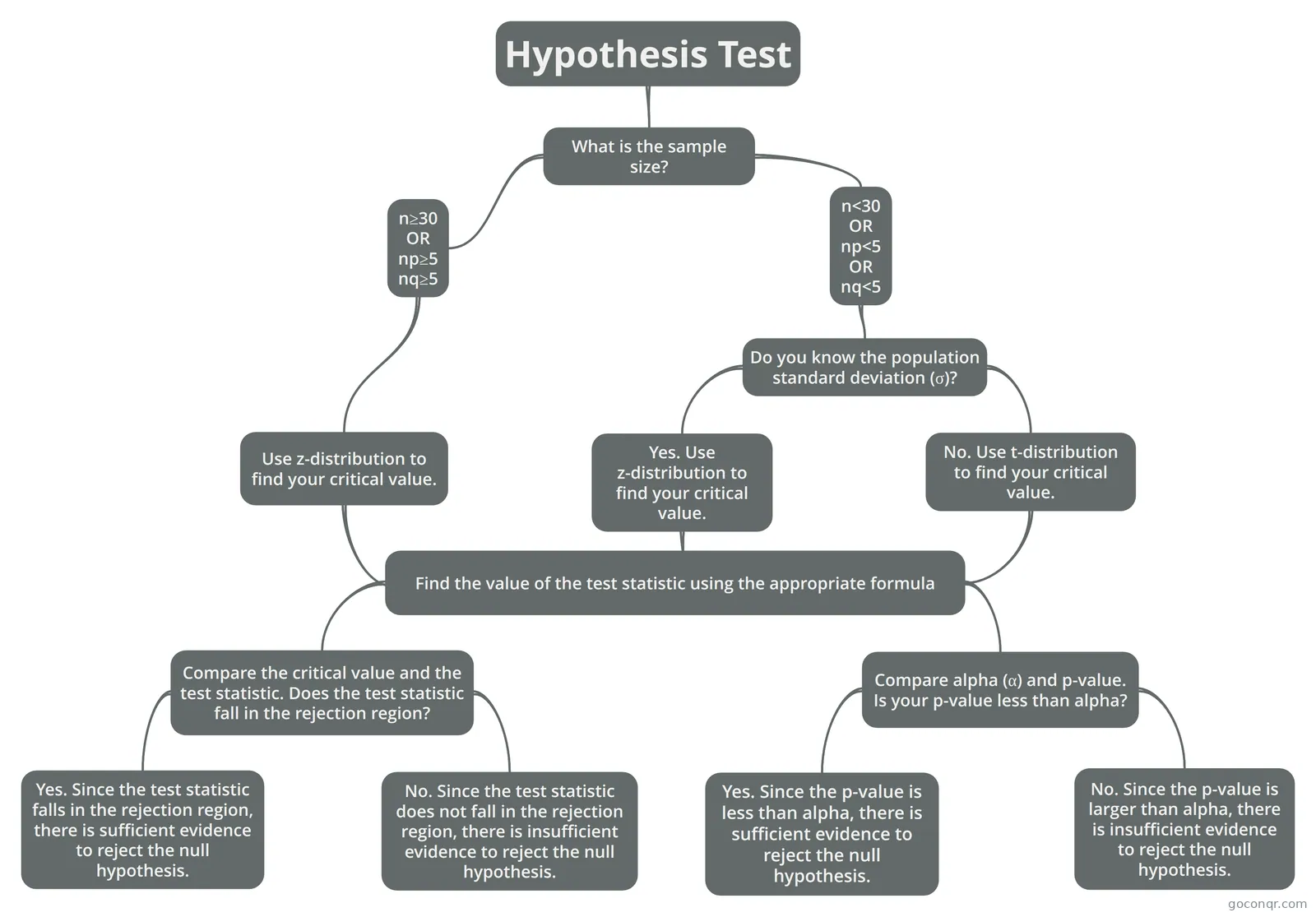 Mind map Hypothesis Test Hypothesis test flow chart.
-
6 cardsStats 151 - Estimation Population Mean from the Sample Mean
-
Mind map 4. CONFIDENCE INTERVALS
Quizzes
See all 43 quizzes-
40 questionsMC Quiz 1 In a US Today/Gallup poll taken shortly after the game, 64% of respondents who described themselves as base...
-
52 questionsSTA2023 Exam 3 What are the alternative titles for a correlated T test
-
10 questionsStatistical Inferences Test These are 10 questions from the practice exam from my free Coursera Course "Improving Your Statistical Infe...
-
74 questionsStats Exam Which of the following are true about confidence intervals (select all that apply):
-
50 questionsInferential Statistics for Data Science Select the right answer. With the help of inferential statistics, we can :
-
40 questionsStatistics Quiz The main idea of a chi square test is to...
-
7 questionsStatistics Test #4 Since an instant replay system for tennis was introduced at a major tournament, men challenged 1746 referee...
-
13 questionsLECTURE TWO PSYC2001 MCQS What is a population?
Mind maps
See all 134 mind maps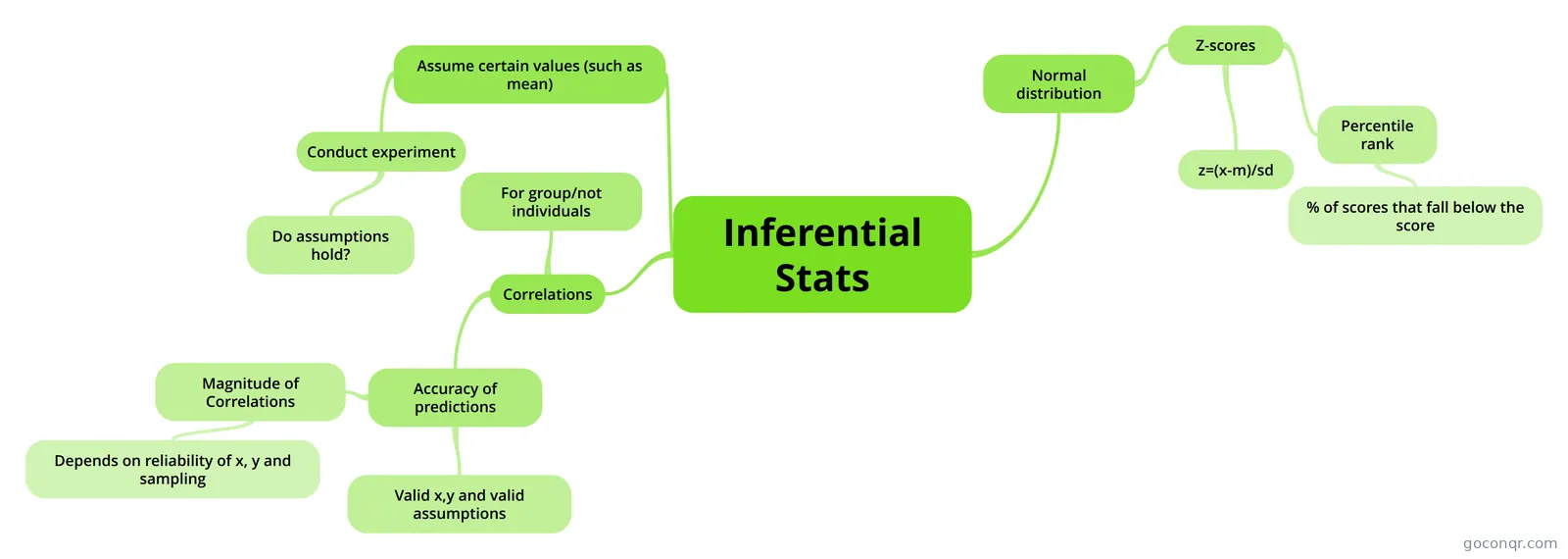
Flashcards
See all 140 flashcards-
6 cardsStats 151 - Estimation Population Mean from the Sample Mean
-
72 cardsDAF All else equal, is specifying a smaller significance level in a hypothesis test likely to increase the prob...
-
67 cardsStats flashcards (dependent variables) define: nominal, ordinal, interval, ratio.
-
43 cardsPsych Stats exam 2 flashcards of lectures as we learn them - help to prep for exam 2
-
17 cardsQBA TEST 2 What are the three characteristics of the normal distribution?
-
37 cardsITRIP Tim Mainly focuses on statistics and qualitative and quantitative data
-
28 cardsConfidence Intervals and Normal Distribution Recap Some continuous random variables can be modelled using....
-
12 cardsresearch skills handout 2 why do we keep the term standard error when its esentially a standard deviation (3)
Flowcharts
Notes
See all 21 notesSlides
More Statistics and probability topics
About Statistical Inference
GoConqr OriginalWhat the page covers
The resources here follow the usual path of inference. Some deal with sampling and estimation, such as the notes on sampling distributions and the flashcard deck on estimating a population mean from the sample mean. Others cover hypothesis testing, p-values, confidence intervals, t-tests, ANOVA, correlation and regression, and non-parametric methods. A few mention AP Statistics and A-level Psychology.
Where to start
- Open the Inferential Stats mind map for normal distributions, z-scores and the logic of testing assumptions.
- Move to the Hypothesis Test mind map, which asks about sample size and whether the population standard deviation is known, then points you to a z or t approach.
- Read 4. CONFIDENCE INTERVALS for the 90%, 95% and 99% critical values and how a p-value should be read.
Choosing the right test
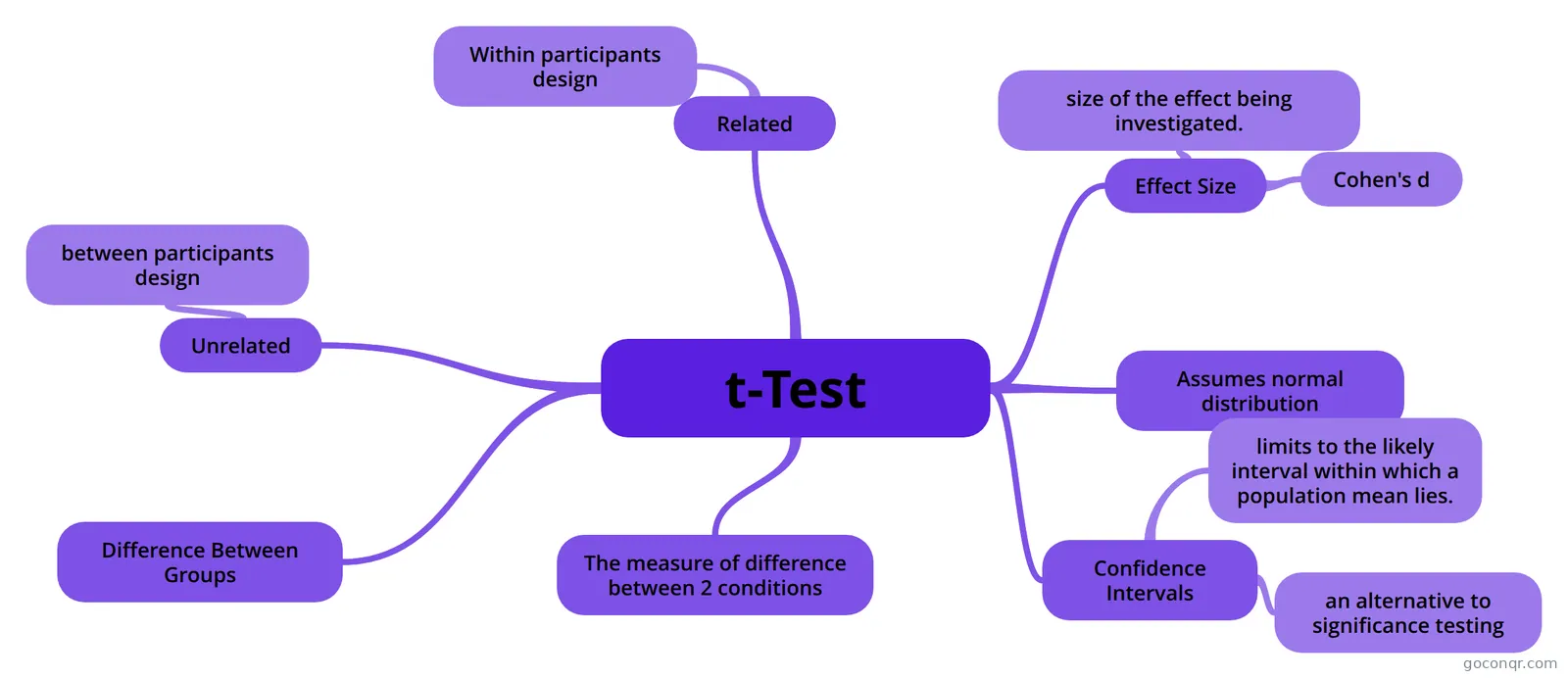
Once the basics are clear, compare the tests. The t-Test map separates related from unrelated designs and mentions effect size. The ANOVA map covers comparing several means and the F ratio. Flowcharts for the Mann Whitney (U) Test, the Chi-Squared Test (X²), Spearman's Rho (r) Test and the sign test help when the data do not fit a parametric test.
Using quizzes and maps together
Read a map first, then test yourself. The Type 1 and Type 2 type errors quiz and the Non-Parametric Testing quiz are good checks after the related maps. Where an answer goes wrong, return to the map and look at that branch again. Flashcard decks such as Hypothesis Testing and Inferential Statistics flashcards suit short, repeated sessions.
Where it fits
This unit sits in the Statistical Inference strand of Statistics and probability. Teachers can pick maps, quizzes and notes to share with a class. Choose one resource that matches what you are working on today, and see where it leads.
Frequently asked questions
Which resource should I open first?
Start with the Inferential Stats mind map, which covers normal distributions, z-scores and checking assumptions. Then use the Hypothesis Test mind map to see how sample size and a known standard deviation decide the method. A quiz such as Statistical Inferences Test makes a good first check.
What do the mind maps cover?
They cover hypothesis testing, p-values, confidence intervals, t-tests, ANOVA, chi-square, correlation and regression, and the sign test. Some work through examples, such as a randomised trial comparing a drug with a placebo to explain p-values. There are over 130 maps to browse.
Are the resources free to use?
Yes. Every resource on this page is free to open, study and take, with no account needed. They were made by GoConqr users, not by GoConqr. A free account also saves your quiz scores and lets you make your own quizzes, mind maps, flashcards and notes.
Which levels and exams do these suit?
The page is mostly aimed at university students and professional candidates, with teachers also able to use it. Listed resources mention AP Statistics and A-level Psychology, so some material may help with those courses. Check each resource's content against your own syllabus.
How do I choose between parametric and non-parametric tests?
Use the flowcharts and decks on test types. Statistical Tests by Factor, Levels, and Groups sorts tests by design, while the Mann Whitney (U) Test, Spearman's Rho (r) Test and sign test flowcharts cover options when data are not suited to parametric methods.
What if I cannot find the topic I need?
Search the unit for related terms, such as confidence intervals or chi-square, since titles vary. Many resources are student notes and may cover several topics under one name. If nothing fits, you can make your own mind map or flashcards.