
Mapa mental
Separation Techniques
Contenido del mapa
Separation Techniques
Chromatography
- can be used: separate dyes in ink/pigments; identify poisons, drugs and banned substances.
- common solvent used: water or ethanol
- the more soluble the dye is in the solvent, the further it will travel up the chromotagram
- to choose the right solvent: the dyes must be able to dissolve in the solvent
- Why must a pencil be used instead of a pen?
- A pencil is used since pencil lead will not dissolve in the solvent, it will not interfere with the chromatogram results.
- Why must the pencil line be above the solvent?
- Since the dyes are placed on the pencil line, if the pencil line is below the solvent, the dyes can dissolve in it causing inaccurate results.
- A pure substance gives only one spot on a chromatogram
Filtration
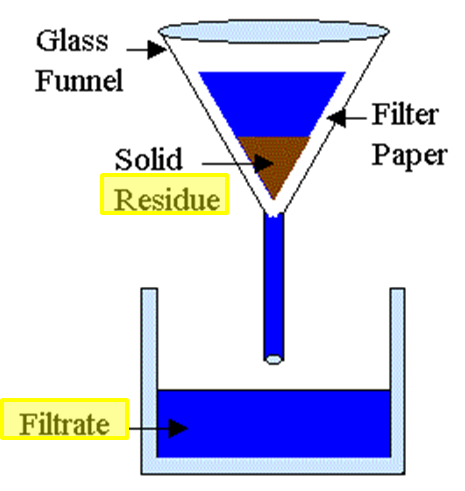
- To separate solid from liquid
- Residue : insoluble solid Filtrate : liquid
Evaporation
- Used to separate a dissolved solid from a solid-liquid mixture
- Only suitable for solids that will not decompose
- Used to separate a dissolved solid from a solid-liquid mixture
Crystallization
- To obtain pure solids from a solution
- Why must the solution be heated?
- To obtain a hot saturated solution.
- Why must the crystals be rinsed?
- To rinse off any impurities on the crystals
- Steps
- 1.Solution is heated to evaporate most of the solvent.
- 2. Hot saturated solution is allowed to cool
- 3.Pure crystals appear as solids. Cold solution is filtered to obtain crystals
- 4. Crystals are rinsed with cold distilled water Dry crystals by pressing them between sheets of filter paper
- 3.Pure crystals appear as solids. Cold solution is filtered to obtain crystals
- 2. Hot saturated solution is allowed to cool
- 1.Solution is heated to evaporate most of the solvent.
Simple Distillation
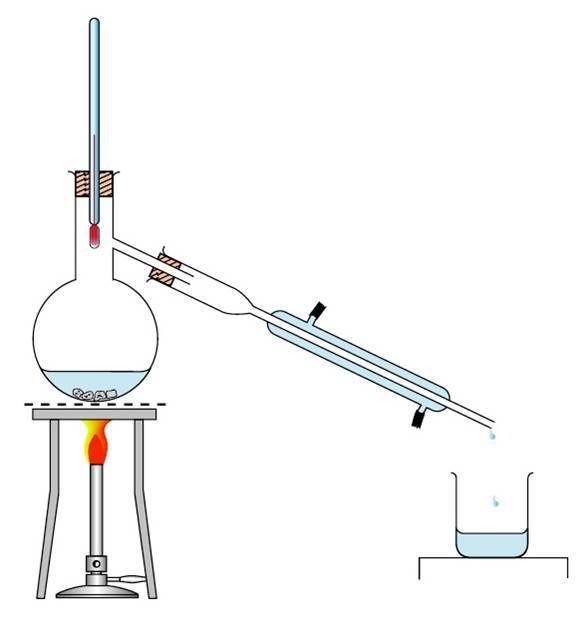
- To obtain a liquid from a solution
- What is the purpose of using boiling stones?
- To ensure smooth boiling
- Why is the thermometer placed at the mouth of the condenser?
- Ensures that the thermometer measures the boiling point of the substance that is being distilled.
- Why is the ‘water in’ at the bottom of the condenser?
- To ensure all the vapor is condensed into liquid.
Fractional Distillation
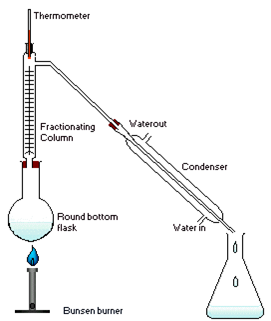
- To separate more than 2 liquids
- Eg: Liquid air; mixture of alcohol and water
- Relies on the boiling point of all the liquids The liquid with the lower boiling point distillates first.
- What is the purpose of the fractionating column?
- To condense the liquid with the higher boiling point back into the flask.
- To separate more than 2 liquids
Imágenes y archivos del mapa
Información
- Descripción
- Mapa Mental sobre Separation Techniques, creado por pam_gz el 12/05/2014.
- Creado por
- pam_gz · may 2014
- Actualizado
- 19 feb 2016
- Visitas
- 11
- Valoración