
Mapa mental
Heat Transfer and Kinetic Theory
Contenido del mapa
Heat Transfer and Kinetic Theory
Infrared Radiation
- Infrared radiation transfers heat energy
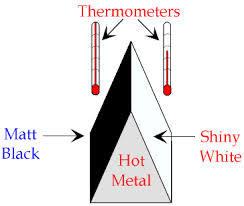
- Dark, matt surfaces are best at absorbing and emitting infrared radiation
- Light, shiny surfaces are worst at absorbing and emitting infrared radiation and reflect a lot of the radiation
- If an object is cooler than its surroundings it will absorb more infrared radiation than it emits
- If an object is warmer than its surroundings it will emit more infrared radiation than it absorbs
- Everything absorbs and emits infrared radiation
Kinetic Theory
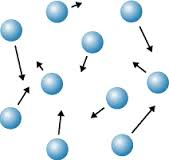
- Gases
- Almost no forces of attraction
- Particles move in a random direction at high speeds
- High energy levels
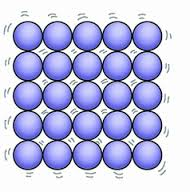
- Solids
- Strong forces of attraction keep it in a fixed pattern
- Low amount of energy so it can only vibrate in fixed positions
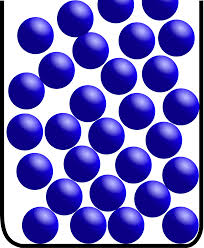
- Liquids
- Weak forces of attraction
- The particles can move in random directions at low speeds
- Gases
Conduction
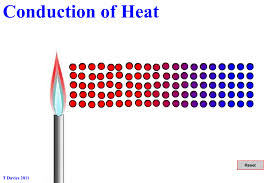
- A type of heat transfer that occurs mainly in solids but also in liquids and gases
- The particles vibrate and transfer their heat energy to neighbouring particles
- More dense materials are better conductors because their particles are closer together
- Materials that have particles that are far apart transfer heat via conduction slower and are known as insulators
- Metals are good conductors because they contain free electrons which allows them to transfer energy faster
Convection
- Occurs mainly in liquids and gases
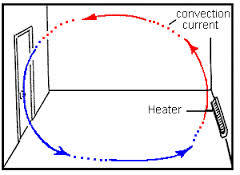
- Particles vibrate more as they heat up and so take up less space and become less dense
- Less dense particles rise taking the energy with them
- Convection currents occur when the less dense particles rise and are replaced by the denser particles
Condensation
- Condensation is the process of turning a gas into a liquid
- If particles lose energy they slow down and the attractive forces between them grow stronger and if the forces are strong enough the particles join and become a liquid
- Factors affecting the rate of condensation
- Temperature of the surface the gas touches
- Airflow
- Density of gas
- Temperature of the gas
Evaporation
- Evaporation is the process of a liquid turning into a gas
- If the particles have enough energy and are travelling in the right direction they can escape the attractive forces of the other particles and evaporate
- Factors affecting the rate of evaporation
- Airflow over the liquid
- Surface area of the liquid
- Temperature of the liquid
- Density of the liquid
Rate of Heat Transfer
- Factors affecting rate of heat transfer
- Surface Area
- Type of material
- Colour
- Surface area to volume ratio
- The smaller this is, the faster the transfer
- Controlling Heat Transfer
- Vacuum Flask
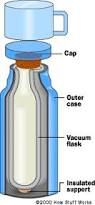
- The flask uses two walls to create a vacuum to stop heat loss through conduction and convection
- The flask walls are silver and shiny to stop heat loss through radiation
- The insulated support stops the flask walls from cracking under the pressure and minimises heat loss from conduction
- The stopper is made of plastic and filled with cork and foam to reduce heat loss through conduction
- Humans and Animals
- Hairs on your skin stand up to trap a thicker layer of insulating air to limit heat transfer by convection
- Blood is diverted to the surface where heat can be lost as radiation resulting in pinker skin tone
- Arctic foxes have small ears to minimise heat loss via radiation
- Desert foxes have large ears to maximise heat loss via radiation
- Vacuum Flask
- Factors affecting rate of heat transfer
Imágenes y archivos del mapa
Información
- Descripción
- A-Level Physics Mapa Mental sobre Heat Transfer and Kinetic Theory, creado por Joseph Tedds el 26/10/2014.
- Creado por
- Joseph Tedds
- Visitas
- 107
- Etiquetas
- Valoración