
Mapa mental
PASSIVE VOICE

Contenido del mapa
PASSIVE VOICE
- leer
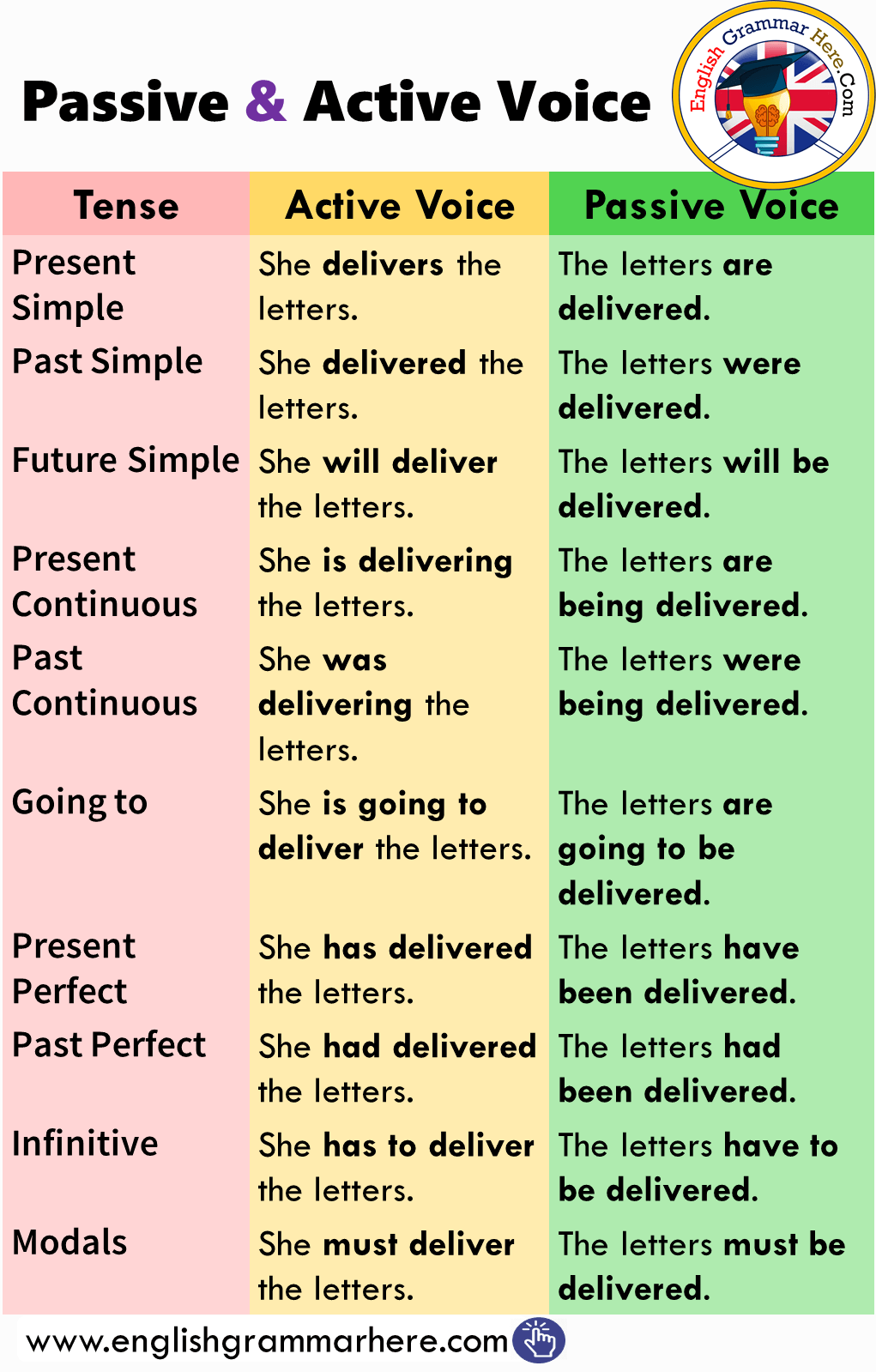
¿ WHAT IS PASSIVE VOICE?
- Complement and action of the sentence are more important than the subject. In the passive voice the complement performs the action and the subject receives it. "CHANGING ROLES"
WHAT IS THE DIFERENCE WITH ACTIVE VOICE?
- The complement performs the action of the sentence
- the passive voice fundamentally uses the past participle
- the subject changes into an agent subject where the use of the preposition "by" is necessary.
WHAT IS THE USE OF THE PASSIVE VOICE?
- The passive voice is used for situations where it is not known who carried out the action or does not want to mention the subject.
- The passive voice is used to give more importance to the complement and the action of a sentence in active voice.
- When it is not necessary to mention who performs the action because it is evident.
WHAT IS THE STRUCTURE OF THE PASSIVE VOICE?
- AFF: OBJECT + TO BE (CONJUGED) + PAST PARTICIPLE + BY + SUBJECT
- NEG: OBJECT + TO BE IN NEGATIVE (CONJUGED) + PAST PARTICIPLE + BY + SUBJECT
- INT: IN THE PASSIVE VOICE, THE DID AND THE DOES ARE NOT USED IN THE INTERROGATIVE FORM: TO BE (CONJUGED) + OBJECT + PAST PARTICIPLE + BY + SUBJECT + ?
- NEG: OBJECT + TO BE IN NEGATIVE (CONJUGED) + PAST PARTICIPLE + BY + SUBJECT
- AFF: OBJECT + TO BE (CONJUGED) + PAST PARTICIPLE + BY + SUBJECT
EXAMPLES OF PASSIVE VOICE
- Penicillin was discovered by Alexander Fleming.
- Was your wallet stolen again?
- His new book was just published around the world
- A book must be given to Laura by Nicolas
- Was your wallet stolen again?
- Penicillin was discovered by Alexander Fleming.
RULES OR RECOMENDATIONS FOR PASSIVE VOICE
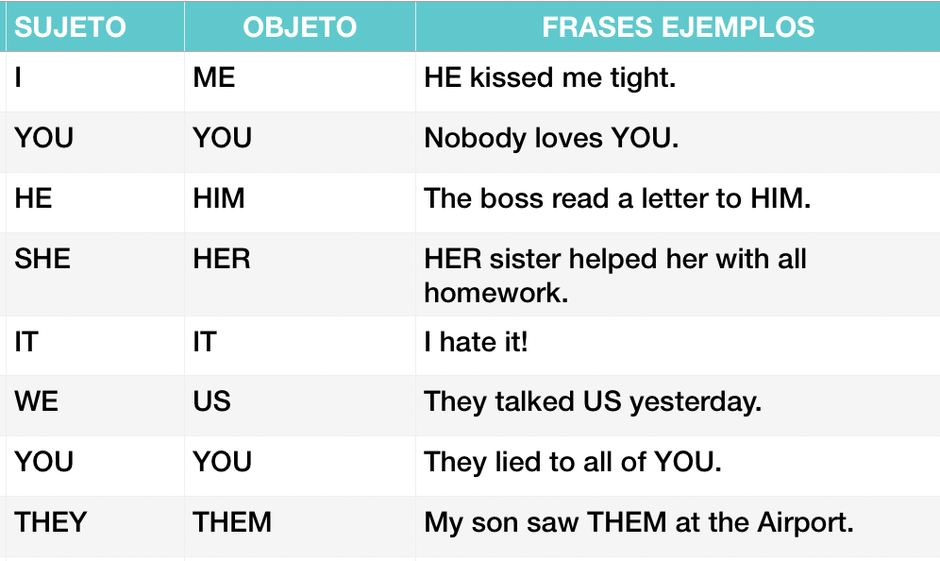
- IN CASES WHERE IT IS NOT KNOWN WHO IS THE SUBJECT OF THE ACTIVE VOICE WHEN TRANSFORMING SENTENCE IN A PASSIVE VOICE WE USE THE OBJECT PRONOUNS
- IMPERSONAL PASSIVE SENTENCE
- The impersonal passive voice is used when we want to express what a greater or lesser number of people think, think, believe or feel about a situation. It is usually used in texts, in the media and in general in formal contexts.
- EXAMPLE: He is said to be a creative and ingenious writer. Se dice que es un escritor creativo e ingenioso.
- It + be (is / was / has been...) + reporting verb (en past participle) + (that) frase
- Sujeto + be (am / is ..) + reporting verb (en past participle) + to + infinitive / perfect infinitive
- TWO DIFERENTS FORMS OF WRITE
- It + be (is / was / has been...) + reporting verb (en past participle) + (that) frase
- EXAMPLE: He is said to be a creative and ingenious writer. Se dice que es un escritor creativo e ingenioso.
- The impersonal passive voice is used when we want to express what a greater or lesser number of people think, think, believe or feel about a situation. It is usually used in texts, in the media and in general in formal contexts.
NICOLAS MANZANO TORRES 10° TENTH GRADE CMM
Imágenes y archivos del mapa
Información
- Descripción
- INGLES
- Creado por
- MANZANO TORRES NICOLAS · abr 2020
- Actualizado
- 1 may 2020
- Visitas
- 108
- Etiquetas
- Valoración