
Mapa mental
Basic resuscitation

Contenido del mapa
Basic resuscitation
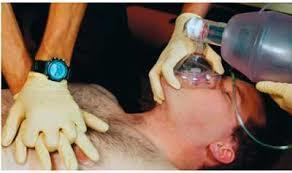
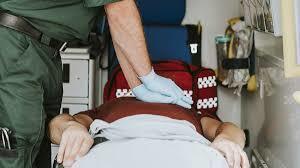
Cardiopulmonary resuscitation is a life-saving technique for victims of sudden cardiac arrest
- The unadjusted analysis showed that at the national level the intervention was associated with better CPR rates by bystanders and a longer survival
- However, in an unadjusted analysis of raw data, the patients who received continuous chest compressions had a rate lower return of spontaneous circulation
- The unadjusted analysis showed that at the national level the intervention was associated with better CPR rates by bystanders and a longer survival
American Heart Association 2017 Update Focused in basic life support for adults and the quality of cardiopulmonary resuscitation
CPR FOR CARDIAC ARREST The 2017 BLS CoSTR 3 abstract and systematic review considered the use of continuous versus interrupted chest compressions after advanced airway placement in the hospital setting.
Whenever an advanced airway (tube tracheal or supraglottic device) during CPR, you can be reasonable for providers to perform compressions continuous with administered positive pressure ventilation without pausing chest compressions
rescatistas capacitados en RCP que utilicen compresiones torácicas y ventilación (respiraciones de rescate) proporcionen una relación compresión-ventilación de 30: 2 para adultos en paro cardíaco
Después de la colocación de una vía aérea avanzada, puede ser razonable que el proveedor administre 1 respiración cada 6 s (10 respiraciones por minuto) mientras se realizan compresiones torácicas continuas
For adults on OHCA, untrained rescuers should provide chest compression-only CPR with or without dispatcher assistance
We recommend that when dispatchers instructions be necessary, dispatchers must provide chest compression only CPR Instructions for Callers for adults with suspected OHCA
file:///C:/Users/mysfo/Downloads/CIR.0000000000000539+may+(1).en.es.pdf file:///C:/Users/mysfo/Downloads/1-s2.0-S030095721930098X-main.en.es.pdf
In out-of-hospital cardiac arrest (OHCA), return of spontaneous circulation (ROSC) to the scene occurs only in a minority of patients. The optimal duration of resuscitation at the scene before transport with cardiopulmonary resuscitation (CPR) in progress.
- In patients with out-of-hospital cardiac arrest (OHCA), advanced life support results in resulted in the return of spontaneous circulation (ROSC) on the scene in a minority of patients, ranging from 15% to 45%.
What is the optimal time to decide to start CPR transport in progress?
- Currently, it is not clear at what point in the resuscitation process the decision to transport a patient with CPR in progress
- Emergency medical services (EMS) must take into account the risk of transporting an unstable patient in a vehicle in movement that the CROS may have achieved if resuscitation efforts at the scene they would have continued for longer
- Doctors are not part of the standard EMS team shipped and the paramedic is qualified and legally authorized to take resuscitation decisions without consulting a physician in the setting prehospital
- Paramedics may choose to stay longer in the scene in non-public places where to transfer the patient to an ambulance with CPR in progress it can be challenging. Additionally, manual CPR in a moving ambulance reduces the quality of CPR and is potentially harmful to the paramedic
- consider transporting a patient with ongoing CPR is associated with interruptions in CPR and a possible lower survival rate
- Doctors are not part of the standard EMS team shipped and the paramedic is qualified and legally authorized to take resuscitation decisions without consulting a physician in the setting prehospital
- Emergency medical services (EMS) must take into account the risk of transporting an unstable patient in a vehicle in movement that the CROS may have achieved if resuscitation efforts at the scene they would have continued for longer
- Currently, it is not clear at what point in the resuscitation process the decision to transport a patient with CPR in progress
Mayra Ortega, cuidado del adulto 2,U. Sabana
Imágenes y archivos del mapa

Información
- Descripción
- Mapa Mental sobre Basic resuscitation, creado por Mayra Ortega el 20/09/2020.
- Creado por
- Mayra Ortega
- Visitas
- 0
- Valoración