
Mapa mental
Atherosclerosis
Contenido del mapa
Atherosclerosis
Epidermiology
- Atherosclerosis/CVD is the leading cause of death world-wide. Location and lifestyle plays a huge part in MI
- Risk factors
- Constitutional
- Genetics: Most important risk (family history). But it is a small percentage. Age: MI increases fivefold between ages 40 to 60. Gender: Premenopausal females are less likely to have MI, but the ones post menopausal have higher risk than males
- Modifiable
- Hyperlipidemia, specifically hypercholesterolemia Hypertension: Cigarette smoking Diabetes Mellitus
- Constitutional
Pathogenesis
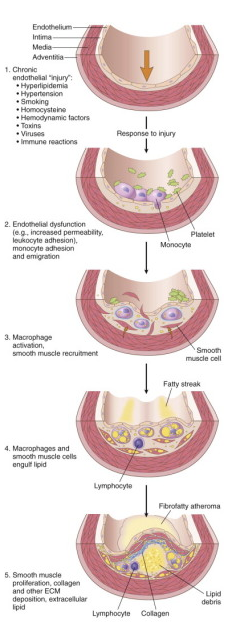
- Almost the same as the one for forming a clot. Except it forms a chronic inflammatory response and stance towards it. Lesion progression involves interaction of modified lipoproteins, monocyte-derived macrophages, T Lymphocytes and the cellular constituents. It results from the following pathogenic events: Endothelial injuries Accumulation of lipoproteins PlRWLWR shwaion Monocyte adhesion to the endothelium and differentiation into macrophages and foam cells. Lipid accumulation Smooth muscle cell recruitments due to the factors realised Smooth muscle cell proliferation and ECM production.
Morphology
- Fatty streaks coalesce into elongated lesions. Composed of lipid-filled foamy macrophages are minimally raised.
- Atherosclerotic Plaque
- 3 principal components: 1. Cells incl smooth muscle, macrophages and T Cells 3. Extracellular Matrix: Includes collagen, elastic fibbers and proteoglycans 3. Intracellular and extracellular lipid:
- Acute Plaque Changes
- Stable vs Unstable plaques. Stable plaques tend to have a smaller lipid core, a thicker fibrous cap. Unstable plaques on the other hand have lpids in the core, thin fibrous cap and more macrophages and T cells.
- Rupture/Fissure
- May induce thrombus formation. may lead to tissue ischaemia. It may organise and incorporate into growing plaque.
- Erosion/ulceration
- Haemorrhage into atheroma
- Atheroembolism/Aneurysm
- Rupture plaque could discharge debris into blood. Pressure may also cause ischaemic atrophy of underlying media, with loss of elastic tissue and cause structural weakening to dilate and rupture.
Imágenes y archivos del mapa
Información
- Descripción
- Processes in Diseases Mapa Mental sobre Atherosclerosis, creado por Daniel Elandix G el 04/11/2013.
- Creado por
- Daniel Elandix G
- Visitas
- 98
- Etiquetas
- Valoración