
Mapa mental
Hormones
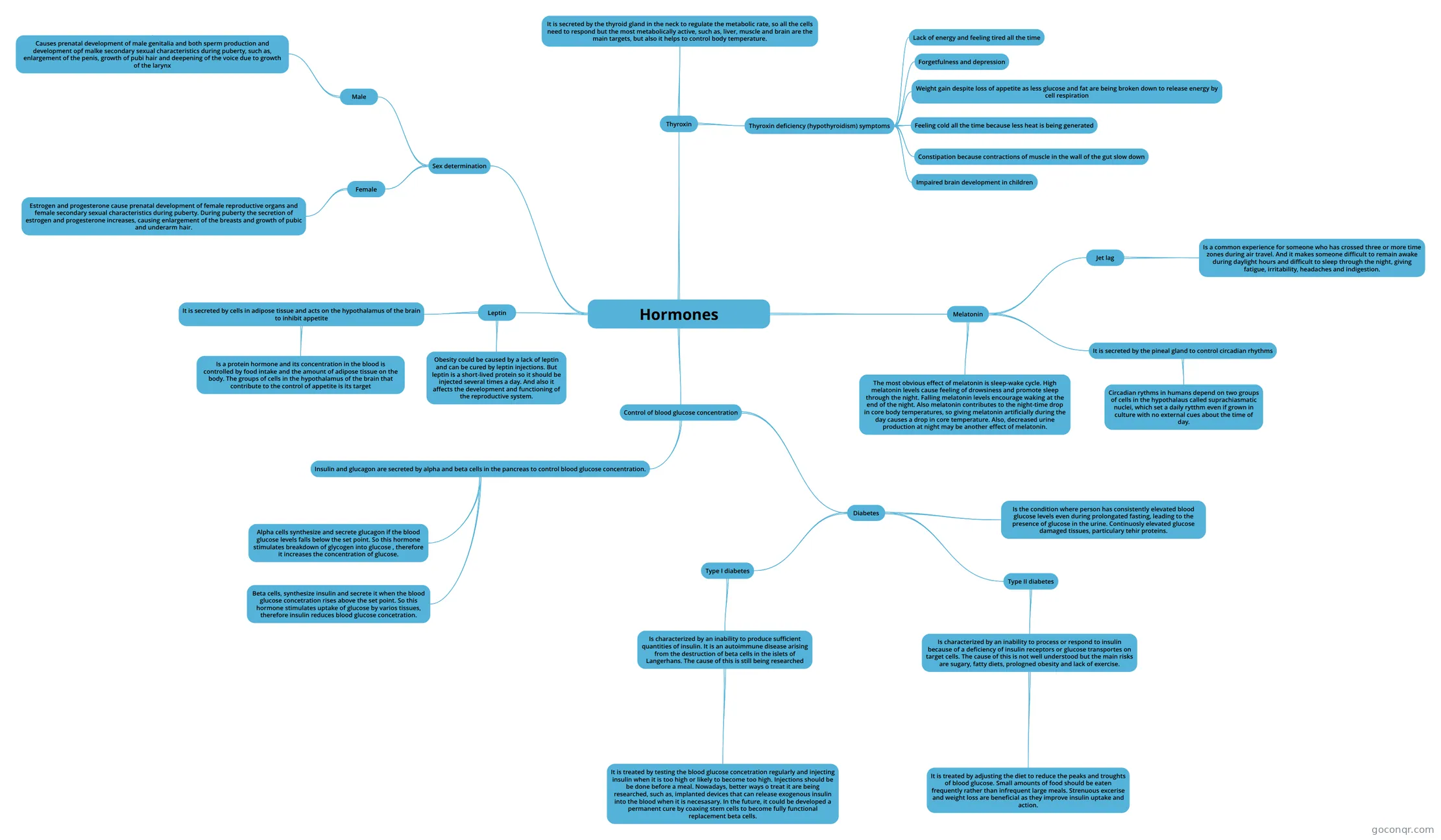
Mind map: Hormones
Contenido del mapa
Hormones
Control of blood glucose concentration
- Insulin and glucagon are secreted by alpha and beta cells in the pancreas to control blood glucose concentration.
- Alpha cells synthesize and secrete glucagon if the blood glucose levels falls below the set point. So this hormone stimulates breakdown of glycogen into glucose , therefore it increases the concentration of glucose.
- Beta cells, synthesize insulin and secrete it when the blood glucose concetration rises above the set point. So this hormone stimulates uptake of glucose by varios tissues, therefore insulin reduces blood glucose concetration.
- Diabetes
- Is the condition where person has consistently elevated blood glucose levels even during prolongated fasting, leading to the presence of glucose in the urine. Continuosly elevated glucose damaged tissues, particulary tehir proteins.
- Type I diabetes
- Is characterized by an inability to produce sufficient quantities of insulin. It is an autoimmune disease arising from the destruction of beta cells in the islets of Langerhans. The cause of this is still being researched
- It is treated by testing the blood glucose concetration regularly and injecting insulin when it is too high or likely to become too high. Injections should be be done before a meal. Nowadays, better ways o treat it are being researched, such as, implanted devices that can release exogenous insulin into the blood when it is necesasary. In the future, it could be developed a permanent cure by coaxing stem cells to become fully functional replacement beta cells.
- Is characterized by an inability to produce sufficient quantities of insulin. It is an autoimmune disease arising from the destruction of beta cells in the islets of Langerhans. The cause of this is still being researched
- Type II diabetes
- Is characterized by an inability to process or respond to insulin because of a deficiency of insulin receptors or glucose transportes on target cells. The cause of this is not well understood but the main risks are sugary, fatty diets, prologned obesity and lack of exercise.
- It is treated by adjusting the diet to reduce the peaks and troughts of blood glucose. Small amounts of food should be eaten frequently rather than infrequent large meals. Strenuous excerise and weight loss are beneficial as they improve insulin uptake and action.
- Is characterized by an inability to process or respond to insulin because of a deficiency of insulin receptors or glucose transportes on target cells. The cause of this is not well understood but the main risks are sugary, fatty diets, prologned obesity and lack of exercise.
- Insulin and glucagon are secreted by alpha and beta cells in the pancreas to control blood glucose concentration.
Thyroxin
- It is secreted by the thyroid gland in the neck to regulate the metabolic rate, so all the cells need to respond but the most metabolically active, such as, liver, muscle and brain are the main targets, but also it helps to control body temperature.
- Thyroxin deficiency (hypothyroidism) symptoms
- Lack of energy and feeling tired all the time
- Forgetfulness and depression
- Weight gain despite loss of appetite as less glucose and fat are being broken down to release energy by cell respiration
- Feeling cold all the time because less heat is being generated
- Constipation because contractions of muscle in the wall of the gut slow down
- Impaired brain development in children
Leptin
- It is secreted by cells in adipose tissue and acts on the hypothalamus of the brain to inhibit appetite
- Is a protein hormone and its concentration in the blood is controlled by food intake and the amount of adipose tissue on the body. The groups of cells in the hypothalamus of the brain that contribute to the control of appetite is its target
- Obesity could be caused by a lack of leptin and can be cured by leptin injections. But leptin is a short-lived protein so it should be injected several times a day. And also it affects the development and functioning of the reproductive system.
- It is secreted by cells in adipose tissue and acts on the hypothalamus of the brain to inhibit appetite
Melatonin
- It is secreted by the pineal gland to control circadian rhythms
- Circadian rythms in humans depend on two groups of cells in the hypothalaus called suprachiasmatic nuclei, which set a daily rytthm even if grown in culture with no external cues about the time of day.
- The most obvious effect of melatonin is sleep-wake cycle. High melatonin levels cause feeling of drowsiness and promote sleep through the night. Falling melatonin levels encourage waking at the end of the night. Also melatonin contributes to the night-time drop in core body temperatures, so giving melatonin artificially during the day causes a drop in core temperature. Also, decreased urine production at night may be another effect of melatonin.
- Jet lag
- Is a common experience for someone who has crossed three or more time zones during air travel. And it makes someone difficult to remain awake during daylight hours and difficult to sleep through the night, giving fatigue, irritability, headaches and indigestion.
- It is secreted by the pineal gland to control circadian rhythms
Sex determination
- Male
- Testosterone
- Causes prenatal development of male genitalia and both sperm production and development opf malke secondary sexual characteristics during puberty, such as, enlargement of the penis, growth of pubi hair and deepening of the voice due to growth of the larynx
- Testosterone
- Female
- Estrogen and progesterone cause prenatal development of female reproductive organs and female secondary sexual characteristics during puberty. During puberty the secretion of estrogen and progesterone increases, causing enlargement of the breasts and growth of pubic and underarm hair.
- Male
Información
- Descripción
- Mapa Mental sobre Hormones, creado por pedro cabrera el 04/04/2022.
- Creado por
- pedro cabrera
- Visitas
- 5
- Valoración