
Mapa mental
NEEDS ANALYSIS:

Contenido del mapa
NEEDS ANALYSIS:
PRIMARY INFORMATION
- INTERVIEWS
- It is a dialogue between two or more people: the interviewer asks questions and the interviewee answers them. It is a technique used for various reasons, research, topics of interest or scientific dissemination, personnel selection.
- CHARACTERISTICS
- Objectives
- They must be clear and precise
- Role of the interviewer
- The interviewer's role is to create a climate of trust that allows the interviewee to be authentic.
- Role of the interviewee
- The interviewee should know in advance the topic or subject to be discussed with the interviewer.
- Investigación
- It is necessary to research the topic to be covered.
- Time and place of interview
- Objectives
- CHARACTERISTICS
- It is a dialogue between two or more people: the interviewer asks questions and the interviewee answers them. It is a technique used for various reasons, research, topics of interest or scientific dissemination, personnel selection.
- SURVEY
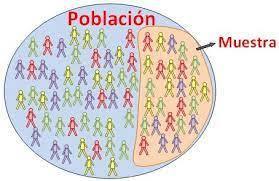
- A method of collecting data from a sample of people, often with the objective of generalizing the results to a larger segment of the population.
- CHARACTERISTICS
- Open response:
- In these surveys, the respondent is asked to answer the question himself. .
- Closed-response
- In these, respondents must choose to answer one of the options presented in a list formulated by the researchers.
- Open response:
- CHARACTERISTICS
- A method of collecting data from a sample of people, often with the objective of generalizing the results to a larger segment of the population.
- OBSERVATION
- It is a technique that consists of attentively observing the phenomenon, fact or case, taking information and recording it for later analysis.
- CHARACTERISTICS
- Planning.
- This involves determining the object or situation to be observed, how it will be observed and at what times, based on a previously formulated hypothesis or assumption.
- Control
- Recording. .
- Verification
- It implies that the results of what has been observed must be reliable and validated, so that they serve as arguments to support or refute the initial hypothesis.
- Implies that the observation process should be replicable through step-by-step recording.
- Verification
- It implies the ability to manipulate the variables, i.e., the quantitative and qualitative characteristics of the phenomenon under study.
- Recording. .
- Planning.
- CHARACTERISTICS
- It is a technique that consists of attentively observing the phenomenon, fact or case, taking information and recording it for later analysis.
- EXPLORATION
- It is carried out when a topic needs to be understood in depth, especially if it has not been done before.
- CHARACTERISTICS
- The researcher has a lot of flexibility and can adapt to changes as the research progresses.
- It is usually low cost.
- Helps lay the groundwork for an investigation.
- It is usually low cost.
- The researcher has a lot of flexibility and can adapt to changes as the research progresses.
- CHARACTERISTICS
- It is carried out when a topic needs to be understood in depth, especially if it has not been done before.
- FOCUS GROUPS
- The focus group is a very useful tool for program planning and evaluation. program planning and evaluation. It allows participants to freely express their opinion on different freely express their opinion on different aspects of interest in an open environment for the open environment for the free exchange of ideas.
- CHARACTERISTICS
- Participants have certain homogeneous characteristics.
- Qualitative data is provided.
- The discussion is focused on a specific aspect.
- The purpose is not to establish consensus, but to establish the perceptions, feelings, opinions, opinions of the users and consumers. to establish users' perceptions, feelings, opinions and thoughts about thoughts about products, services and opportunities. opportunities.
- The discussion is focused on a specific aspect.
- Qualitative data is provided.
- Participants have certain homogeneous characteristics.
- CHARACTERISTICS
- The focus group is a very useful tool for program planning and evaluation. program planning and evaluation. It allows participants to freely express their opinion on different freely express their opinion on different aspects of interest in an open environment for the open environment for the free exchange of ideas.
- SAMPLE LANGUAJE
- It is the elicitation and phonological analysis of an elicited language sample.
- CONCEPT
- They are those obtained directly from the researched with the use of their own instruments and experience. These are obtained for the purpose of approaching the study phenomenon.
- INTERVIEWS
SECONDARY INFORMATION
- Uses information organized by external sources, such as government agencies, media, chambers of commerce, etc. This information is published in newspapers, magazines, books, company websites, governmental agencies, etc.
- DOCUMENTS
- Public sources like the library are an amazing way to gather free information. Government libraries generally offer free services and of course a researcher can document whatever information is available.
- LITERATURE
- This is the theoretical foundation of the research, which will allow us to support the results obtained and discuss coincidences and/or disagreements in the discussion section, but above all to demonstrate that the research proposed is an effective scientific contribution.
- DOCUMENTS
- Uses information organized by external sources, such as government agencies, media, chambers of commerce, etc. This information is published in newspapers, magazines, books, company websites, governmental agencies, etc.
ANALYSIS OF DATA
- Data analysis is a process that will allow you to know and interpret information with the purpose of identifying points of value.
- Are those areas within the organization on whose performance depends the fulfillment of the organization's mission.
- IDENTIFY KEY AREAS.
- STABLISH PRIORITIES.
- Have a single list containing all the tasks. tasks. Identify what is important Understand your true objectives. Highlight what is urgent.
- STABLISH PRIORITIES.
Imágenes y archivos del mapa





Información
- Descripción
- Mapa Mental sobre NEEDS ANALYSIS:, creado por Mayra Torres el 29/04/2022.
- Creado por
- Mayra Torres
- Visitas
- 16
- Valoración